:::::::::::::::::::::::::::::::::::::::::::::::::::::::::::::::::::::::::::::::::::::::::::::::::::::
Matsunaga Teitoku 松永貞徳
(1571-1653)
1571年(元亀2年) - 1654年1月3日(承応2年11月15日)
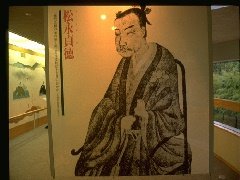
He was born in Kyoto. His father was the haikai poet
Matsunaga Eishu 松永永種.
His other names are
Shooyuu 逍遊(しょうゆう)"Carefree wandering"
Choozumaru 長頭丸(ちょうずまる), Endamaru 延陀丸(えんだまる) and some more.
He was the center of the
TEIMON HAIKAI group 貞門俳諧(ていもんはいかい).
Teimonha 貞門派.
He was a friend of Hayashi Razan 林羅山 (1583 - 1657)
Hayashi Dōshun, a Japanese Neo-Confucian philosopher, serving as a tutor and an advisor to the first four shoguns of the Tokugawa bakufu.
© More in the WIKIPEDIA !
quote
Matsunaga Katsuguma Teikoku, also called Shōyuken, or Chozumaru (born 1571, Kyoto—died Jan. 3, 1654, Kyoto), renowned Japanese scholar and haikai poet of the early Tokugawa period (1603–1867) who founded the Teitoku (or Teimon) school of haikai poetry. Teitoku raised haikai—comic renga (“linked verses”) from which the more serious 17-syllable haiku of Bashō were derived—to an acceptable literary standard and made them into a popular poetic style.
Teitoku was the son of a professional renga poet, and he received an excellent education from some of the best poets of the day. After making the acquaintance of the Neo-Confucian scholar Hayashi Razan, Teitoku began giving public lectures on Japanese classics. In about 1620 he opened the Teitoku school in his home; at first he concentrated on educating children, but gradually he became more interested in tutoring aspiring poets.
Throughout this time he had been composing poems, primarily serious waka and renga but also lighter haikai. Although reluctant at first, he allowed one of his students to publish a number of his haikai in the anthology Enokoshū 犬子集 (1633; “Puppy Collection”). This volume established him as the leading poet of the early to mid-17th century, and numerous poets were inspired to compose haikai. Several other collections of his poems were published, including Taka tsukuba (1638) and Shinzo inu tsukuba shu (1643).
Teitoku also set down the rules he had formulated for writing haikai in Gosan (1651).
source : www.britannica.com
.................................................................................
Famous publications
俳諧 御傘 Haikai Gosan
貞徳独吟
The Teimon School was known for its use of colloquialism and puns in haiku. But he insisted on the use of Chinese words too (kango 漢語).
Reference
:::::::::::::::::::::::::::::::::::::::::::::::::::::::::::::::::::::::::::::::::::::::::::::::::::::
七夕のなかうどなれや宵の月
tanabata no nakoodo nare ya yoi no tsuki
please become the matchmaker
for the Tanabata stars -
moon of this evening
(tanabata is the star festival on the night of July 7.)
WKD : Star Festival (Tanabata)
花よりも団子やありて帰る雁
hana yori mo dango ya arite kaeri kari
better eating dumplings
than watching cherry blossoms -
geese flying home
WASHOKU
Dango ... dumplings in Japanese culture
Tr. Gabi Greve
:::::::::::::::::::::::::::::::::::::::::::::::::::::::::::::::::::::::::::::::::::::::::::::::::::::
The poet name of Teitoku was Choozumaru 長頭丸 Chozumaru, a name quite familiar for Matsuo Basho and all haikai poets. Basho belonged to the "Teimon school of haikai", but he never met Teitoku in person.
Chozumaru "Boy with a long head" reminds the normal reader more of the name of a young boy, but not of a grown-up.
There was also a famous portrait of
Soogi 宗祇 Sogi (1421―1502), a renku master of the Muromachi period. It is said to have been quite close to the facial features of the master.
But it comes with the following inscription
うつし置く我が影ながら世の憂さも
知らぬ翁ぞ羨まれぬる
utsushi oku waga kage nagara yo no uki mo
shiranu okina zo urayamarenuru
Though it seems
to show me,
I find envy
the old man in the picture
who knows not the world's sadness!
source : Tr. H. Mack Horton
Matsuo Basho wrote:
幼名や知らぬ翁の丸頭巾
osana na ya shiranu okina no maruzukin
a name for a boy -
the round hood of an old man
I never met
Tr. Gabi Greve
Written about 貞亨元年, Basho age 41 or later.
A pun with the Chinese characters : 長頭丸 - 丸頭巾.
. WKD : zukin 頭巾 hood .
kigo for winter
a maruzukin 丸頭巾 was used by elderly men.
Also called hooroku zukin 焙烙 頭巾 or Daikoku zukin 大黒頭巾

. Matsuo Basho and Sogi 宗祇 .
:::::::::::::::::::::::::::::::::::::::::::::::::::::::::::::::::::::::::::::::::::::::::::::::::::::
***** Introducing Japanese Haiku Poets
Kitamura Kigin 北村季吟
Nishiyama Soin (Soo-In) 西山宗因
shooyooyuu 逍遥遊 Shoyoyu - carefree wandering
. Shoomon 蕉門 Shomon, Basho students, Basho's school .
:::::::::::::::::::::::::::::::::::::::::::::::::::::::::::::::::::::::::::::::::::::::::::::::::::::
[ . BACK to WORLDKIGO . TOP . ]
:::::::::::::::::::::::::::::::::::::::::::::::::::::::::::::::::::::::::::::::::::::::::::::::::::::


 Posts
Posts


1 comment:
tanabata no nakoodo nare ya yoi no tsuki
Become a matchmaker
Of the two stars,
Early evening moon!
Tr. Micheal Marra
The original haiku has wide meaning, kigo is set on a concrete date, there is information about the festival, clear allusion to the legend about the lovers, etc.
It is understood in a moment.
The translation by Michael Marra is very narrow in meaning (just a matchmaker of the stars),
kigo is set generally at Autumn, the allusion to the legend is covered very deep (two stars),
and without this knowledge, haiku seems to be weak.
Discussion
http://groups.yahoo.com/group/simply_haiku/message/23871
Michael Marra is is Professor of Japanese Literature. Aesthetics, and Hermeneutics in the Department of Asian Languages and Cultures at UCLA ...
Post a Comment