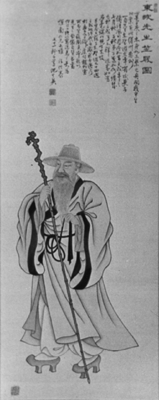
Showing posts with label poet. Show all posts

8/01/2016

Masaoka Shiki bungo

[ . BACK to WORLDKIGO TOP . ]
. Masaoka Shiki 正岡子規 .
:::::::::::::::::::::::::::::::::::::::::::::::::::::::::::::::::::::::::::::::::::::::::::::::::::::

Masaoka Shiki - from Bungo to Nihongo
(1867, October 14 - 1902, September 19) 


Selected Poems of Masaoka Shiki
Translated by Janine Beichman

:::::::::::::::::::::::::::::::::::::::::::::::::::::::::::::::::::::::::::::::::::::::::::::::::::::

quote
Centenary of the Death of Masaoka Shiki (1867-1902)
... Shiki expresses himself to us, in a simple and sincere voice, as though talking with the reader in private. By using the language of everyday life he raises it to a literary rank.
Masaoka Shiki’s literary carrier burst into literature when the majority of authors were copying limitlessly the European and American literature of the Meiji restoration period. His poetical style was the shasei, meaning “drawing from life”.
Using this informal, spoken language, he dared to denounce the importance of going back to the traditional roots of Japanese poetry, calling it a source in the process of defining modern Japanese modes of expression.
source : World Haiku Review . Susumu Takiguchi / Judit Vihar


:::::::::::::::::::::::::::::::::::::::::::::::::::::::::::::::::::::::::::::::::::::::::::::::::::::


Shiki lived in a time of great changes and reforms in Japan.
After the opening of the country to the "West", the Japanese had to deal with new ideas on every level.
One of them was the Japanese language itself.

The use of BUNGO 文語 had been common for written texts. It had a grammar and vocabulary of its own and made use of difficult Kanji characters.

- quote -
The Classical Japanese language
(文語 Bungo, literally "Literary language"),

also called "Old writing" (古文 Kobun), is the literary form of the Japanese language that was the standard until the early Shōwa period (1926–89).
It is based on Early Middle Japanese, the language as spoken during the Heian period (794–1185), but exhibits some later influences.
Its use started to decline during the late Meiji period (1868–1912) when novelists started writing their works in the spoken form.
Eventually,
the spoken style came into widespread use, including in major newspapers, but many official documents were still written in the old style. After the end of World War II because of the Surrender of Japan, most documents switched to the spoken style, although the classical style continues to be used in traditional genres, such as haiku and waka. Old laws are also left in the classical style unless fully revised.
..... Old character forms (旧字体 Kyūjitai)
變 → 変 (hen "strange")
體 → 体 (karada "body")
眞 → 真 (makoto "truth")
..... Historical kana usage (歴史的仮名遣 Rekishi-teki kana-zukai)
..... Geminate (促音 Sokuon) rule
In 1946, the simplified 当用漢字 Toyo Kanji were declared official.
..... and more details are here:
- source : wikipedia -

Shiki was a strong advocate of the simpler form of every-day life of the Japanese language, so that anybody could write poetry or prose to express himself.
He wanted "the people" to write poems, not just an educated elite with an education in poetry, history and Chinese influence on Japanese writing.

He did not change the three conditions of a hokku
- 5 7 5
- one kireji (cut marker)
- one kigo (season word)

He advocated poetry meetings where people could write single, individual poems, not the first set of a renku linked verse.
And all they had to do was look around them and write about it (shasei at its simplest).

He advocated a change in the use of the language, and thus
re-named 発句 hokku to 俳句 haiku.

It reminds me of the modern translations of the Bible, which use a much different language than the first "translations".


俳句は季題を詠む詩である。
Haiku is poetry
that expresses itself through season words.

Masaoka Shiki 正岡子規

:::::::::::::::::::::::::::::::::::::::::::::::::::::::::::::::::::::::::::::::::::::::::::::::::::::


A "Sketch from Life" was One of Shiki's Many Techniques
Masaoka Shiki: the Misunderstood Reformer, Critic and Poet
. Carmen Sterba, 2011 .

(1) to "pay more attention to lesser-known locales" rather than famous places,
(2) to walk and observe nature, but afterwards write at home,
(3) to focus on "material and theme in a way that will reveal [your] individuality,"
(4) to read other's haiku to be informed, and
(5) to know something of the history of tanka (originally called waka).

Ueda also suggests that Basho wrote about the "beauty of external nature" and Shiki wrote haiku based on "internal, psychological reality of what is truthful (makoto)."


- quote -
History of Magazines in Japan: 1867-1988
The first magazine of Japan was Seiyo-Zasshi, or Western Magazine, published in October 1867 by a scholar Shunzo Yanagawa. That was ten and some pages wood printed booklet, and six issues had been public until it closed in September 1869. Since then, the term Zasshi has been used for the translation of magazine.
- source : kanzaki.com/jpress -


:::::::::::::::::::::::::::::::::::::::::::::::::::::::::::::::::::::::::::::::::::::::::::::::::::::

The efforts to make Japanese haiku accessible to more Japanese people
is going on.

. Local Japanese Kigo (chiboo kigo 地貌季語) .
Collecting regional kigo, sometimes even in dialect, from rural areas of Japan.
Natural phenomenon are included, and more interesting, the local festivals, food and other necessities of the daily life.
There are now quite a few regional Saijiki.

:::::::::::::::::::::::::::::::::::::::::::::::::::::::::::::::::::::::::::::::::::::::::::::::::::::

The following poem came to my attention a few days ago.

. Yosa Buson 与謝蕪村 (1715-1783) .

薬盗む女やは有おぼろ月
kusuri nusumu onna ya ha aru oborozuki

A woman has
stolen the elixir of life
the hazy moon

Tr. Allan Persinger


This is a poem that can not be understood without a detailed knowledge of things Chinese.
This is just the kind of poem that Shiki would have rejected.

The background of this story is here
. Lady Chang-O, The Moon Lady .
Jooga 嫦娥 Joga, Chang'e
Kooga 姮娥(こうが)Koga, Heng'e


:::::::::::::::::::::::::::::::::::::::::::::::::::::::::::::::::::::::::::::::::::::::::::::::::::::

Here is a haiku by Shiki himself, when he was too ill to get up any more.
He could only look at his front garden.

"teizen 庭前" Front Garden

鶏頭の十四五本もありぬべし
keitoo no juushigohon mo arinubeshi

there must be
about fourteen or fifteen
cockscombs . . .

Tr. Gabi Greve


In a recent documentary about the life of Shiki, I saw the cockscombs in his garden, a flower he liked very much. When he could not move around any more, his sister, who cared for him lovingly, planted the flowers a bit closer to the veranda.
Later, when he had to be in bed all the time, she re-planted them again so that he could still see them when he uplifted his upper body, holding on to a crutch under his arm. Counting the blossoms was one of his daily joys in his sickbed.

When he became completely bedridden, she replanted many flowers, including the hechima gourds, directly on the veranda in pots, so he could see them while lying on his back in bed.
- Gabi Greve, January 2010 -


More translations and background of this poem in my blog:
. keitoo 鶏頭 (けいとう) Cockscomb .

:::::::::::::::::::::::::::::::::::::::::::::::::::::::::::::::::::::::::::::::::::::::::::::::::::::

. . SHIKI - Cultural Keywords and ABC-List . .


Join the Masaoka Shiki - Study Group on facebook!


::::::::::::::::::::::::::::::::::::::::::::::::::::::::::::::::::::::::::::::::::::::::::::::::::::: 

[ . BACK to WORLDKIGO  TOP . ]
[ . BACK to DARUMA MUSEUM TOP . ]

::::::::::::::::::::::::::::::::::::::::::::::::::::::::::::::::::::::::::::::::::::::::::::::::::::: 

2/23/2012

anagachi

[ . BACK to WORLDKIGO TOP . ]
:::::::::::::::::::::::::::::::::::::::::::::::::::::::::::::::::::::::::::::::::::::::::::::::::::::

anagachi あながち 

***** Location: Japan
***** Season: Non-seasonal Topic
***** Category: Humanity


*****************************
Explanation


anagachi 強ち

the dictionary gives these possibilities

〔必ずしも〕(not) necessarily, (not) always;
〔全く〕(not) altogether, (not) wholly;
〔厳密に言って〕(not) exactly


source : dic.search.yahoo.co.jp


:::::::::::::::::::::::::::::::::::::::::::::::::::::::::::::::::::::::::::::::::::::::::::::::::::::

not necessarily
not uncommon

彼の言うことはあながち間違っていない。
He is not altogether wrong.

source : en.glosbe.com


Anagachi-ni, adv. By compulsion, right or wrong, unreasonably, reluctantly.
Japanese-English and English-Japanese dictionary
James Curtis Hepburn


:::::::::::::::::::::::::::::::::::::::::::::::::::::::::::::::::::::::::::::::::::::::::::::::::::::

(下に打ち消しの語を伴う)
(1)一概に。まんざら。必ずしも。
「―無理ともいえない」

(2)決して。むやみに。
「範頼・義経が申し状、―御許容あるべからず/平家 10」
(形動ナリ)

(1)周囲にかまわず一途(いちず)であるさま。ひたむき。
「―に心ざし見えありく/竹取」「など、かく、この御学問の―ならむ/源氏(乙女)」

(2)強引であるさま。無理やり。
「―にかかづらひたどりよらむも人悪かるべく/源氏(空蝉)」

(3)異常なほどはなはだしいさま。ゆきすぎ。
「それだになほ―なるさまにては見ぐるしきに/枕草子 237」

(4)必ずしも。
「―に恐ろしかるべき事にもあらねど/栄花(玉の村菊)」

〔他人の迷惑をかえりみず、自分勝手にしたいままにするというのが原義。
「あな」は「おのれ(己)」の意で、「己(あな)勝ち」に由来するか。平安時代末期には打ち消しの語を伴って用いる(4)の意が生じ、次第に「に」を脱落させたの用法が主流となっていった〕

source : www.weblio.jp


*****************************
Worldwide use


*****************************
Things found on the way


あながちよかった正月 !


:::::::::::::::::::::::::::::::::::::::::::::::::::::::::::::::::::::::::::::::::::::::::::::::::::::

A waka by Saigyo 西行

anagachi ni
niwa o sae haku
arashi kana
sakoso kokoro ni
hana o makaseme

Two translations by Robin D. Gill

and the gale has
enough strength left over
to sweep the yard!
we must, then, give him
his will with the bloom


the gale even
insists on sweeping
my garden!
how can I not entrust
him with the bloom?


*****************************
HAIKU


Three haiku by Kobayashi Issa


あながちに留主とも見へず梅の花
anagachi ni rusu to mo miezu ume no tsuki

it seems likely
someone's at home...
plum blossoms


Shinji Ogawa notes that anagach ni means "likely" but is always followed by a negative word, in this case the suffix zu or "not."
The expression, rusu to mo miezu, thus means, "it doesn't look like he (or she) is absent."


あながちに雪にかまわぬ霰哉
anagachi ni yuki ni kamawanu arare kana

messing up the snow
like always...
hailstones


あながちに丸くならでも梅の月
anagachi ni maruku narade mo ume no tsuki

as usual
not quite round...
plum blossom moon


source : David Lanoue


The meaning of the moon and plum blossoms can be seen like this:

Dear moon behind the plum blossoms!
Do not hurry to get all round so soon.
It is all right to take your time and ripen.


even though
the moon is not quite full
plum blossoms


Tr. and discussion by Larry Bole
Translating Haiku Fourm


:::::::::::::::::::::::::::::::::::::::::::::::::::::::::::::::::::::::::::::::::::::::::::::::::::::

Other haiku by Issa with anagachi


あながちに青くなくとも簾也

あながちにかくれもせぬや小田の雁

あながちにせい高からぬぼたん哉

あながちに吹となけれど秋の風

あながちに夜の明きらぬかゞし哉

まふ蛍あながち呼びもせざりしが


:::::::::::::::::::::::::::::::::::::::::::::::::::::::::::::::::::::::::::::::::::::::::::::::::::::


Haiku by (probably) Matsuo Basho with
anagachi

あながちに鵜とせりあはぬかもめ哉
anagachi ni u to seriawanu kamome kana


the seagulls do not fight over food
with the cormorants -
anagachi ni

カモメは決して、貪欲な鵜と競争して魚を取ったりしないということです。

This hokku is usually atributed to Esa Shoohaku 江佐尚白.
(? - 1722)


芭蕉の七部集 or 猿蓑脚注
. Matsuo Basho 松尾芭蕉 - Archives of the WKD .


:::::::::::::::::::::::::::::::::::::::::::::::::::::::::::::::::::::::::::::::::::::::::::::::::::::


Haiku by other poets with anagachi


病葉やあながちの恋紅の照り

Matsune Tooyoojoo 松根 東洋城
(1878年2月25日 - 1964年10月28日)


あながちに紅ゐならぬ紅葉哉

橋仙


秋炎の四方のあながち親しめず

. Iida Dakotsu 飯田蛇笏 .


あながちに夏川越しぬ酒の酔

Ozaki Meidoo 尾崎迷堂 (1891 - 1970)


*****************************
Related words


***** . Kobayashi Issa (小林一茶) .


***** . Matsuo Basho 松尾芭蕉 .


. WKD - LIST of haiku topics and Keywords  


[ . BACK to WORLDKIGO  TOP . ]
[ . BACK to DARUMA MUSEUM TOP . ]
:::::::::::::::::::::::::::::::::::::::::::::::::::::::::::::::::::::::::::::::::::::::::::::::::::::

10/11/2011

Santoka, Sake - Ozaki

[ . BACK to worldkigo TOP . ]
:::::::::::::::::::::::::::::::::::::::::::::::::::::::::::::::::::::::::::::::::::::::::::::::::::::

Santoka and Sake

Taneda Santooka 種田山頭火 Taneda Santoka
(1882-1940)

(明治15年)12月3日 - 1940年(昭和15年)10 月11日

a haiku nonconformist who cast aside all the rules including the 5-7-5 syllable structure, is also associated with Matsuyama. Santoka, an ordained Zen priest, after spending most of his life wandering all over the country as a begging monk, chose to settle in Matsuyama only to die 10 months later. The humble cottage where he dwelt --
Isso-an (A Blade of Grass Hermitage) is preserved north of Ehime University.


His books and documents are also preserved in Shiki Memorial Museum.
Read more about Santoka and his Life here:
Terebess Asia Online (TAO): Santoka


Westerners like to conquer mountains;
Orientals like to contemplate them.
As for me, I like to taste the mountains.

Santoka


Santoka Memorial Day, Santooka ki 山頭火忌
kigo for late autumn. October 11


Santoka :: Grass and Tree Cairn
tr. Hiroaki Sato
100 pages to read
source : thehaikufoundation.org


Woodblock print by Priest Inagaki Shodo.


:::::::::::::::::::::::::::::::::::::::::::::::::::::::::::::::::::::::::::::::::::::::::::::::::::::


Collection compiled by Larry Bole, September 2006.

Santoka had a troubled relationship with alcohol.

As early as a 1918 haiku, he considers the subject (no Japanese text available):

Somehow
the sound of swallowing sake
seems very lonely

tr. Stephen Addiss
("The Art of Twentieth-Century Zen: Paintings and Calligraphy by Japanese Masters," Audrey Yoshiko Seo, catalog of the exhibit.)

Some other haiku Santoka wrote about sake and drinking, all translated by Burton Watson:

yoote koorogi to nete ita yo

so drunk
I slept
with the crickets!


ippai yaritai yuuyake-zora

a drink
would be nice now
sunset sky


yoeba iro-iro no koe ga kikoeru fuyuame

get drunk
you hear all sorts of voices
winter rain


yoi yado de dochira mo yama de mae wa sakaya de

nice inn
mountains all around
sake store in front


futo yoizame no kao go aru baketsu no mizu

suddenly
that hungover face
bucket water


yoizame no hana koboreru koboreru

hangover
and blossoms
scattering scattering


aru dake no sake o tabe kaze o kiki

finish the last
of the sake
hear the wind


midori yoeba iyo-iyo midori

green--
drunk and it gets
even greener


hiza ni sake no koboruru ni aitoo naru

sake slopping over
on our knees
wish we were together


And here are a few comments by Santoka from his diaries (translations by Burton Watson):

June 16, 1932
For the first time in five days, I had a drink of sake. It didn't taste very good, which makes me feel happy, and also rather depressed.
Anyway, there's no doubt that clearing up the problem of sake is the first step in clearing up the problem of myself.


July 20, 1932
People view all things, all events in terms of what they value in life, with that as their standard. I look at everything through the eyes of sake. Gazing far off at a mountain, I think how I'd like a little drink; I see some nice vegetables and think how well they'd go with the sake. If I had such-and-such sum, I could polish off a flask; if I had this much, I could buy a bottle.
You may laugh, but that's just the way I am--nothing I can do about it.


August 28, 1940
[written a little over six weeks before his death]
Sake is my koan. If I could understand sake--if I could learn the true way to enjoy sake, it would be my awakening, my breakthrough!

Compiled by Larry Bole

:::::::::::::::::::::::::::::::::::::::::::::::::::::::::::::::::::::::::::::::::::::::::::::::::::::::


From John Stevens' introduction to his book,
"Mountain Tasting: Zen Haiku by Santoka Taneda"

"Sake was Santoka's koan.
He said that 'to comprehend the true taste of sake will give me satori.' He attempted to completely efface himself through drinking, a practice not unknown among certain types of Zen monks. ...

'When I drink sake I do so with all my heart.
I throw myself recklessly into sake drinking.'


"There is no point in romanticizing Santoka's alcoholism, however. He himself struggled with this problem for many years and never solved his greatest koan. On several occasions he was even arrested for public drunkeness and vagrancy. ...

"Santoka admitted that he could do only three things well: walk, drink sake, and make haiku. Sake and haiku were almost identical:

'Sake for the body, haiku for the heart;
Sake is the haiku of the body,
Haiku is the sake of the heart.'
"


Following are some of Stevens' translations of Santoka's haiku (with some overlap with Burton Watson's translations posted previously):

horohoro yoote ko no ha furu

Slightly tipsy;
The leaves fall
One by one.


[Santoka may be sober here, and it's just the leaves that seem tipsy to him]


ippai yaritai yuuyaki-zora

The sky at sunset--
A cup of sake
Would taste so good!


hitori shoogatsu no mochi mo sake mo ari soshite

Alone on New Year's Day--
There is mochi and sake
And...


ama no kawa mayonaka no yoidore wa odoru

Beneath the River of Heaven
The drunkard dances all night.


sake ga yamerarenai ki no me kusa no me

I can't give up sake;
The budding trees,
The budding grasses.


taberu mono wa atte you mono mo atte zassoo no ame

I've something to eat
And something to make me drunk;
Rain in the weeds.


sake wa nai tsuki shimijimi mite ori

No sake;
I stare at the moon.


yoote koorogi to nete ita yo

Drunk, I slept
With the crickets.


yoi yado de dochira mo yama de mae wa sakaya de

What a splendid inn!
Mountains in both directions
And a sake shop in front.


boro utte sake koote samishiku mo aru ka

If I sell my rags
And buy some sake
Will there still be loneliness?


Compiled by Larry Bole


ooo ooo ooo ooo ooo ooo ooo ooo ooo


Here is an anecdote about Santoka and a dog with a rice cake, from John Stevens' book "Mountain Tasting: Zen Haiku by Santoka Taneda:"

Santoka was used to sharing anything he had. One night, as Santoka prepared for another dinnerless evening, a large dog came to his door carrying a big rice cake in its mouth [perhaps a descendant of a rice cake-stealing dog that Issa wrote about?]. Santoka had no idea where the dog or the rice cake had come from.
He took the rice cake, split it in two and gave half to the dog, who then ran off into the darkness.
As soon as the dog was gone a little cat came up to Santoka and begged for some of the rice cake. Santoka split it again.

aki no yo ya inu kara morattari neko ni ataetari

Autumn night--
I received it from the dog
And gave it to the cat.

Compiled by Larry Bole


人声なつかしがる猫とおり
hitogoe natsukashigaru neko to ori

I stay with a cat
which craves to hear
words from us humans  


ooo ooo ooo ooo ooo ooo ooo ooo ooo


音は 時雨 か
oto wa shigure ka

the sound, oh,
it's sleet !


(Tr. Gabi Greve)
Winter Drizzle (shigure)
Discussing Santoka's Haiku


Some Santoka Sake Haiku in French


:::::::::::::::::::::::::::::::::::::::::::::::::::::::::::::::::::::::::::::::::::::::::::::::::::::

haiku about water


Santoka in Kumamoto

. konna ni umai mizu ga afurete iru
such delicious water is overflowing here .


Such delicious water
Overflows from the spring.


kyoo no ohiru wa mizu bakari

Today's lunch:
Only water.


taberu mono ga nakereba nai de suzushii mizu

There's still something to eat:
The cool water.

Tr. John Stevens


:::::::::::::::::::::::::::::::::::::::::::::::::::::::::::::::::::::::::::::::::::::::::::::::::::::

. . . . . 炎天
. Blazing Sky (enten) haiku by Santoka

:::::::::::::::::::::::::::::::::::::::::::::::::::::::::::::::::::::::::::::::::::::::::::::::::::::


CLICK for original LINK


山あれば山を観る 
雨の日は雨を聴く


yama areba yama o miru
ame no hi wa ame o kiku

when there are mountians, I look at mountains
when there is a rainy day, I listen to the rain

Tr. Gabi Greve


:::::::::::::::::::::::::::::::::::::::::::::::::::::::::::::::::::::::::::::::::::::::::::::::::::::


Plowing the field,
one hears a song


Haiga by Michael Daniel Hofmann
calligraphy by Jikihara Gyokusei
Translation by James Green & Hisashi Miura


- shared by Michael Daniel Hofmann - FB

:::::::::::::::::::::::::::::::::::::::::::::::::::::::::::::::::::::::::::::::::::::::::::::::::::::


More about the Life of Taneda Santooka 
種田山頭火


Santoka <>The master for all of us wandering pilgrims.
http://groups.yahoo.com/group/happyhaiku/message/438


Santoka, "shinjin datsuraku" and the Begging Bowl
http://groups.yahoo.com/group/happyhaiku/message/1331

.....

About Taneda Santoka and his Somokuto 草木塔


CLICK for original ... blog.goo.ne.jp

百合咲けばお地蔵さまにも百合の花
yuri sakeba o-Jizoo sama ni mo yuri no hana

when the lilies blossom
even Jizo Bosatsu
gets some lilies


:::::::::::::::::::::::::::::::::::::::::::::::::::::::::::::::::::::::::::::::::::::::::::::::::::::


山のしづかさへしづかなる雨
yama no shizukasa e shizuka naru ame

on the stillness of the mountain
the stillness of rain

Santoka at temple Eihei-Ji 永平寺
http://blowinthewind.net/santoka/eiheiji.htm

Tr. Gabi Greve
MOUNTAIN, could also be translated "monastery, temple".


Great Zen-Temple in the cold mountains of Gifu
Eihei-Ji Temple 永平寺


The mountain stillness
Makes the rain still.

Tr. John Stevens


over the mountain’s silence
silent rain

Tr. Burton Watson


By way of interpretation after a stormy night in July 2009, I am tempted to interpret this

tera no shizukasa e shizuka naru kokoro

in the quietude of this mountain temple
my heart (mind, soul) becomes quiet


Gabi Greve
HFB


:::::::::::::::::::::::::::::::::::::::::::::::::::::::::::::::::::::::::::::::::::::::::::::::::::::


歩き続ける 彼岸花 咲き続ける 
aruki-tsuzukeru higanbana saki-tsuzukeru

I keep walking
the spider lilies
keep blooming  


. Spider Lilies (higanbana彼岸花, manjushage) .  


- - - - -


yoote nemu nadeshiko sakeru ishi no ue

I'd like enough drinks
to put me to sleep--on stones
covered with pinks.

Tr. Harold Henderson

. Matsuo Basho 松尾芭蕉 - Archives of the WKD .


:::::::::::::::::::::::::::::::::::::::::::::::::::::::::::::::::::::::::::::::::::::::::::::::::::::


Contributions by other Haiku Poets


so drunk
the tick that bit me
died

[2003, true story]

AA meeting
in the far corner
a cricket


Friday 9/14/06, local AA's, The Broken Bottle Club, Vineland, NJ.

Gene Murtha

xxxxxxxxxxxxxxxxxxxxxxxxxxxxx

palm wine sloshes
in my calabash -
sandals wearing thin


The delicious, milky-white drink is made by tapping the sap of the palm-oil tree, then allowing it to spontaneously ferment for several hours. It is sweet and lightly alcoholic. It is also hugely refreshing, and probably the nicest drink I've ever enjoyed!

Norman Darlington, written in Togo (West Africa)

:::::::::::::::::::::::::::::::::::::::::::::::::::::::::::::::::::::::::::::::::::::::::::::::::::


窓あけて 窓いっぱいの春
mado akete mado ippai no haru

opening the window
a window full
of spring


Old Scroll by Ando san, Photo from Ishino


Details about this haiku are HERE !


:::::::::::::::::::::::::::::::::::::::::::::::::::::::::::::::::::::::::::::::::::::::::::::::::::::


. 生死の中の雪ふりしきる
seishi no naka no yuki furishikiru .


"To resolve life and to resolve death
are the most important Karma for a Buddhist"
- Shushogi (修証義).


:::::::::::::::::::::::::::::::::::::::::::::::::::::::::::::::::::::::::::::::::::::::::::::::::::::


during the war at 街頭所見 - (thinking of Nagasaki)


月のあかるさはどこを爆撃してゐることか
tsuki no akarusa wa doko o bakugeki shiteiru koto ka

the brightness of the moon
will it show where
the bombs are going to fall ?

Tr. Gabi Greve


another translation

Moon’s brightness I wonder where they’re bombing

source : Montage #20 THF Blog

:::::::::::::::::::::::::::::::::::::::::::::::::::::::::::::::::::::::::::::::::::::::::::::::::::::


Kiefernwind und Grüne Berge
Der Wanderdichter Santōka und das Freie Haiku

aus dem Japanischen übersetzt und erläutert
von Robert F. Wittkamp
mit Kalligraphien von Mineko Sasaki-Stange und
Tuschemalereien von Mira Wallraven Ono

Etwas im Wasser
lässt selbst die Wolkenschatten
keine Ruhe finden


ISBN 978-3-932185-12-0
source : www.verlag-ganzheitlich-leben.de

:::::::::::::::::::::::::::::::::::::::::::::::::::::::::::::::::::::::::::::::::::::::::::::::::::::


The Santoka: versions by Scott Watson


source : www.imcbook.net/poietikos

Walking by My Self Again - Taneda Santoka -
Versions by Scott Watson

Taneda Santoka (1882-1940) is a free style haikuist, which means he shed the various rules governing traditional or mainstream haiku composition. He is from Houfu in Yamaguchi Prefecture and is also connected with Matsuyama on the island of Shikoku, which is where he died. Santoka spent much of his adult life living in humble cottages or wandering the land as a mendicant Zen priest, composing haiku poems through each, as each, instance. Matsuyama is where he settled in a cottage he called Isso-an (A Blade of Grass Hermitage), dying there not long after. Scott Watson's versions seek to produce the sense that Santoka intended but not word for word translation.
- source : www.amazon.com


Walking By Myself Again: Santoka,
translated by Scott Watson
- source : lilliputreview.blogspot.jp -Issa's Untidy Hut
- source : www.mountainsandriverspress.org


Scott also shared this information
- on facebook in 2013 -

Santoka went into the sake brewing business with his father.
The business failed but the rights were purchased by another family and the brewery continues. They make a brand called Santoka. It is in Hofu, in Yamaguchi Pref. Which is Santoka's home town.


- source : yadolog/omiyage
【お土産】種田山頭火の愛した酒


*****************************
Related words

***** WKD : Ricewine (sake) and related KIGO

***** WKD : Matsuyama and the Shiki Memorial Museum

. Ozaki Hoosai 尾崎 放哉 Ozaki Hosai .
- and Sumitaku Kenshin  住宅顕信

:::::::::::::::::::::::::::::::::::::::::::::::::::::::::::::::::::::::::::::::::::::::::::::

. . . . . BACK TO

Introducing Japanese Haiku Poets 

Memorial Days of Famous People ..... SAIJIKI
:::::::::::::::::::::::::::::::::::::::::::::::::::::::::::::::::::::::::::::::::::::::::::::::::::::::::::::::::::::::::::

[ . BACK to DARUMA MUSEUM TOP . ]
[ . BACK to WORLDKIGO . TOP . ]
- #santoka #santooka #taneda #sake -
:::::::::::::::::::::::::::::::::::::::::::::::::::::::::::::::::::::::::::::::::::::::::::::::::::::::::::::::::::::::::::

7/17/2011

Mizuhara Shuoshi

[ . BACK to Worldkigo TOP . ]
:::::::::::::::::::::::::::::::::::::::::::::::::::::::::::::::::::::::::::::::::::::::::::::::::::::

Mizuhara Shūōshi, Shuoshi 水原秋桜子 Shuuooshi Shuoshi

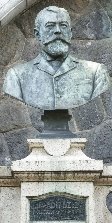
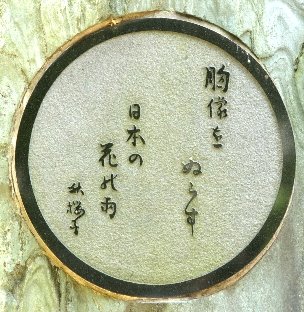
胸像をぬらす日本の花の雨
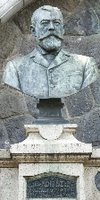


Japanese rain
on the cherry blossoms
moistens his statue
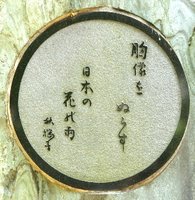


二人ともに日本人と結婚したが,ベルツの妻の名は「花」という.

The name of the wife of Bälz was also HANA.

http://www.jsp51.umin.jp/annai4.htm

*****************************


The statue is of Erwin Bälz, Erwin von Bälz, the German doctor who introduced modern Medicine to Japan.

Quote from the Wikipedia
Son of a contractor, Bälz was born in 1849 in Bietigheim-Bissingen. He attended grammar school in Stuttgart and studied medicine at Eberhard Karls University of Tübingen. He graduated at the age of 23. Contacts through a Japanese patient led to his appointment at Tokyo Medical College in 1876, at first with a two-year contract.

In the summer of 1899, he visited the Korean Capital Seoul and Busan and undertook ethnological investigations. From April 22 to July 3, 1903, he was again in Korea and, together with Richard Wunsch, undertook an expedition into the interior of the country.

He stayed on in Japan as a university teacher for more than 30 years and taught more than 800 students in Western medicine. On Bälz' initiative, the vulcanic springs of Kusatsu (200 km away from Tokyo) were transformed into the most successful hot spring resort of Japan. He married a Japanese woman and had two children. In 1905, he returned to Germany. In Stuttgart late in the summer of 1913, Bälz succumbed to heart disease.

Bälz was also an ardent art collector, the majority of the Japanese works collected by him are nowadays on exhibiton in the Linden Museum in Stuttgart. A stone sculpture at Tübingen University reminds of his merits for the Japanese medical science. In 1961, a sister city relationship between Kusatsu and Bietigheim-Bissingen was established.

© Wikipedia


xxxxxxxxxxxxxxxxxxxxxxxxxxxxx


Mizuhara wrote some haiku about Bälz. There is even a memorial stone in the city of Tübingen. Thus Mizuhara and Bälz even helped promote the knowledge of haiku at their time.

Ein Haikustein in Tübingen
Volker Friebel

Mitten im Gewirr des Neuen Klinikums Tübingen, hoch über der Stadt, liegt ein Haikustein für Erwin Bälz. Geboren 1849 in Bietigheim, studierte dieser in Tübingen Medizin. 1876 wurde er als Internist an die medizinische Hochschule in Tokio berufen. Er blieb bis 1905 in Japan und unterrichtete westliche Medizin. Sein Einfluss an der Universität und als Hofarzt der kaiserlichen Familie war groß, er gilt als Begründer der modernen Medizin in Japan. .....
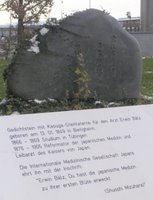


Mit dem Haiku hat Bälz anscheinend nichts zu tun. Aber der Haikudichter Shuoshi Mizuhara (1892-1981) studierte bei Schülern von Bälz Medizin. Mehrere Haiku auf japanischen Gedenksteinen für Erwin Bälz stammen von ihm. Und so hat der „Medizinmann“, wenn auch zunächst ganz unverstanden und lang nach seinem Tode, sogar noch etwas zum Bekanntwerden japanischer Kultur in seinem Heimatland bewirkt.

Die Inschrift des Haikusteins in Tübingen lautet:

Kimi ni yorite / Nihon-Igaku no / Hana hiraku

Wörtliche Übersetzung von Mieko Schroeder:

Durch dich / japanische Medizin / erblüht

source : www.haiku-heute.de, 2005 . Volker Friebel


Another version

Erwin Bälz, Du hast die japanische Medizin zu ihrer ersten Blüte erweckt.
www.zajfert.de/co_buch.pdf


Japanese Medicine
started to flower because
of you
(Tr. Dr. med. Gabi Greve)

*****************************


花の雨竹にけぶれば真青なり
hana no ame take ni kebureba masao nari

rain on the cherry blossoms
with bamboo in the mist -
so pale and green


Tr. Gabi Greve, 2006

::::::::::::::::::::::::::::::::::::::::::


The above haiku is rather difficult to translate.

Here are some thoughts of Robin D. Gill:

According to the Nihon Kokugo Daijiten hana-no-ame is

1) rain that falls during the time the cherries are in bloom,
2) rain that falls on cherry blossoms
3) metaphor (mitate) for a heavy fall of blossoms/petals.

There is no way to know for sure without asking the poet, but if he does not mention seeing blossoms, the most common definition = the first = should probably be chosen.

Because of the way the bamboo lets rays of sun into the grove (they are spacy in Japan because people eat the shoots and most landowners clean out the dead ones) one sees mist very well. I favor smokey blue for the cherry rain would come before the new bamboo climbed up and shedding its wrappers revealed its bright new green --- but smoky green or blue, the color of the mist would mentally be a fine match for the pink-white cherry petals even if they were only in the mind’s eye (or there could be some on the floor of the woods for the petals blow through the grove in cherry time).

... ... ... ... ...

Here are some thoughts of Lewis Cook:

I'd say that the verb "keburu" is not to be taken nearly literally. This verb can mean "smoke rises (etc.)", literally, but in poetic usage more often means, metaphorically, "to appear as though seen through mist," or (the most likely sense here) "to appear faintly (vaguely) and [thus] beautifully" (the last is a translation of the entry from a reliable Japanese dictionary of classical Jpn which reads "honori to ustukushiku mieru").

With this in mind, the poem would mean that the rain falling on (or perhaps through, or just as well at the time of the blooming of) the cherry blossoms (hana no ame) seen through a stand of bamboo, is tinted by the color of the bamboo. Bamboo is green of course but diffused by the white of the cherry blossoms the rain may well appear pale blue. "Masao" usually means pale tending towards blue.

Not to complexify matters, but what I think makes this poem effective, now that you confront me with it, is that it defies easy translation (explication). Much of how it does this is by playing on the ambiguity of "keburu" and of "masao". Take two such words and play them off against each other in one verse and there is no end to the repercussions.

Thanks to both for their thoughts. Gabi Greve

*****************************

Another word for GREEN is gunjo 群青 ぐんじょ


taki ochite gunjo-sekai todoro keri

The water plunges -
a sea-green world
thundering

Mizuhara Shuoshi
http://www.ecf.or.jp/shiki/2000/workshop-sum-e.html


:::::::::::::::::::::::::::::::::::::::::::::::::::::::::::::::::::::::::::::::::::::::::::::::::::::


水原秋桜子
みずはら しゅうおうし
1892年10月9日(明治25年) - 1981年7月17日(昭和56年)
医学博士
本名は水原豊(みずはら ゆたか)Mizuhara Yutaka

Japanese LINK with more of his memorial stones
http://www.01.246.ne.jp/~yo-fuse/bungaku/shuuousi/shuuousi.html


His Grave at Somei Cemetery
染井霊園
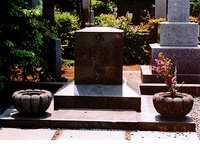

Read more of his haiku in Japanese
http://www.asahi-net.or.jp/~PB5H-OOTK/pages/M/mizuharasyuosi.html

:::::::::::::::::::::::::::::::::::::::::::::::::::::::::::::::::::::::::::::::::::::::::::::::::::::


Quote
© Susumu Takiguchi, The Daily Yomiuri

Today, we shall look at a giant in the history of Japanese haiku, who initially followed the Hototogisu School as a prominent student of Kyoshi Takahama but later initiated a spectacular rebellion against him.

Shuoshi Mizuhara (1892-1981)

naku hibari/matsukaze tachite/ochi ni kemu

singing skylark...
against the wind blowing through pines,
has descended

Every bit of this haiku reflects neoclassicism. It also reflects the old poetic tradition of Japan. From the time he was a middle school student, Shuoshi had a passion for tanka verse. His introduction to haiku came relatively late at the age of 27. However, once he started, his progress was remarkable. Soon he approached the Hototogisu School, and his success was such that he was accepted as a disciple of Kyoshi within a few years. He also revived the Todai Haiku-kai (Haiku Society of Tokyo University) with Fusei Tomiyasu, Mizuho Nakata and Seison Yamaguchi. His prospect as a haijin, it seemed, was bright.

moya no naka/asa-mo karu fune/mie-some nu

from the mist
a boat for cutting reeds in the morning
has begun to emerge

The subject, terminology and sentiment displayed here are those of waka verse. So much so that I am tempted to suspect if Shuoshi really knew the difference between haiku and tanka. If someone says that this haiku is like a truncated tanka, I would not strongly disagree. If we add something like "My sleeve gets wet with my tears as I think of my lost love," it would become a perfect waka. His deep knowledge of classic Japanese literature and his study of tanka under the famous tanka poet Utsubo Kubota had too strong an influence on his haiku-writing. This was to compel him to walk a different path from that of Kyoshi, but it also gave his haiku depth and richness.

yoi-yami ya/kayoi nare-taru/imo-batake

twilight...
the sweet potato field that is
my shortcut

This is to me one of his most haikulike pieces. First and foremost, the language is that of haiku. The subject, the sweet potato field, is a haikulike thing, ordinary, unpretentious and humorous. Using it as a shortcut all the time and therefore being able to walk home at dusk without going astray or tripping over or falling is a haikulike topic and displays a good sense of humor. Haiku is not a shortened tanka any more than tanka is not a prolonged haiku.

Let us see if we can find some more of these.

shishimai wa/iri-hi no fuji ni/te o kazasu

lion-dance dancer
shading his eyes with his hand to look
at Mt. Fuji in the sunset

Shishimai is a New Year's custom. A dancer puts on a huge lion's mask and a robe that looks like a lion's body. Everything looks fearsome. The performer dances to hayashi music played by flutes, drums and bells. The idea is that this dancing will frighten evil away and help secure peace at home. Some children start crying when they see the costumed dancer, believing him to be a real fearsome creature.

In this case, the human wearing the costume wishes to view the sacred Mt. Fuji on New Year's Day. Something comic and human is at the center of this haiku as well as the general atmosphere of celebration and freshness of this special day.

uragare ya/take-zao aoki/hane-tsurube

withered scene...
the bamboo pole is green;
a well bucket

The trees, bushes and grass are all withered because it is winter. Among these dull colors, only the bamboo pole used for supporting the well bucket has a vivid green color. Such a contrast is a technique of haiku and here it is superbly executed. There is no sentimentality brought in here. That would be tanka. Haiku is drier and more detached.

chugen no/itsumo no e naru/uchiwa kana

summer seasonal gift...
once again the same fan with
the same motif

Japan is a paradise of present giving. It seems the Japanese are giving presents almost constantly. However, there is also some specific seasonal present giving, and chugen is the name for the presents given in summer. The author receives a present, but it is not only the same gift as last summer, but also the same design into the bargain.

nemutasa no/unaji otonashi/tenkafun

sleepy...
the neck of the child not moving,
talcum powder

Such is the heat of the Japanese summer that children often suffer from heat rashes. Adults do too. To see white talcum powder on the skin of babies and children is therefore very seasonal.

natsuboo no/hi o terikaesu/nagisa kana

summer hats...
reflecting the sun,
seashore

Summer hats are normally white in color, at least pale colors, in order to reflect the sun. They look as if they are shining and broadcasting bright light. This is a brilliant depiction of the hot summer.

saku yorimo/otsuru tsubaki to/nari-ni keri

camellia flowers...
now, more of them are falling
than blossoming

When camellias start blossoming all the flowers are in the tree. However, very soon we are surprised by the enormous amount of fallen camellia flowers on the ground. This causes in our heart some kind of a feeling--melancholy, sadness or resignation.


* * *

Kyoshi emphasized the importance of objective sketches from life.
Shuoshi, on the other hand, insisted on the importance of subjective thoughts. This is the greatest point of departure between these two talented poets. Soon, Kyoshi showed his displeasure by publicly rebuking Shuoshi or praising other disciples who pursued Kyoshi's way, especially Sojo Hino, or both.

It is, however, strange for me to look at the haiku by Shuoshi and find most of them not subjective but objective. Maybe this subjective/objective controversy is a relative one, and in the days of Kyoshi and Shuoshi the differences may perhaps have been subtle. Today, we see haiku with blatant and obscene subjectivity. Compared with them, Shuoshi's haiku poems look elegant and objective.

A good example is this haiku that we first looked at last September:

fuyu giku no/matou wa onoga/hikari nomi

winter chrysanthemums...
all they are wearing is
the light of themselves


In Western haiku, this work would most definitely be criticized because it uses what is called anthropomorphosis, or personification. They would say, "Chrysanthemums don't WEAR, only humans do." The Japanese word "matou" is even heavier and used for such things as one's best dress, or an overcoat. So, it might have sounded to Kyoshi that the chrysanthemums are "showing off" and that it is Shuoshi who imposes his will on them, which has nothing to do with them.

Talking about one's own light also sounds like boasting and celebrating one's own ego, similar to liking one's own voice or laughing at one's own joke. However, to me the haiku is pure adoration of these wonderful flowers in an original and beautiful way and, most importantly, in a way that emphasizes how human interference, let alone some busybody's irksome subjectivity, is totally absent.

anegawa to/kiku ni/mushi no ne/tada narazu

River Anegawa...
just hearing this name would make
the crickets call out in alarm


This haiku is slightly pedantic and also subjective. Like Hastings or Gettysburg, Anegawa is an old battlefield where Oda Nobunaga beat the coalition of Asai Nagamasa and Asakura Yoshikage in 1570. Most Japanese know it, but to allude to it in a haiku in such a blatant way as this could be offensive, or at least irritating, to some antielitist and anti-intellectual poets.

(Jul. 27, 2006)


:::::::::::::::::::::::::::::::::::::::::::::::::::::::::::::::::::::::::::::::::::::::::::::::::::::


天騒ぎ摩利支天岳に雷おこる
ten sawagi Marishiten-gake ni rai okoru

heaven is in uproar -
at Mount Marishiten
there is thunder


. Marishitengake, a mountain in Kiso
and Marishiten, God of the Warriors


.................................................................................


waka-kaede kage sasu suzuri araikeri

. Inkstone (suzuri 硯) .


:::::::::::::::::::::::::::::::::::::::::::::::::::::::::::::::::::::::::::::::::::::::::::::::::::::
:::::::::::::::::::::::::::::::::::::::::::::::::::::::::::::::::::::::::::::::::::::::::::::::::::::


Mizuhara Haruo (Shunroo) 水原春郎
(みずはらはるお)
born 1922, son of Mizuhara Shuoshi 水原秋桜子


. night in early summer -
Chekhov is also
a doctor


.......................................................................

刺青の牡丹のさわぐ夏祭
irezumi no botan no sawagu natsu matsuri

at the summer festival
the peony tatoo
is so excited


source : www.dclog.jp/en

. irezumi 刺青 tatoo .


*****************************
Related words

***** World Kigo Database : GREEN in Haiku

***** WKD : Cold rain on the Cherry Blossoms (hana no ame)

:::::::::::::::::::::::::::::::::::::::::::::::::::::::::::::::::::::::::::::::::::::::::::::::::::::

Introducing Japanese Haiku Poets 

::::::::::::::::::::::::::::::::::::::::::::::::::::::::::::::::::::::::::::::::::::::::::::::::::::: 

[ . BACK to DARUMA MUSEUM TOP . ]
[ . BACK to WORLDKIGO . TOP . ]

:::::::::::::::::::::::::::::::::::::::::::::::::::::::::::::::::::::::::::::::::::::::::::::::::::::

4/20/2011

Uchida Hyakken

[ . BACK to TOP . ]

:::::::::::::::::::::::::::::::::::::::::::::::::::::::::::::::::::::::::::::::::::::::::::::::::::::

Uchida Hyakken Memorial Day

***** Location: Japan
***** Season: Late Spring
***** Category: Observance


*****************************
Explanation


Uchida Hyakken 内田 百間
May 29, 1889 — April 20, 1971

CLICK for more photos

Uchida Hyakken Memorial Day
Hyakken Ki 百閒忌 (ひゃっけんき)
Hyakki-En Ki 百鬼園忌(ひゃっきえんき)
(the title of one of his works and his poet name)
Mokuren Ki 木蓮忌(もくれんき)

The name HYAKKEN (in Chinese characters written with the MOON, not the Sun in the KEN 間) derives from the river Hyakken 百間川 in Okayama.
. . . CLICK here for Photos of river Hyakkengawa!


quote
He was a Japanese author and academic. He was born in Okayama, to a family of sake brewers whose business later went bankrupt. His real name is Eizo Uchida (内田栄造 Uchida Eizo).
He became a pupil of Natsume Sōseki in 1911. He graduated from Tokyo University (Tokyo Imperial University) in 1914. He became professor of German at Imperial Japanese Army Academy in 1916. He later taught at Hosei University (Tokyo). He is the main subject of Akira Kurosawa's last film, Madadayo.
His novel, Disk of Sarasate (サラサーテの盤 Sarasāte no ban) is the inspiration for the film, Zigeunerweisen.
He is the author of more than fifteen volumes of writings including I am a Cat: The Fake Version, and Gates Close at Dusk.
In Japan he is well known as a passionate railfan and he made some works on railway travel. A great literary figure in Japan, he has but one book translated into English: Realm of the Dead, a collection of short stories whose title work is perhaps his most well known.
A translated excerpt from another collection, Hyakkien Zuihitsu [Jottings from the Goblins' Garden], appeared in the JAL inflight magazine Skyward, January, 2006: "Small Round Things."
© More in the WIKIPEDIA !


阿房列車 Ahoo Ressha Train


Reference


Some of his work and about him
「全輯百間随筆」全6巻(版畫荘、昭11)
「内田百間全集」全10巻(講談社、昭46~48)
「私の「漱石」と「龍之介」」(筑摩書房、昭40)
「百鬼園戦後日記」上下<昭20~24>(小沢書店、昭57)
「百鬼園日記帳」(論創社、昭56)<昭10~11発行の正続合わせての復刻>
「百鬼園先生雑記帳」(三笠書房、昭44)
「回想内田百間」(津軽書房、昭50)
「詩琴酒の人」(小沢書店、昭59)
「實歴阿房列車先生」(朝日新聞社、昭40)
「阿房列車物語」(論創社、昭56)
「内田百間論」(川村二郎著、福武書店、昭58)
「百鬼園寫眞帖」(旺文社編・刊、昭59)
「内田百間」日本文学研究資料新集22(酒井英行編、有精堂、昭61)
「百鬼園残夢」(伊藤隆史・坂本弘子共著、朝日新聞社、昭60)
source : xwww.libnet.pref.okayama.jp

*****************************
Worldwide use


*****************************
Things found on the way


*****************************
HAIKU


鯛網や浜街道は山に入り  
tai-ami ya hama-kaidoo wa yama ni iri

net for sea breams -
the old beach road leads
into the mountains
         
Uchida Hyakken
Tr. Gabi Greve

Hamakaido is one of the old trading roads from Edo via Mito toward Iwanuma in Northern Japan, along the Sanriku Beach 三陸浜街道.

Haiku with SEA BREAM


*****************************
Related words

***** ***** Introducing Japanese Haiku Poets

:::::::::::::::::::::::::::::::::::::::::::::::::::::::::::::::::::::::::::::::::::::::::::::::::::::

Back to the Worldkigo Index
http://worldkigodatabase.blogspot.com/

:::::::::::::::::::::::::::::::::::::::::::::::::::::::::::::::::::::::::::::::::::::::::::::::::::::

4/02/2011

Enomoto Kikaku

[ . BACK to WORLDKIGO . TOP . ]
::::::::::::::::::::::::::::::::::::::::::::::::::::::::::::::::::::::::::::::::::::::::::::::::::::: 

Kikaku Takarai Kikaku 宝井其角
Enomoto Kikaku (1661-1707)
寛文元年7月17日(1661年8月11日) -
宝永4年2月30日( 一説には2月29日)(1707年4月2日))

a Japanese haikai poet and among the most accomplished disciples of Matsuo Bashō. His father was an Edo doctor, but Kikaku chose to become a professional haikai poet rather than follow in his footsteps.

One day, Kikaku composed a haiku,

Red dragonfly / break off it wings / Sour cherry

which Bashō changed to,

Sour cherry / add wings to it / Red dragonfly


鐘ひとつ賣れぬ日はなし江戸の春
kane hitotsu urenu hi wa nashi Edo no haru

Springtime in Edo,
Not a day passes without
A temple bell sold.


© More in the WIKIPEDIA !


. Enomoto Kikaku Takarai ... MAIN ENTRY


for 是橘 Zekitsu, see below.
::::::::::::::::::::::::::::::::::::::::::::::::::::::::::::::::::::::::::::::::::::::::::::::::::::: 


.................. Original Japanese


「我が雪と思えば軽し笠の上」 
waga yuki to omoeba karushi kasa no ue

其角は
「我がものと思えば軽し傘の雪」
waga mono to omoeba karushi kasa no yuki

と2つ詠んだそうです。

Kikaku wrote these two versions.
http://araraoasys.web.infoseek.co.jp/oashp/youtisyodoukan.htm

ooo ooo ooo ooo ooo ooo ooo ooo ooo

わが雪と思えばよろし傘の上
waga yuki to omoeba yoroshi kasa no ue

其角 Kikaku

http://naojiro.at.webry.info/200512/article_1.html
http://www.tsukiji.or.jp/nikki/9907/9907.html


我が雪と思えば軽し笠のうへ

宝井其角 Takarai Kikaku
blog.livedoor.jp/kokorozawazawa/


waga yuki to omoeba karushi kasa no ue

Kikaku Takarai (1661-1705)
www.mcedit.com/archive/Wingspan/2004/December/CSP.html

:::::::::::::::::::::::::::::::::::::::::::::::::::::::::::::::::::::::::::::::::::::::::::::::::::::

"It's mine," I think . . .
and the snow seems lighter
on my straw hat.


waga yuki to / omoeba karoshi / kasa no ue

by Mukai Kyorai
Translated by Steven D. Carter

ooo ooo ooo

This snow is mine
thinking that way it seems lighter
on your sedge hat


Kikaku (1661-1707)

Translated by Michael K. Bourdaghs

http://groups.yahoo.com/group/simply_haiku/message/14454

ooo ooo ooo ooo ooo ooo ooo ooo ooo

In Russian

Это мой собственный снег!
Каким он кажется легким
На плетеной шляпе моей!

This translation of Kikaku is published in
Matsuo Basho : The great in the small,
St. Petersburg "Tertsiia" 1999.

............... and this version

from: One Hundred Famous HAIKU

Selected and translated into English by Daniel C. Buchanan
Japan Publications, INC
Tokyo and San Francisco 1973
ISBN 0-87040-222-6

page 115

Waga yuki to
Omoeba, karoshi
Kasa no ue.

--Kikaku

When I think of it
As my snow, how light it is
On my bamboo hat.


Composed by the poet on seeing a picture of Su Tong P'o, a famous Chinese literary figure, wearing a large hat covered with snow.
The general meaning -- what is our own never seems burdensome.


In the above text, the kanji for 軽し is read KAROSHI .

(Contributed by Natalia Rudychev)

ooo ooo ooo ooo ooo ooo ooo ooo ooo

if I think the snow mine
my hat
becomes light


Enomoto Kikaku (1661-1707)

Tr. by DR. MICHAEL HALDANE
http://www.michaelhaldane.com/HaikuNonJapanese.htm

:::::::::::::::::::::::::::::::::::::::::::::::::::::::::::::::::::::::::::::::::::::::::::::::::::::

More English versions, collected by Larry


When I think it is my snow
On my hat,
It seems light.

--Blyth, (Haiku, Vol. 4, pp. 250-51)

Blyth then makes a tedious comparison to a Chekov story about a stray dog. He sums up his comments with an unattributed quote from Milton:

The mind is its own place, and in itself
Can make a heavan of hell, a hell of heaven.

Blyth then says:

"Shiki rightly says that it must be [written Japanese] 'When I think it is my snow.'

"As a haiku, the poetry lies in the intimate feeling of ownership by the poet of the snow which is on his own umbrella, but the verse lends itself to generalization so easily that it cannot be called a good one."

..... ..... .....


This snow is mine
thinking that way it seems lighter
on your sedge hat

Tr. Bourdaghs


"It's mine," I think . . .
and the snow seems lighter
on my straw hat.

Tr. Carter


if I think the snow mine
my hat
becomes light

Tr. Haldane


Waga yuki to omoeba karushi kasa-no ue
My snow thus when-think is-light straw-hat's top

"My snow!"--when I think that,
it weighs almost nothing
on my umbrella-hat!

Tr. Henderson "An Introduction to Haiku."


"It's my snow"
I think
And the weight on my hat lightens

Tr. Kerr, "Lost Japan."


Think it's your snow, and it's light on your hat
Tr. Sato, "From the Country of Eight Islands."


Collected by Larry

And more is here
With Annotations, collected by Larry


:::::::::::::::::::::::::::::::::::::::::::::::::::::::::::::::::::::::::::::::::::::::::::::::::::::

Here are my attempts to express the haiku's idea.

Think of the snow on your hat
as a belonging,
and it'll feel weightless.

When I think the snow
on my hat is my belonging,
it seems weightless.

Zhanna P. Rader
translatinghaiku/message/135

xxxxxxxxxxxxxxxxxxxxxxxxxxxxx

it's quite light
when I think it's mine --
snow on my hat


Grzegorz Sionkowski"
translatinghaiku/message/198

xxxxxxxxxxxxxxxxxxxxxxxxxxxxx

The conical shape of the Japanese straw hat calls to mind a mountain, thus the hat covered with snow looks like a mountain covered with snow, which enhances the feeling of burden to the person wearing it.
So when they think of it as their own hat, that helps to lighten their burden, but if they think of the 'mountain' of the imagery as belonging to them, then they must feel like a lord!

The verse below is not really a translation, but a verse that expresses the feeling I get from this poem.

my own mountain!
this snow-covered hat


~ translatinghaiku/Kei~

:::::::::::::::::::::::::::::::::::::::::::::::::::::::::::::::::::::::::::::::::::::::::::::::::::::

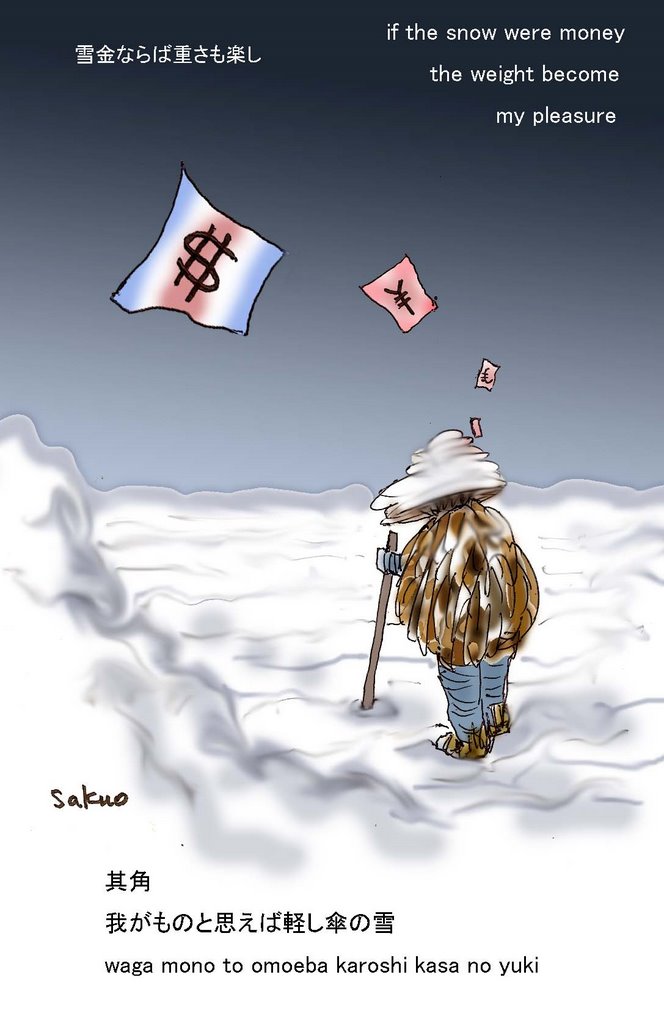
Renku from Sakuo Nakamura

雪が金なら 重さも楽し
yuki ga kane nara omosa mo tanoshi

if the snow were money
the weight becomes my pleasure


ISSA Haiga by Nakamura Sakuo

:::::::::::::::::::::::::::::::::::::::::::::::::::::::::::::::::::::::::::::::::::::::::::::::::::::

傘の雪 Kasa no Yuki, snow on the Umbrella, in Old Edo

江戸言葉で自分の物にしたいことを”傘の雪”と言う.

In the language of Old Edo, the expression "kasa no yuki" "snow on my umbrella" was used to indicate something that you would like to have, to posess.

http://www15.tok2.com/home/waon/hauta/hauta22.htm


我がものと思えば軽し 笠の雪
これは宝井其角という俳人の句だが、彼の詠むとおり、俳諧というのも笠の上の雪に同じ。
http://www003.upp.so-net.ne.jp/p-para/gehou/gehou10_11.htm


蓑は、まだ着てみたためしはありませんが、 は、着けて歩いたためしはあります。
思っているより笠の直径って大きく出来ていて、肩のあたりまで屋根をつくってくれるので、雨とかは結構だいじょぶでした。

ただ、雪の場合、笠の上に雪がつもってくると、歌沢ぶしの「わがものと思えば軽き傘の雪」とは違って 直接頭に重みかかってくるだけに、重たいですけどね…。
A straw hat was rather large and covered also the shoulders, so if snow piled up on it, it must have been quite heavy、since it was right on your head. On an umbrella, it might feel different.
http://www.kwai.org/modules/weblog/details.php?blog_id=90

.. .. ..

市人よこの笠売らう雪の傘
ichibito yo kono kasa uroo yuki no kasa

market-shoppers!
let me sell you this hat
full of snow

Tr. Shirane


Read more on our discussion about the snow on my hat !


MORE Hokku about his hat :
. Matsuo Basho 松尾芭蕉 - Archives of the WKD .


:::::::::::::::::::::::::::::::::::::::::::::::::::::::::::::::::::::::::::::::::::::::::::::::::::::

Various Questions arise from the above:

Who wrote this haiku ?

Writing in Romaji:
Is the original KAROSHI or KARUSHI or YOROSHI ?

If the original is YOROSHI, why translate it as LIGHT ?


KASA : 
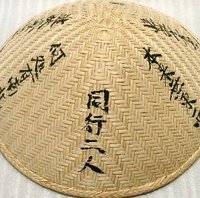
1  straw hat, sedge hat, bamboo hat
2 ..: umbrella (made from oiled paper in the Edo Period)


Umbrella, a kigo


KASA the straw hat of this discussion,
with illustrations in detail


Read more about this problem here:
Translating Haiku # 122


:::::::::::::::::::::::::::::::::::::::::::::::::::::::::::::::::::::::::::::::::::::::::::::::::::::

Su Tung Po (Su Dong Po, Su Tong Po) 蘇東坡
1037 - 1101 (1036-1100) , China
He he wrote very simple poems based on Buddhist Philosophy.


Painting by Chi Un-Yeong (1853-1936) of the famous 11th-century
Chinese scholar-poet Su Dong-Po, in straw hat and wooden shoes.
http://www.columbia.edu/cu/record/archives/vol21/vol21_iss29/record2129.23.html


......................................... Remembrance

To what can our life on earth be likened?
To a flock of geese,
alighting on the snow.
Sometimes leaving a trace of their passage.

www.poemhunter.com/su-tung-po/poet-38991/

His famous poem, Battle of Red Cliff
www.poemhunter.com/su-tung-po/poet-38991/

Read an amusing koan about BUDDHA AND COW DUNG
http://www.purifymind.com/CowDung.htm

:::::::::::::::::::::::::::::::::::::::::::::::::::::::::::::::::::::::::::::::::::::::::::::::::::::::


Matsuo Basho at the New Year haikai meeting with Kikaku
in 1686 貞亨3年

月雪とのさばりけらし年の暮
tsuki yuki to nosabari kerashi toshi no kure

“moon and snow”:
so I’ve indulged myself
to the end of the year


nosabaru implies an arrogant indifference to others, making this one of Basho's periodic self-depracations.
Tr. and comment Barnhill


Kikaku had written this hokku

気晴ては虹立空かよもの春


:::::::::::::::::::::::::::::::::::::::::::::::::::::::::::::::::::::::::::::::::::::::::::::::::::::
::::::::::::::::::::::::::::::::::::::::::::::::::::::::::::::::::::::::::::::::::::::::::::::::::::: 


Kobayashi Issa 小林一茶

29th day - rain
requiem for Kikaku on the hundredth anniversary of his death

春の風草にも酒を呑すべし
haru no kaze kusa ni mo sake o nomasubeshi

spring wind --
let us share our sake
with the grass


This hokku was written in Edo on 2/29 (early April) in 1806 and is immediately preceded in Issa's diary by the diary note translated above the hokku. Takarai Kikaku was one of the leading hokku and renku poets of the 17th century. He was the most talented of Basho's followers -- so talented that he struck out on his own path after a few years. He was born in Edo, had an urban sensibility, and wrote very worldly and often warmly humorous hokku that are still widely read today. He was very popular in Edo because of his love for the common things of the floating world, and during his life he was probably more popular there than Basho, who spent a lot of his time away from Edo. Kikaku was also famous as a heavy drinker, and he eventually killed himself with his drinking, dying at age 47 in 1707.
He died on 2/29 (some say 2/30), and his last hokku, which began a renku sequence, was written on 2/23:

uguisu no akatsuki samushi kirigirisu

bush warbler
cold at dawn --
a cricket


Although it is spring in the hokku, some of the dawns, such as this one, are still cold. The bush warbler's songs also seem cold, a coldness accentuated by the weak cry of an autumn cricket which has managed to survive the winter but which now sounds very feeble. This hokku is often said to express Kikaku's feeling that he was about to die, as if he were here comparing himself to the weak cricket. Certainly he is sympathizing with the cricket.

Issa, who learned haikai in Edo, deeply respected Kikaku, wrote about him, and regarded him as a poet next only to Basho in ability, and he must have taken the hundredth anniversary of Kikaku's death very seriously. It is also an important anniversary in Buddhism, so Issa must have made a prayer for Kikaku's soul on 2/29. In fact, the diary entry at the head of the hokku may mean that Issa visited Shououin Temple in Asakusa, a Pure Land temple within which Kikaku's grave was located, in order to attend the hundredth-year requiem there. Issa often visited Asakusa, and, given his respect for Kikaku, he is likely to have attended the requiem service.

Asakusa has many places to eat and drink, and perhaps Issa later joined a post-requiem drinking get-together/memorial wake. Since it rained on this day, the grass was probably wet, so the drinking was likely inside. Perhaps Issa's hokku was a suggestion to those thinking of Kikaku at that time that they share their sake with the grass and symbolically with sake-loving Kikaku's soul. A warm spring wind was blowing, probably making some long grass nearby bend and sway, so perhaps Issa felt as if Kikaku's spirit might almost be about to appear. Or at least that might have been his wish.

The requiem is only 99 years after Kikaku's death by western counting, but in Japanese Buddhism the year of death was and still is counted as one year, so 1806 was the hundredth anniversary year for someone who had died in 1707.

Chris Drake


*****************************
Related words

***** Hat (kasa) 笠いろいろ 

***** . Enomoto Shidoo 槐本之道 Shido .
Tookoo - 東湖 - Toko "East Lake"
(1659?−1708)

:::::::::::::::::::::::::::::::::::::::::::::::::::::::::::::::::::::::::::::::::::::::::::::::::::::


Zekitsu 是橘
He was a hokku disciple of Kikaku since about 1689, and then choose to become a doctor and study with the father of Kikaku. On that day he had his hair cut.
His name was Choosuke 長助 Chosuke, but many called him Korekichi 是吉.
He later became a surgeon and called himself Uzawa Chooan 鵜沢長庵 Uzawa Choan.
Uzawa Zekitsu 鵜沢是橘 (うざわ ぜきつ)


Basho wrote this auspicious hokku for him.

初午に狐の剃りし頭哉
はつむまに 狐のそりし 頭哉
hatsu-uma ni kitsune no sorishi atama kana
hatsumuma ni

on the first day of the horse
a fox has shaved
your head, it seems  . . .


Written in 元禄6年, Basho age 50.
This hokku is full of gentle humour and also auspicious for the occasion.
The cut marker KANA is at the end of line 3.


. WKD : first day of the horse, hatsu uma 初午 .
a festive day at the Inari Fox Shrines of Edo. Farmers prayed for a good harvest on this festival, later the merchants prayed for good business.
The first day of the horse in the second lunar month.


source : turbobf1516


::::::::::::::::::::::::::::::::::::::::::::::::::::::::::::::::::::::::::::::::::::::::::::::::::::: 

[ . BACK to WORLDKIGO . TOP . ]
[ . BACK to DARUMA MUSEUM TOP . ]

:::::::::::::::::::::::::::::::::::::::::::::::::::::::::::::::::::::::::::::::::::::::::::::::::::::