[ . BACK to TOP . ]
:::::::::::::::::::::::::::::::::::::::::::::::::::::::::::::::::::::::::::::::::::::::::::::::::::::
Waitinglist
dugong (Dugong dugon)
looking for a haiku to go !
:::::::::::::::::::::::::::::::::::::::::::::::::::::::::::::::::::::::::::::::::::::::::::::::::::::
1/30/2007

1/27/2007
Flower-Heart (hana gokoro)
[ . BACK to TOP . ]
:::::::::::::::::::::::::::::::::::::::::::::::::::::::::::::::::::::::::::::::::::::::::::::::::::::
Flower-Heart (hana gokoro)
***** Location: Japan
***** Season: Non-seasonal Topic
***** Category: Humanity
*****************************
Explanation
hatsu yume ya
samete mo hana wa
hana-gokoro
first dream--
even after awakening
the flower's heart the same
Chiyo-Ni 加賀千代(尼)(かが の ちよ(に))
(Tr. Donegan)
::::::::::::::::::::::::::::::::::::::::::::::::::::::::::::::::::::::::::::::::::::::::::::::::::::
hana-gokoro, hanakokoro 花心、はがごころ、花こころ, that expression seems already been used in Heian poetry ... the heart of a lady in love, but also the heart changing as fast as cherry blossoms fall ...
in Chapter 49 of The Tale of Genji
Other interpretations are possible.
onna-gokoro 女心 is another version.
::::::::::::::::::::::::::::::::::::::::::::::::::::::::::::::::::::::::::::::::::::::::::::::::::::
An old song comes to mind
when I woke up this morning
you were on my mind
yuuuuu were on my mind
Gabi
...........................................
Quoting Larry Bole
The thought of Chiyo referring to herself as a flower had occurred to me, but it seemed unnecessarily metaphoric. Of course, under the old calendar, the New Year would have come near the beginning of spring. Maybe some early cherry blossoms were aleady out.
Here is a haiku of Chiyo-ni's which is less metaphoric:
kaketaranu onna-gokoro ya doyooboshi
never enough
a woman's heart,
summer airing
Tr. Michael Haldane
airing out kimonos
as well as her heart
is never enough
Tr. Donegan and Ishibashi
from the 'note' in the Donegan & Ishibashi book:
"Here, there is also a subtext of frustration, probably stemming from the suppression of women in Edo society."
Larry Bole
::::::::::::::::::::::::::::::::::::::::::::::::::::::::::::::::::::::::::::::::::::::::::::::::::::
QUOTE:
「花心」を国語辞書『大辞林』で見るに、
(1)花の持つ心。花を咲かせようとする心。
「三千年(ミチトセ)に咲く―の,折り知る春のかざしとかや/謡曲・西王母」
(2)はなやかな心。浮き浮きした心。
「ひらく連中(イチザ)の―,若やぐ春の一趣向/人情本・恵の花」
(3)風流心。
「庭風俗に知れる亭主の―/青簾」
(4)〔花の散りやすいところから〕移りやすい心。
「―におはする宮なれば/源氏(宿木)
と、「はなごころ」という同一語のなかで意味が「褒語」と「貶語」と大いに異なることが知れよう。
『大辞林』は、現代語意味感覚を先出し、古語意味感覚を後出する。現代人の「はなごころ」は、(1)の用例「謡曲」、(2)の用例「人情本」、(3)の用例「俳諧」までか、(4)の移り気な心・浮気心の意味と解釈するのは、平安王朝時代から いつごろまで続くのかここからはまったく見えてこない。
現代人の意識感覚でこの(4)の用例『源氏物語』<宿木の巻き>のこの語を解釈したら、「風流(心)にいらっしゃる宮なので」などと誤やまった解釈してしまうこともなきにしもあらずであろう。「浮気な心」という逆もあろうか。古語の意味学習にあって、この「花心」は、もっとも注意すべき語でもある。
さて、ではいつ頃までこの「移り気な心・あだ心」の意味を持って、解釈されていたのかという点と「風流心」をいつ頃持ちはじめるのかを明らかにせねばなるまい。これを示唆する資料として、室町時代の『日葡辞書』に、
「Fanagocoro.(はなごころ,花心)花のような心.すなわち,温和で愛想がよく,しかも性のよい心.詩歌語.」<邦訳202l>
と、ここでは「褒語<詩歌語>」となっている。続いて江戸元禄時代の辞書においては、青木鷺水編『世俗字盡』全一冊に、「花心(ハナコヽロ)」<4ウ④>と収載され、その頭注に「花心有∨始无終云∨――。源氏寄木ニ花心ニオハスル君ノー。俗ビトハナ心ト云フ」とある。『書字考節用集』にも、「花心(ハナゴヽロ)[源氏]」<九23⑤,言辞>といずれも『源氏物語』の、
花心におはする宮なれば、あはれとは思すとも、今めかしき方にかならず御心移ろひなむかし。
といった「貶語(浮気心・あだ心)」の意味を、典拠として引用記載が見えるのである。他に、
散りぬべき花心ぞとかつ見つつ頼みそめけむ我やなになる(元良親王集-94)
が『源氏物語』研究のなかで知られている。
ここで、褒語「風流心」と貶語「浮気心」とが同時代に意味併用されること。それは、詩歌語と世俗語という二種の「花心」として使用され、室町時代に表出する可能性がでてくるのだが、当代の古辞書『下學集』『節用集』『運歩色葉集』に未収載ということも考慮しながら、そのことばの使用状況を具体的に多くの作品資料から詳細に探って行かねばなるまい。
「物数をきわめて、工夫を尽くして後、花の失せぬところをば知るべし」とあるは、この口伝なり。されば、花とて、別にはなきものなり。物数を尽くして、工夫を得て、珍しき感を心得るが、花なり。「花は心、種は態(わざ)」という表現句がある。これは能樂師・世阿弥が『風姿花伝』のなかに記したことばである。この「花の心」すなわち、『日葡辞書』に記載される「花心」の源流かと推察するのだが如何…。
© 「ことばの溜め池」
*****************************
Worldwide use
*****************************
Things found on the way
*****************************
HAIKU
looking deep
into the flower heart -
all is MU
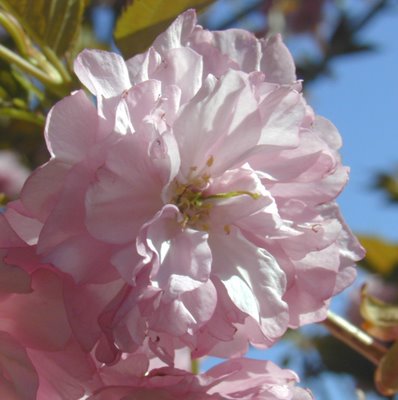
花心 深く見れば 無 となり
© Gabi Greve, May 2006
MU and the Flower Heart
xxxxxxxxxxxxxxxxxxxxxxxxxxxxx
*****************************
Related words
***** First Dream (hatsu yume)
*****************************
Please send your contributions to Gabi Greve
worldkigo .....
Back to the Worldkigo Index
http://worldkigodatabase.blogspot.com/
:::::::::::::::::::::::::::::::::::::::::::::::::::::::::::::::::::::::::::::::::::::::::::::::::::::
Flower-Heart (hana gokoro)
***** Location: Japan
***** Season: Non-seasonal Topic
***** Category: Humanity
*****************************
Explanation
hatsu yume ya
samete mo hana wa
hana-gokoro
first dream--
even after awakening
the flower's heart the same
Chiyo-Ni 加賀千代(尼)(かが の ちよ(に))
(Tr. Donegan)
::::::::::::::::::::::::::::::::::::::::::::::::::::::::::::::::::::::::::::::::::::::::::::::::::::
hana-gokoro, hanakokoro 花心、はがごころ、花こころ, that expression seems already been used in Heian poetry ... the heart of a lady in love, but also the heart changing as fast as cherry blossoms fall ...
in Chapter 49 of The Tale of Genji
Other interpretations are possible.
onna-gokoro 女心 is another version.
::::::::::::::::::::::::::::::::::::::::::::::::::::::::::::::::::::::::::::::::::::::::::::::::::::
An old song comes to mind
when I woke up this morning
you were on my mind
yuuuuu were on my mind
Gabi
...........................................
Quoting Larry Bole
The thought of Chiyo referring to herself as a flower had occurred to me, but it seemed unnecessarily metaphoric. Of course, under the old calendar, the New Year would have come near the beginning of spring. Maybe some early cherry blossoms were aleady out.
Here is a haiku of Chiyo-ni's which is less metaphoric:
kaketaranu onna-gokoro ya doyooboshi
never enough
a woman's heart,
summer airing
Tr. Michael Haldane
airing out kimonos
as well as her heart
is never enough
Tr. Donegan and Ishibashi
from the 'note' in the Donegan & Ishibashi book:
"Here, there is also a subtext of frustration, probably stemming from the suppression of women in Edo society."
Larry Bole
::::::::::::::::::::::::::::::::::::::::::::::::::::::::::::::::::::::::::::::::::::::::::::::::::::
QUOTE:
「花心」を国語辞書『大辞林』で見るに、
(1)花の持つ心。花を咲かせようとする心。
「三千年(ミチトセ)に咲く―の,折り知る春のかざしとかや/謡曲・西王母」
(2)はなやかな心。浮き浮きした心。
「ひらく連中(イチザ)の―,若やぐ春の一趣向/人情本・恵の花」
(3)風流心。
「庭風俗に知れる亭主の―/青簾」
(4)〔花の散りやすいところから〕移りやすい心。
「―におはする宮なれば/源氏(宿木)
と、「はなごころ」という同一語のなかで意味が「褒語」と「貶語」と大いに異なることが知れよう。
『大辞林』は、現代語意味感覚を先出し、古語意味感覚を後出する。現代人の「はなごころ」は、(1)の用例「謡曲」、(2)の用例「人情本」、(3)の用例「俳諧」までか、(4)の移り気な心・浮気心の意味と解釈するのは、平安王朝時代から いつごろまで続くのかここからはまったく見えてこない。
現代人の意識感覚でこの(4)の用例『源氏物語』<宿木の巻き>のこの語を解釈したら、「風流(心)にいらっしゃる宮なので」などと誤やまった解釈してしまうこともなきにしもあらずであろう。「浮気な心」という逆もあろうか。古語の意味学習にあって、この「花心」は、もっとも注意すべき語でもある。
さて、ではいつ頃までこの「移り気な心・あだ心」の意味を持って、解釈されていたのかという点と「風流心」をいつ頃持ちはじめるのかを明らかにせねばなるまい。これを示唆する資料として、室町時代の『日葡辞書』に、
「Fanagocoro.(はなごころ,花心)花のような心.すなわち,温和で愛想がよく,しかも性のよい心.詩歌語.」<邦訳202l>
と、ここでは「褒語<詩歌語>」となっている。続いて江戸元禄時代の辞書においては、青木鷺水編『世俗字盡』全一冊に、「花心(ハナコヽロ)」<4ウ④>と収載され、その頭注に「花心有∨始无終云∨――。源氏寄木ニ花心ニオハスル君ノー。俗ビトハナ心ト云フ」とある。『書字考節用集』にも、「花心(ハナゴヽロ)[源氏]」<九23⑤,言辞>といずれも『源氏物語』の、
花心におはする宮なれば、あはれとは思すとも、今めかしき方にかならず御心移ろひなむかし。
といった「貶語(浮気心・あだ心)」の意味を、典拠として引用記載が見えるのである。他に、
散りぬべき花心ぞとかつ見つつ頼みそめけむ我やなになる(元良親王集-94)
が『源氏物語』研究のなかで知られている。
ここで、褒語「風流心」と貶語「浮気心」とが同時代に意味併用されること。それは、詩歌語と世俗語という二種の「花心」として使用され、室町時代に表出する可能性がでてくるのだが、当代の古辞書『下學集』『節用集』『運歩色葉集』に未収載ということも考慮しながら、そのことばの使用状況を具体的に多くの作品資料から詳細に探って行かねばなるまい。
「物数をきわめて、工夫を尽くして後、花の失せぬところをば知るべし」とあるは、この口伝なり。されば、花とて、別にはなきものなり。物数を尽くして、工夫を得て、珍しき感を心得るが、花なり。「花は心、種は態(わざ)」という表現句がある。これは能樂師・世阿弥が『風姿花伝』のなかに記したことばである。この「花の心」すなわち、『日葡辞書』に記載される「花心」の源流かと推察するのだが如何…。
© 「ことばの溜め池」
*****************************
Worldwide use
*****************************
Things found on the way
*****************************
HAIKU
looking deep
into the flower heart -
all is MU
花心 深く見れば 無 となり
© Gabi Greve, May 2006
MU and the Flower Heart
xxxxxxxxxxxxxxxxxxxxxxxxxxxxx
*****************************
Related words
***** First Dream (hatsu yume)
*****************************
Please send your contributions to Gabi Greve
worldkigo .....
Back to the Worldkigo Index
http://worldkigodatabase.blogspot.com/
1/13/2007
Bird Droppings
[ . BACK to Worldkigo TOP . ]
:::::::::::::::::::::::::::::::::::::::::::::::::::::::::::::::::::::::::::::::::::::::::::::::::::::
Bird droppings (tori no fun)
***** Location: Worldwide
***** Season: Non-seasonal Topic
***** Category: Animal
*****************************
Explanation
A truely global phenomenon !
birds droppings, bird's droppings
The droppings of the bush warbler (nightingale) have a special place in Japan.
uguisu no fun 鶯の糞 うぐいすのふん
Read more haiku about this delicate subject HERE !
*****************************
Worldwide use
*****************************
Things found on the way
*****************************
HAIKU
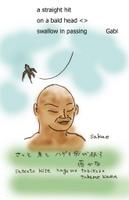
a straight hit
on a bald head -
swallow in passing
ein Volltreffer
auf die Glatze -
Schwalbe im Durchflug
© Haiku by Gabi Greve
Haiga by Nakamura Sakuo
:::::::::::::::::::::::::::::::::::::::::::::::::::::::::::::::::::::::::::::::::::::::::::::::::::::

hatsu-tsubame ... ... 初燕
yane no kazari ni ... ... 屋根の飾りに
nari ni keri ... ... なりにけり
.. .. .. first swallows -
.. .. .. left decorations
.. .. .. on the roof

erste Schwalben -
hinterlasse Dekorationen
auf dem Dach
© Haiku by Gabi Greve
More on the aftermath is here !
:::::::::::::::::::::::::::::::::::::::::::::::::::::::::::::::::::::::::::::::::::::::::::::::::::::
鴬や餅に糞する縁の先
uguisu ya mochi ni fun suru en no saki
bush warbler -
a dropping on the rice cake
at the veranda's edge!
source : Makoto Ueda, googlebooks
. Matsuo Basho 松尾芭蕉 - Archives of the WKD .
..........................................................................
大津絵に糞落しゆく燕かな
Ootsu-e ni fun otoshi-yuku tsubame kana
a swallow leaves
its droppings on this
Otsu painting !
. Otsu Paintings (大津絵)
紅梅の落花燃らむ馬の糞
koobai no rakka moyuramu uma no fun
pink petals of the plum
lie on horse dung,
looking ready to flare up
Tr. Ueda
. WKD : koobai 紅梅 red plum blossoms .
. Yosa Buson 与謝蕪村 in Edo .
:::::::::::::::::::::::::::::::::::::::::::::::::::::::::::::::::::::::::::::::::::::::::::::::::::::
with a grin
the pelican drops its load . . .
"Bombs Away!"
Richard Kay, Australia
:::::::::::::::::::::::::::::::::::::::::::::::::::::::::::::::::::::::::::::::::::::::::::::::::::::
morning sun...
a sparrow's droppings
on my shoulder
- Shared by Willie Bongky, 2013 -
*****************************
Related words
***** . Pissing (shooben)
[ . BACK to WORLDKIGO . TOP . ]
:::::::::::::::::::::::::::::::::::::::::::::::::::::::::::::::::::::::::::::::::::::::::::::::::::::
:::::::::::::::::::::::::::::::::::::::::::::::::::::::::::::::::::::::::::::::::::::::::::::::::::::
Bird droppings (tori no fun)
***** Location: Worldwide
***** Season: Non-seasonal Topic
***** Category: Animal
*****************************
Explanation
A truely global phenomenon !
birds droppings, bird's droppings
The droppings of the bush warbler (nightingale) have a special place in Japan.
uguisu no fun 鶯の糞 うぐいすのふん
Read more haiku about this delicate subject HERE !
*****************************
Worldwide use
*****************************
Things found on the way
*****************************
HAIKU
a straight hit
on a bald head -
swallow in passing
ein Volltreffer
auf die Glatze -
Schwalbe im Durchflug
© Haiku by Gabi Greve
Haiga by Nakamura Sakuo
:::::::::::::::::::::::::::::::::::::::::::::::::::::::::::::::::::::::::::::::::::::::::::::::::::::

hatsu-tsubame ... ... 初燕
yane no kazari ni ... ... 屋根の飾りに
nari ni keri ... ... なりにけり
.. .. .. first swallows -
.. .. .. left decorations
.. .. .. on the roof

erste Schwalben -
hinterlasse Dekorationen
auf dem Dach
© Haiku by Gabi Greve
More on the aftermath is here !
:::::::::::::::::::::::::::::::::::::::::::::::::::::::::::::::::::::::::::::::::::::::::::::::::::::
鴬や餅に糞する縁の先
uguisu ya mochi ni fun suru en no saki
bush warbler -
a dropping on the rice cake
at the veranda's edge!
source : Makoto Ueda, googlebooks
. Matsuo Basho 松尾芭蕉 - Archives of the WKD .
..........................................................................
大津絵に糞落しゆく燕かな
Ootsu-e ni fun otoshi-yuku tsubame kana
a swallow leaves
its droppings on this
Otsu painting !
. Otsu Paintings (大津絵)
紅梅の落花燃らむ馬の糞
koobai no rakka moyuramu uma no fun
pink petals of the plum
lie on horse dung,
looking ready to flare up
Tr. Ueda
. WKD : koobai 紅梅 red plum blossoms .
. Yosa Buson 与謝蕪村 in Edo .
:::::::::::::::::::::::::::::::::::::::::::::::::::::::::::::::::::::::::::::::::::::::::::::::::::::
with a grin
the pelican drops its load . . .
"Bombs Away!"
Richard Kay, Australia
:::::::::::::::::::::::::::::::::::::::::::::::::::::::::::::::::::::::::::::::::::::::::::::::::::::
morning sun...
a sparrow's droppings
on my shoulder
- Shared by Willie Bongky, 2013 -
*****************************
Related words
***** . Pissing (shooben)
[ . BACK to WORLDKIGO . TOP . ]
:::::::::::::::::::::::::::::::::::::::::::::::::::::::::::::::::::::::::::::::::::::::::::::::::::::
1/09/2007
Lottery (takarakuji)
[ . BACK to Worldkigo TOP . ]
:::::::::::::::::::::::::::::::::::::::::::::::::::::::::::::::::::::::::::::::::::::::::::::::::::::
Lottery (takarakuji)
***** Location: Japan
***** Season: Non-seasonal Topic
***** Category: Humanity
*****************************
Explanation
Lottery, lottery ticket, takarakuji, tomikuji 宝くじ
tomikuji 富籤
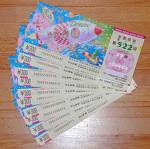
Takarakuji (宝くじ), i.e. lotteries, are held by prefectures or large cities on a regular basis all throughout the calendar year.
There are three main types of lotteries: unique number lotteries, selected number lotteries, and scratch cards. Each lottery ticket is sold at 100 yen to 500 yen, and the top cash prizes are usually 100 million yen or more.
The takarakuji law stipulates that the entire prize pool for any given lottery is to be less than 50% of total sales, with the rest going to local government organizations and charities. Takarakuji tickets are available at takarakuji booth and stores in many cities. Tickets for selected number lotteries can be also bought at some ATMs.
© More in the WIKIPEDIA !

This lucky cat (maneki neko) is placed in front of many stores who sell lottery tickets.
Since yellow is the color for "luck in money affairs" according to Feng Shui, there are also many yellow cats nowadays! Beside this praying cat is a piece of money (koban) with the words "Big Hit!"

Large pieces of Gold Koban Money, ooban 大判
PHOTOS of Oban (ooban)
.......................................................................
. Taiyuuji no tomi 太融寺の富 lottery at temple Taiyu-Ji .
Minoo no tomi 箕面の富 lottery at Mino Benten Temple
tomifuda 富札(とみふだ)lottery ticket
shichinan sokumetsu shichifuku sokushoo
七難即滅七福即生
sevenfold harm to leave
sevenfold luck to come
*****************************
Worldwide use
*****************************
Things found on the way
Daruma with Takarakuji
宝くじだるま

. © PHOTO : だるまさん色々
:::::::::::::::::::::::::::::::::::::::::::::::::::::::::::::::::::::::::::::::::::::::::::::::::::::
Robot to help you win, as red as Daruma san
元気な「だるまさん」

© PHOTO : www.mytech.jp
*****************************
HAIKU

takarakuji yume wa miru mono kawanu mono
lottery tickets ...
dreams are to see
not to buy
Tr. Gabi Greve
緑風さん Enpu San
source : ichiran.php : takarakuji haiku
:::::::::::::::::::::::::::::::::::::::::::::::::::::::::::::::::::::::::::::::::::::::::::::::::::::
孫の買ふ成人の日の宝くじ
mago no kau seijin no hi no takarakuji
my grandchild buys
a lottery ticket
on his Coming-of Age day
Tr. Gabi Greve
Kawano Yone 河野 ヨネ
... www13.ocn.ne.jp/~kate/
:::::::::::::::::::::::::::::::::::::::::::::::::::::::::::::::::::::::::::::::::::::::::::::::::::::
yard work --
a lottery ticket
in the leaf pile
Earl Keener
lottery -
even the beggar
buys dreams
BobT
Read more here:
source : From the Shiki Archives 1996
:::::::::::::::::::::::::::::::::::::::::::::::::::::::::::::::::::::::::::::::::::::::::::::::::::::
lottery ticket -
grandpa is questioning
our birthdays
four-leaf clover found..
time to buy
a lottery ticket
Heike Gewi, Yemen, July 2008
*****************************
Related words
***** Gambling (bakuchi)
***** Coins (kozeni)
:::::::::::::::::::::::::::::::::::::::::::::::::::::::::::::::::::::::::::::::::::::::::::::::::::::
. Amulet to win the lottery .
Shrine Kaichu Jinja
. maneki neko, manekineko 招き猫 beckoning cat .

This treasure bag of the cat helps to win the lottery !
:::::::::::::::::::::::::::::::::::::::::::::::::::::::::::::::::::::::::::::::::::::::::::::::::::::
. Welcome to Edo 江戸 ! .
[ . BACK to WORLDKIGO . TOP . ]
[ . BACK to DARUMA MUSEUM TOP . ]
:::::::::::::::::::::::::::::::::::::::::::::::::::::::::::::::::::::::::::::::::::::::::::::::::::::
:::::::::::::::::::::::::::::::::::::::::::::::::::::::::::::::::::::::::::::::::::::::::::::::::::::
Lottery (takarakuji)
***** Location: Japan
***** Season: Non-seasonal Topic
***** Category: Humanity
*****************************
Explanation
Lottery, lottery ticket, takarakuji, tomikuji 宝くじ
tomikuji 富籤
Takarakuji (宝くじ), i.e. lotteries, are held by prefectures or large cities on a regular basis all throughout the calendar year.
There are three main types of lotteries: unique number lotteries, selected number lotteries, and scratch cards. Each lottery ticket is sold at 100 yen to 500 yen, and the top cash prizes are usually 100 million yen or more.
The takarakuji law stipulates that the entire prize pool for any given lottery is to be less than 50% of total sales, with the rest going to local government organizations and charities. Takarakuji tickets are available at takarakuji booth and stores in many cities. Tickets for selected number lotteries can be also bought at some ATMs.
© More in the WIKIPEDIA !
This lucky cat (maneki neko) is placed in front of many stores who sell lottery tickets.
Since yellow is the color for "luck in money affairs" according to Feng Shui, there are also many yellow cats nowadays! Beside this praying cat is a piece of money (koban) with the words "Big Hit!"
Large pieces of Gold Koban Money, ooban 大判
PHOTOS of Oban (ooban)
.......................................................................
. Taiyuuji no tomi 太融寺の富 lottery at temple Taiyu-Ji .
Minoo no tomi 箕面の富 lottery at Mino Benten Temple
tomifuda 富札(とみふだ)lottery ticket
shichinan sokumetsu shichifuku sokushoo
七難即滅七福即生
sevenfold harm to leave
sevenfold luck to come
*****************************
Worldwide use
*****************************
Things found on the way
Daruma with Takarakuji
宝くじだるま

. © PHOTO : だるまさん色々
:::::::::::::::::::::::::::::::::::::::::::::::::::::::::::::::::::::::::::::::::::::::::::::::::::::
Robot to help you win, as red as Daruma san
元気な「だるまさん」

© PHOTO : www.mytech.jp
*****************************
HAIKU

takarakuji yume wa miru mono kawanu mono
lottery tickets ...
dreams are to see
not to buy
Tr. Gabi Greve
緑風さん Enpu San
source : ichiran.php : takarakuji haiku
:::::::::::::::::::::::::::::::::::::::::::::::::::::::::::::::::::::::::::::::::::::::::::::::::::::
孫の買ふ成人の日の宝くじ
mago no kau seijin no hi no takarakuji
my grandchild buys
a lottery ticket
on his Coming-of Age day
Tr. Gabi Greve
Kawano Yone 河野 ヨネ
... www13.ocn.ne.jp/~kate/
:::::::::::::::::::::::::::::::::::::::::::::::::::::::::::::::::::::::::::::::::::::::::::::::::::::
yard work --
a lottery ticket
in the leaf pile
Earl Keener
lottery -
even the beggar
buys dreams
BobT
Read more here:
source : From the Shiki Archives 1996
:::::::::::::::::::::::::::::::::::::::::::::::::::::::::::::::::::::::::::::::::::::::::::::::::::::
lottery ticket -
grandpa is questioning
our birthdays
four-leaf clover found..
time to buy
a lottery ticket
Heike Gewi, Yemen, July 2008
*****************************
Related words
***** Gambling (bakuchi)
***** Coins (kozeni)
:::::::::::::::::::::::::::::::::::::::::::::::::::::::::::::::::::::::::::::::::::::::::::::::::::::
. Amulet to win the lottery .
Shrine Kaichu Jinja
. maneki neko, manekineko 招き猫 beckoning cat .
This treasure bag of the cat helps to win the lottery !
:::::::::::::::::::::::::::::::::::::::::::::::::::::::::::::::::::::::::::::::::::::::::::::::::::::
. Welcome to Edo 江戸 ! .
[ . BACK to WORLDKIGO . TOP . ]
[ . BACK to DARUMA MUSEUM TOP . ]
:::::::::::::::::::::::::::::::::::::::::::::::::::::::::::::::::::::::::::::::::::::::::::::::::::::
Sensei, a haiku teacher
[ . BACK to Worldkigo TOP . ]
:::::::::::::::::::::::::::::::::::::::::::::::::::::::::::::::::::::::::::::::::::::::::::::::::::::
Before you can be teaching haiku,
you must know what a HAIKU is !
You should know the difference between haiku, senryu and zappai and other forms of short free verse.
Since there are so many and various definitions of HAIKU in other languages, it is difficult to teach how to write such a poem in a language other than Japanese.
And yet, HAIKU is NOT short free verse.
Trying to define HAIKU ...
:::::::::::::::::::::::::::::::::::::::::::::::::::::::::::::::::::::::::::::::::::::::::::::::::::::

Sensei 先生, a haiku teacher, haiku master
A friend wrote :
You mentioned a haiku sensei,
where does one find such a person?!
I want one!
If I write something good, I need to know why it is good, because I still can't tell. Just because people like something I contribute, doesn't necessarily make it haiku and never mind GOOD haiku. Perhaps it is senryu, perhaps it is just touching a nerve that people associate closely with and falls into no category. I still don't know.
... snip
My dear American Haiku Friend !
Myself, I am not a teacher of haiku, although I write a lot ABOUT kigo ... grin ...
I do not even consider myself a poet in the professional sense, I just write haiku once in a while as a memory of a memorable moment for my diary, so to say, and try to share it with others (that way, I do not have to worry toooo much about it being GOOD or BAD or which category or which "rule" is infringed ..)
Yesterday I watched a TV program about a group of semi-professional poet highschool students of a School haiku club discussing haiku with a gruop of local talento (Tamori and other TV fun personalities with absolutely no haiku experience ) ... and it was really enlightening to see the differences in argumenting when and what the "haiku lay folk" discussed ...
(There is a regular Haiku Competition, almost a "Students Haiku Olympics" in Matsuyama, ‘Haiku Kōshien’ for the students.)

Haiku Koshien 。。。俳句甲子園 more English links.
Here in Japan, part of a haiku meeting is the discussion of the poems, without knowing the author, so you are free to criticize, state the good parts, try to work on the one's you think need improvement ... so "discussing haiku" is trained just as much as writing the poem itself.
(We do this even with our local school kids of six years in the first grade and it can be hilarious !)
And I always find the discussion part of a meeting most helpful in improving my knowledge of language and culture.
But that again, can not easily be carried over to America and the rest of the world, I guess.
I am trying to pass on bits and pieces of what I have learned about Japanese haiku in my various postings, forums and BLOGs, but that is the most I can do.
Whether it applies to American haiku ... the more I read about it, the more I think ... maybe NOT ?!
By the way, not every forum moderator or group leader is a sensei, nor is a magazine editor automatically a haiku sensei.
We also have these "loan words" in English
haijin 俳人 person who writes haiku
shijin 詩人 person who writes poetry
shuzai 取材 leader of a haiku meeting (kukai)
. . . . .not to confuse with
haijin 廃人 disabled person
(this is a homonyme of the word, but not connected to in in meaning, only in sound. The Chinese characters for HAI are quite different).
. discussion at WHC .
:::::::::::::::::::::::::::::::::::::::::::::::::::::::::::::::::::::::::::::::::::::::::::::::::::::
Among a few other things,
I wrote in a different context:
Definitions of HAIKU are now manyfold outside of Japan, I often find it a rather arbitrary, personal matter of judgement of each poet, each haiku magazine editor and so on ... so be it!
BUT if you have no clear definition of haiku, how are you going to teach how to write this?
If you have a haiku sensei, ask him for his definition and in which way he advises you to write your own haiku.
If you want your haiku published in xyz magazine, write to the taste of the editor ...
Read Larry Bole :
I'm a "pure product of America" (to paraphrase the American poet, William Carlos Wiliams--"The pure products of America / go crazy--") and as such, I am somewhat of an autodidact in my approach to learning, as many Americans are, even those with college degrees!
If I were studying haiku, I might take lessons from a number of established practitioners, but I wouldn't attach myself to any one in particular, and being skeptical of authority, as many Americans are, I would take what any sensei said with a grain of salt. I once long ago took a class taught by Patricia Donegan in Chicago when she had just come back from what I believe was Peace Corps work in Korea, and she talked a lot about lineages, as if that were important.
To me, "sensei" leads to lineages, and I find the concept of lineages rather amusing at best, and stultifying at worst. Haiku lineages, as things of value in and of themselves, is one of the things Shiki was objecting to, was it not?
Just as there is good and not-so-good poetry, there is good taste and not-so-good taste. If you want to use "taste" as your criteria for quality, that's fine, although I think taste is only a part of an assessment of quality. When it comes to poetry and art, I can recognize and acknowledge work of quality even though it may not be to my personal taste. And most importantly, taste can be educated, wouldn't you agree? Isn't good taste in haiku one of the things you are learning from your sensei?
From what available evidence I have in English, critiquing and commenting on Japanese haiku, by Japanese critics and commentators, seems to be a well-established practice in Japan, starting in "modern" times with Shiki. In light of Shiki's example, I think American haiku suffers from a paucity of informed comment and critique. The alleged "spiritual" aspect of haiku that many American haikuists prize has too often exempted American haiku from discerning evaluation as poetry.
Larry
:::::::::::::::::::::::::::::::::::::::::::::::::::::::::::::::::::::::::::::::::::::::::::::::::::::
It is very important that you feel free to write a haiku your way.
But there are certain basic conditions which you as a haiku poet are supposed to observe.
Read more of the teachings of this Japanese Haiku Sensei:
Inahata Teiko
:::::::::::::::::::::::::::::::::::::::::::::::::::::::::::::::::::::::::::::::::::::::::::::::::::::
Haiku in English: The First Hundred Years
Jim Kacian (Editor), Philip Rowland (Editor),
Allan Burns (Editor), Billy Collins (Introduction)
An anthology of haiku in English,
from Ezra Pound’s early experiments to the present-day masters.
Haiku in English is an anthology of more than 800 brilliantly chosen poems that were originally written in English by over 200 poets from around the world. Although haiku originated as a Japanese art form, it has found a welcome home in the English-speaking world.
source : www.amazon.com
Now we have to ask,
WHO are the "present-day masters" ?
:::::::::::::::::::::::::::::::::::::::::::::::::::::::::::::::::::::::::::::::::::::::::::::::::::::::::::::::::
:::::::::::::::::::::::::::::::::::::::::::::::::::::::::::::::::::::::::::::::::::::::::::::::::::::
As we have a sensei, we also have a DESHI 弟子, a haiku student.
The Haiku Apprentice:
Memoirs of Writing Poetry in Japan
by Abigail Friedman
Legions of Westerners have pursued idealized notions of “traditional” Japan through enchanted forays into ikebana, martial arts, ink painting, or tea ceremony. The pitfall of such adventures is that they (sometimes willfully) overlook the more complex, ambiguous reality of contemporary Japanese culture and politics. In contrast, Friedman distinguishes herself through depth and rigor of inquiry, which ultimately leads to a revised understanding of both her host country and herself. She quietly earns her place in an all-Japanese haiku study group led by prominent haiku sensei or “master,” Kuroda Momoko.
Haiku, Friedman discovers there, “is not an exclusive club for the spiritually adept few.” Instead, she has the rare fortune to experience poetry in a culture where it still exists as a social activity and “popular art, practiced by a wide range of people, and meant to be understood.” To make such an opportunity accessible to readers outside Japan, Friedman concludes with instructions on writing haiku in English, as well as starting a haiku group.
As Japan scholar William LaFleur has written, the rigorously condensed traditional Japanese forms of poetry are “best opened with care, close attention, and appreciation for the skill of the person who put so much into so small a container.” The practice of haiku, based on this finely tuned attentiveness to both environment and language, helps Friedman gradually locate a sense of belonging for herself in the midst of a diplomat’s nomadic life.
In the process, her book becomes a deft and seamless merging of genres: at once memoir, travel literature, and an unpretentious guide onto the terrain of Japanese poetry. It will appeal not just to poetry lovers, but to all readers who are curious about the world beyond their own borders.
Read the full review here:
Review by: Melanie Drane
Kuroda Momoko 黒田杏子
Advise vor haiku beginners !
:::::::::::::::::::::::::::::::::::::::::::::::::::::::::::::::::::::::::::::::::::::::::::::::::::::
Master Basho teaches Kyorai
(from "Sources of Japanese Tradition," by William Theodore De Bary;
Columbia Universit Press, 2001):
Inoshishi no Ne ni yuku kata ya Ake no tsuki
Is that the path
The wild boar travels to his lair?
The moon at dawning.
Kyorai
When I [Kyorai] asked the Master what he thought of this verse, he pondered for a long time without saying whether it was good or bad. I mistakenly thought that master though he was, he didn't know how hunters wait at night for a boar to return to his lair at dawn, and I explained it all to him in great detail. Then he remarked, "The interest of that sight was familiar even to the poets of former times.
(Kyorai then gives a waka that Basho quotes about deer returning home from fields to their mountains at dawn)
"When a subject can be treated even within the elegant framework of a 'waka', there does not seem to be much point in giving within the freer compass of the haiku so prosy a description. The reasons why I stopped to think for a while was that the verse seemed somehow interesting, and I was wondering whether something could be done with it. But I fear it's hopeless."
Compiled by Larry Bole
:::::::::::::::::::::::::::::::::::::::::::::::::::::::::::::::::::::::::::::::::::::::::::::::::::::
how to call you?
san さん for any man or woman
sama さま、様 for any man or woman you consider above your social level
kun くん、君 for a man or boy you consider below your social level
chan ちゃん for a woman or girl you consider below your social level
So for my Japanese friends, I have become
Gabi san ガビさん.
:::::::::::::::::::::::::::::::::::::::::::::::::::::::::::::::::::::::::::::::::::::::::::::::::::::
Japanese haiku poets tend to see the guidelines (yakusokugoto) as means to improve the way to write haiku.
They find their freedom within the limits of this poetry form.
Many of my foreign friends tend to see the "haiku rules" as infringements of the personal freedom of the writer and resent them. There is even the word "Haiku Police" out there, which would be quite unthinkable of in Japan.
Rules for Haiku ?! A general discussion. Add your opinion !
Haiku Definitions ... Take your pick !
:::::::::::::::::::::::::::::::::::::::::::::::::::::::::::::::::::::::::::::::::::::::::::::::::::::
A little detour
. Laozi, Lao-tzu, Rooshi, Roshi【老子】 .
author of the Tao Te Ching
rooshi 老師 Roshi, Zen Master
"old master"
I eat breakfast
and wash the dish -
my old Zen Master
breakfast -
before I finish drinking
my coffee mug empty
25 years ago, during my Sesshin ( a period of intensive meditation) in a Zen Monastery near Jerusalem, the Zen Master was quite old. He was from Kyoto. We called him Roshi.
After breakfast, wash your dish!
- Shared by Freddy Ben-Arroyo -
Haiku Culture Magazine, 2013
. tenzoo 典座 the Zen cook .
*****************************
BACK TO
***** Haiku Theory Archives
:::::::::::::::::::::::::::::::::::::::::::::::::::::::::::::::::::::::::::::::::::::::::::::::::::::
[ . BACK to DARUMA MUSEUM TOP . ]
[ . BACK to WORLDKIGO . TOP . ]
:::::::::::::::::::::::::::::::::::::::::::::::::::::::::::::::::::::::::::::::::::::::::::::::::::::
:::::::::::::::::::::::::::::::::::::::::::::::::::::::::::::::::::::::::::::::::::::::::::::::::::::
Before you can be teaching haiku,
you must know what a HAIKU is !
You should know the difference between haiku, senryu and zappai and other forms of short free verse.
Since there are so many and various definitions of HAIKU in other languages, it is difficult to teach how to write such a poem in a language other than Japanese.
And yet, HAIKU is NOT short free verse.
Trying to define HAIKU ...
:::::::::::::::::::::::::::::::::::::::::::::::::::::::::::::::::::::::::::::::::::::::::::::::::::::
Sensei 先生, a haiku teacher, haiku master
A friend wrote :
You mentioned a haiku sensei,
where does one find such a person?!
I want one!
If I write something good, I need to know why it is good, because I still can't tell. Just because people like something I contribute, doesn't necessarily make it haiku and never mind GOOD haiku. Perhaps it is senryu, perhaps it is just touching a nerve that people associate closely with and falls into no category. I still don't know.
... snip
My dear American Haiku Friend !
Myself, I am not a teacher of haiku, although I write a lot ABOUT kigo ... grin ...
I do not even consider myself a poet in the professional sense, I just write haiku once in a while as a memory of a memorable moment for my diary, so to say, and try to share it with others (that way, I do not have to worry toooo much about it being GOOD or BAD or which category or which "rule" is infringed ..)
Yesterday I watched a TV program about a group of semi-professional poet highschool students of a School haiku club discussing haiku with a gruop of local talento (Tamori and other TV fun personalities with absolutely no haiku experience ) ... and it was really enlightening to see the differences in argumenting when and what the "haiku lay folk" discussed ...
(There is a regular Haiku Competition, almost a "Students Haiku Olympics" in Matsuyama, ‘Haiku Kōshien’ for the students.)
Haiku Koshien 。。。俳句甲子園 more English links.
Here in Japan, part of a haiku meeting is the discussion of the poems, without knowing the author, so you are free to criticize, state the good parts, try to work on the one's you think need improvement ... so "discussing haiku" is trained just as much as writing the poem itself.
(We do this even with our local school kids of six years in the first grade and it can be hilarious !)
And I always find the discussion part of a meeting most helpful in improving my knowledge of language and culture.
But that again, can not easily be carried over to America and the rest of the world, I guess.
I am trying to pass on bits and pieces of what I have learned about Japanese haiku in my various postings, forums and BLOGs, but that is the most I can do.
Whether it applies to American haiku ... the more I read about it, the more I think ... maybe NOT ?!
By the way, not every forum moderator or group leader is a sensei, nor is a magazine editor automatically a haiku sensei.
We also have these "loan words" in English
haijin 俳人 person who writes haiku
shijin 詩人 person who writes poetry
shuzai 取材 leader of a haiku meeting (kukai)
. . . . .not to confuse with
haijin 廃人 disabled person
(this is a homonyme of the word, but not connected to in in meaning, only in sound. The Chinese characters for HAI are quite different).
. discussion at WHC .
:::::::::::::::::::::::::::::::::::::::::::::::::::::::::::::::::::::::::::::::::::::::::::::::::::::
Among a few other things,
I wrote in a different context:
Definitions of HAIKU are now manyfold outside of Japan, I often find it a rather arbitrary, personal matter of judgement of each poet, each haiku magazine editor and so on ... so be it!
BUT if you have no clear definition of haiku, how are you going to teach how to write this?
If you have a haiku sensei, ask him for his definition and in which way he advises you to write your own haiku.
If you want your haiku published in xyz magazine, write to the taste of the editor ...
Read Larry Bole :
I'm a "pure product of America" (to paraphrase the American poet, William Carlos Wiliams--"The pure products of America / go crazy--") and as such, I am somewhat of an autodidact in my approach to learning, as many Americans are, even those with college degrees!
If I were studying haiku, I might take lessons from a number of established practitioners, but I wouldn't attach myself to any one in particular, and being skeptical of authority, as many Americans are, I would take what any sensei said with a grain of salt. I once long ago took a class taught by Patricia Donegan in Chicago when she had just come back from what I believe was Peace Corps work in Korea, and she talked a lot about lineages, as if that were important.
To me, "sensei" leads to lineages, and I find the concept of lineages rather amusing at best, and stultifying at worst. Haiku lineages, as things of value in and of themselves, is one of the things Shiki was objecting to, was it not?
Just as there is good and not-so-good poetry, there is good taste and not-so-good taste. If you want to use "taste" as your criteria for quality, that's fine, although I think taste is only a part of an assessment of quality. When it comes to poetry and art, I can recognize and acknowledge work of quality even though it may not be to my personal taste. And most importantly, taste can be educated, wouldn't you agree? Isn't good taste in haiku one of the things you are learning from your sensei?
From what available evidence I have in English, critiquing and commenting on Japanese haiku, by Japanese critics and commentators, seems to be a well-established practice in Japan, starting in "modern" times with Shiki. In light of Shiki's example, I think American haiku suffers from a paucity of informed comment and critique. The alleged "spiritual" aspect of haiku that many American haikuists prize has too often exempted American haiku from discerning evaluation as poetry.
Larry
:::::::::::::::::::::::::::::::::::::::::::::::::::::::::::::::::::::::::::::::::::::::::::::::::::::
It is very important that you feel free to write a haiku your way.
But there are certain basic conditions which you as a haiku poet are supposed to observe.
Read more of the teachings of this Japanese Haiku Sensei:
Inahata Teiko
:::::::::::::::::::::::::::::::::::::::::::::::::::::::::::::::::::::::::::::::::::::::::::::::::::::
Haiku in English: The First Hundred Years
Jim Kacian (Editor), Philip Rowland (Editor),
Allan Burns (Editor), Billy Collins (Introduction)
An anthology of haiku in English,
from Ezra Pound’s early experiments to the present-day masters.
Haiku in English is an anthology of more than 800 brilliantly chosen poems that were originally written in English by over 200 poets from around the world. Although haiku originated as a Japanese art form, it has found a welcome home in the English-speaking world.
source : www.amazon.com
Now we have to ask,
WHO are the "present-day masters" ?
:::::::::::::::::::::::::::::::::::::::::::::::::::::::::::::::::::::::::::::::::::::::::::::::::::::::::::::::::

:::::::::::::::::::::::::::::::::::::::::::::::::::::::::::::::::::::::::::::::::::::::::::::::::::::
As we have a sensei, we also have a DESHI 弟子, a haiku student.
The Haiku Apprentice:
Memoirs of Writing Poetry in Japan
by Abigail Friedman
Legions of Westerners have pursued idealized notions of “traditional” Japan through enchanted forays into ikebana, martial arts, ink painting, or tea ceremony. The pitfall of such adventures is that they (sometimes willfully) overlook the more complex, ambiguous reality of contemporary Japanese culture and politics. In contrast, Friedman distinguishes herself through depth and rigor of inquiry, which ultimately leads to a revised understanding of both her host country and herself. She quietly earns her place in an all-Japanese haiku study group led by prominent haiku sensei or “master,” Kuroda Momoko.
Haiku, Friedman discovers there, “is not an exclusive club for the spiritually adept few.” Instead, she has the rare fortune to experience poetry in a culture where it still exists as a social activity and “popular art, practiced by a wide range of people, and meant to be understood.” To make such an opportunity accessible to readers outside Japan, Friedman concludes with instructions on writing haiku in English, as well as starting a haiku group.
As Japan scholar William LaFleur has written, the rigorously condensed traditional Japanese forms of poetry are “best opened with care, close attention, and appreciation for the skill of the person who put so much into so small a container.” The practice of haiku, based on this finely tuned attentiveness to both environment and language, helps Friedman gradually locate a sense of belonging for herself in the midst of a diplomat’s nomadic life.
In the process, her book becomes a deft and seamless merging of genres: at once memoir, travel literature, and an unpretentious guide onto the terrain of Japanese poetry. It will appeal not just to poetry lovers, but to all readers who are curious about the world beyond their own borders.
Read the full review here:
Review by: Melanie Drane
Kuroda Momoko 黒田杏子
Advise vor haiku beginners !
:::::::::::::::::::::::::::::::::::::::::::::::::::::::::::::::::::::::::::::::::::::::::::::::::::::
Master Basho teaches Kyorai
(from "Sources of Japanese Tradition," by William Theodore De Bary;
Columbia Universit Press, 2001):
Inoshishi no Ne ni yuku kata ya Ake no tsuki
Is that the path
The wild boar travels to his lair?
The moon at dawning.
Kyorai
When I [Kyorai] asked the Master what he thought of this verse, he pondered for a long time without saying whether it was good or bad. I mistakenly thought that master though he was, he didn't know how hunters wait at night for a boar to return to his lair at dawn, and I explained it all to him in great detail. Then he remarked, "The interest of that sight was familiar even to the poets of former times.
(Kyorai then gives a waka that Basho quotes about deer returning home from fields to their mountains at dawn)
"When a subject can be treated even within the elegant framework of a 'waka', there does not seem to be much point in giving within the freer compass of the haiku so prosy a description. The reasons why I stopped to think for a while was that the verse seemed somehow interesting, and I was wondering whether something could be done with it. But I fear it's hopeless."
Compiled by Larry Bole
:::::::::::::::::::::::::::::::::::::::::::::::::::::::::::::::::::::::::::::::::::::::::::::::::::::
how to call you?
san さん for any man or woman
sama さま、様 for any man or woman you consider above your social level
kun くん、君 for a man or boy you consider below your social level
chan ちゃん for a woman or girl you consider below your social level
So for my Japanese friends, I have become
Gabi san ガビさん.
:::::::::::::::::::::::::::::::::::::::::::::::::::::::::::::::::::::::::::::::::::::::::::::::::::::
Japanese haiku poets tend to see the guidelines (yakusokugoto) as means to improve the way to write haiku.
They find their freedom within the limits of this poetry form.
Many of my foreign friends tend to see the "haiku rules" as infringements of the personal freedom of the writer and resent them. There is even the word "Haiku Police" out there, which would be quite unthinkable of in Japan.
Rules for Haiku ?! A general discussion. Add your opinion !
Haiku Definitions ... Take your pick !
:::::::::::::::::::::::::::::::::::::::::::::::::::::::::::::::::::::::::::::::::::::::::::::::::::::
A little detour
. Laozi, Lao-tzu, Rooshi, Roshi【老子】 .
author of the Tao Te Ching
rooshi 老師 Roshi, Zen Master
"old master"
I eat breakfast
and wash the dish -
my old Zen Master
breakfast -
before I finish drinking
my coffee mug empty
25 years ago, during my Sesshin ( a period of intensive meditation) in a Zen Monastery near Jerusalem, the Zen Master was quite old. He was from Kyoto. We called him Roshi.
After breakfast, wash your dish!
- Shared by Freddy Ben-Arroyo -
Haiku Culture Magazine, 2013
. tenzoo 典座 the Zen cook .
*****************************
BACK TO
***** Haiku Theory Archives
:::::::::::::::::::::::::::::::::::::::::::::::::::::::::::::::::::::::::::::::::::::::::::::::::::::
[ . BACK to DARUMA MUSEUM TOP . ]
[ . BACK to WORLDKIGO . TOP . ]
:::::::::::::::::::::::::::::::::::::::::::::::::::::::::::::::::::::::::::::::::::::::::::::::::::::
1/02/2007
Water (mizu)
[ . BACK to Worldkigo TOP . ]
:::::::::::::::::::::::::::::::::::::::::::::::::::::::::::::::::::::::::::::::::::::::::::::::::::::
Water (mizu)
***** Location: Japan, Worldwide
***** Season: Various, see below
***** Category: Earth
*****************************
Explanation
WATER just like that (mizu, sui 水 ) is not a kigo in Japan but a nonseasonal topic.
But since water is a constant necessity throughout the year, there are many detailed phenomenon used as kigo for it. And in olden times with no tabwater, this comodity was really important for the continuation of life.
Let us go through the seasons.
I also add some Japanese kigo with the word WATER as part of the description of something else.
xxxxxxxxxxxxxxxxxxxxxxxxxxxxxxxxxxxxxxxxxxxxxxxxxxxxxxxxxx
The goodwill of the God of Water is very important to a ricegrowing and farming society.
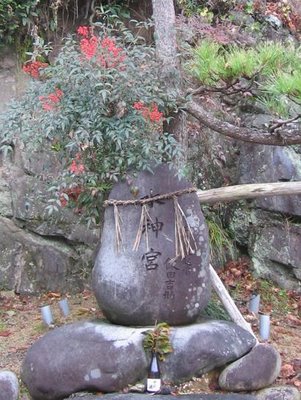
The God of Water, Suijin 水神様
God of the Fields (田の神) and related kigo
Kappa, the Water Goblin of Japan 河童 and Haiku
:::::::::::::::::::::::::::::::::::::::::::::::::::::::::::::::::::::::::::::::::::::::::::::::::::::
SPRING
Ceremony of Opening the Water Channels to the rice paddies
..... mizuguchi matsuri 水口祭
Ceremony of drawing the first sacred water お水取り,
Temple Todai-ji, Nara
Skunk Cabbage (mizu bashoo)
.................................................................................
. water in spring, haru no mizu 春の水 .
shunsui 春水、mizu no haru 水の春
"water in spring" refers to water getting warmer and more pleasant. With the snowmelt, rivers, ponds and lakes get full and the rays of the sun reflect pleasantly on it. It is the water of life for all beings.
. Yosa Buson 与謝蕪村 .
春水や四条五条の橋の下
shunsui ya Shjoo Gojoo no hashi no shita
water of spring -
at Shijo and Gojo
under the bridges
Two famous bridges in
. Kyoto (Hana no Miyako) .
春の水すみれつばなをぬらし行
haru no mizu sumire tsubana o nurashi-yuku
Water of spring,
violets and white flowered reeds
moistened as it flows.
Tr. Sawa and Shiffert

. tsubana 茅花 (つばな) Chigaya flowers .
kigo for mid-spring
春の水山なき国を流れけり
haru no mizu yamanaki kuni o nagarekeri
The water in spring
Through the hill-less countryside
Meanders.
Tr. Nelson and Saito
.................................................................................
snow meltwater, yukige mizu 雪解水
..... yukishiro mizu 雪しろ水
Water gets warmer, waters warm up, waters warming
mizu nurumu 水温む
..... nurumu mizu 温む水
kigo for mid-spring
:::::::::::::::::::::::::::::::::::::::::::::::::::::::::::::::::::::::::::::::::::::::::::::::::::::
SUMMER
natsu no mizu 夏の水 (なつのみず) water in summer
Represents all kinds of water, drinking water, water used in the home and also in the fields.
Water was a precious commodity in the old days, depending on rain, springs and wells.
spring, fountain, izumi 泉
... ... ... shimizu 清水 clear water
clear water, fresh spring water in summer, shimizu 清水
..... draw well water, shimizu kumu 清水汲む(しみずくむ)
Water in the rice paddies needs work:
..... to dam in the water, shimizu seku 清水堰く(しみずせく)
..... connecting the water, shimizu muzubu 清水掬ぶ(しみずむすぶ)
fresh mountain water, yama shimizu 山清水
fresh water from the rocks, iwa shimizu 岩清水
fresh water from moss, koke shimizu 苔清水(こけしみず)
fresh water from a deep valley, soba shimizu 岨清水(そばしみず)
clear water on the beach, iso shimizu 磯清水(いそしみず)
..... soko shimizu 底清水(そこしみず)
clear water in the home, ie shimizu 家清水
clear water at the corners (of an estate), kado shimizu 門清水(かどしみず)
clear water in the garden, niwa shimizu 庭清水(にわしみず)
clear water in a temple, tera shimizu 寺清水(てらしみず)
not to confuse with the famous temple in Kyoto, Kiyomizudera 清水寺, see below.
fresh water in the morning, asa shimizu 朝清水
fresh water in the evening, yuu shimizu 夕清水(ゆうしみず)
stall selling tea made with fresh water
..... shimizujaya, shimizu chaya 清水茶屋(しみずぢゃや)
. chaya, -jaya 茶屋 tea shop, tea stall .
... ... ...
. Floods, flooding, demizu 出水 .
Jelly Bean Cake (mizu yookan 水羊羹) Japan
Playing in water, mizu asobi 水遊び
..... This can be in rivers, lakes or at the sea in salt water. Also BEACH and beach life kigo.
Sprinkling Water (uchimizu, Japan)
sansuisha 撒水車 (さんすいしゃ) water sprinkling car
Trickling water, dripping water, shitatari 滴り
..... finely dripping water, kenteki 涓滴(けんてき)
..... dripping from the mountain, yama shitatari山滴り(やましたたり)
..... dripping from the rocks, iwa shitatari 巌滴り(いわしたたり)
..... dripping from a cliff, gake shitatari 崖滴り(がけしたたり)
..... dripping from the moss, koke shitatari 苔滴り(こけしたたり)
Water lily, suiren 水蓮
Watermelon, suika スイカ 西瓜
Water Strider, water boatman, water spider, water horse (amenbo 水馬) Japan
..... also whirligig beetles, mizusumashi 水澄
.................................................................................
. Waterfall, taki 滝 / baku 瀑
looking at a waterfall, takimi 滝見(たきみ)
teahouse at a waterfall, takimi chaya 滝見茶屋
bottom basin of a waterfall, takitsub9o 滝壺(たきつぼ)
foam from a waterfall, taki shibuki 滝しぶき(たきしぶき)
breeze of a waterfall , takikaze 滝風
sound of the waterfall, taki no oto 滝の音(たきのおと)
path to the waterfall, takimichi 滝道(たきみち)
two falls like a couple, myotodaki 夫婦滝(みょうとだき)
..... male waterfall, odaki 男滝(おだき)、
..... female waterfall medaki 女滝(めだき)
waterfall at night, yodaki 夜滝
coolness at a waterfall, taki suzushi 滝涼し(たきすずし)
bath in a waterfall, taki abi 滝浴び(たきあび)
wild waterfall, bakufu 瀑布(ばくふ)
"flying waterfall", hibaku 飛瀑(ひばく)
manmade waterfall, tsukuridaki 作り滝(つくりだき)
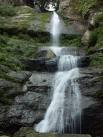 瀑五段一段毎の紅葉かな
baku godan ichidan goto no momiji kana
five-tiered waterfall -
by each tier there are
red maple leaves
Natsume Soseki 漱石, composed in 1895
Tr. Gabi Greve
Shirai no Taki Waterfall 白猪(しらい)の滝
Karakai no Taki 唐岬の滝 near Matsuyama.
(five terraced waterfalls)
NEXT
Waterfall, kigo for all seasons
.................................................................................
Well cleaning (sarashi-i 晒井 さらしい)
"changeing the well", ido gae 井戸替(いどがえ)
.................................................................................
humanity kigo for late summer
. mizukyoogen, mizu kyoogen
水狂言 (みずきょうげん) "water kyogen"
..... mizugei 水芸(みずげい) acrobatic tricks with water, performances
. mizu arasoi 水争 (みずあらそい) fighting for water
many KIGO for the farmers worrying about water during a dry spell
and giving thanks to a rainfall after it
.................................................................................
hinatamizu, hinata mizu 日向水 (ひなたみず)
water warmed by the sun
日向水ひろごる雲をうつしけり
hinatamizu hirogoro kumo o utsushi-keri
water warmed by sunshine . . .
in the afternoon it reflects
the clouds
Kubota Mantaro 久保田万太郎
. . . . .
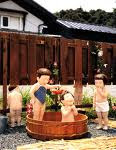
gyoozui 行水 (ぎょうずい) children taking a bath in a bathtub
Especially enjoyed by small children in the garden
In the Edo period during the summer months, folks could enjoy a splash outside, but with the arrival of colder days, this pleasure was over.
行水も日まぜになりぬむしのこゑ
gyôzui mo himaze ni narinu mushi no koe
bathing outside
occurs only every second day now -
these sounds of insects
Konishi Raizan 小西来山 (1654 - 1716) Mitsuhira 満平

. The Water Supply of Edo .
. . . . .
yosusugi 夜濯 (よすすぎ) washing in the evening
During the Edo period, it was common to wash the sweaty cloths in the cooler evening and hang them for drying over night.
夜濯の更け来し水の澄みわたり
Nakamura Teijo 中村汀女
.................................................................................
. SAIJIKI ... category EARTH
Kigo for Summer
.................................................................................
humanity kigo for all summer
joro 如露 (じょろ) watering can, Giesskanne
..... jouro, jo-u-ro 如雨露(じょうろ)
. . . CLICK here for Photos !
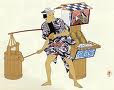
mizu-uri 水売 (みずうり) vendor of water
hiyamizu uri 冷水売(ひやみずうり) vendor of cold water
koorimizu uri 氷水売り vendors of "ice water"
This was an important job in the Edo period, when there were no supermarkets or vending maschines on every corner.
They usually started their job around the 5th lunar month.
..... koori uri 氷売 (こおりうり) vendor of ice blocks
toshiyori no hiyamizu 年寄りの冷や水 to do something imprudent for an old person
derived from this habit.
水売りは一つか二つ錫茶碗
水売りは一つか二つ鈴茶碗
mizu-uri wa hitotsu ka futatsu suzu chawan
the water vendor
has one or maybe two
tin cups
Tin cups did not break easily and kept the water cool.
The vendors were dressed in fancyful robes, to look cool themselves.
They drew water from deep wells, but it was soon warm in the hot climate of summer in Edo.

. Food vendors in Edo .
ひやつこい ひやつこい hiyakkoi hiyakkoi
Here comes the cold delight !
One bowl was 4 mon, and if the client wanted more white sugar in the brew, it might cost im 8 or even 12 mon.
. shiratama uri 白玉売 vendor of Shiratama sweets .
also selling cold water

hiyamizu uri 冷や水売り selling cold drinking water
. koorimizu uri 氷水売り vendor of "ice water" - senryu
- - - - -
shawaa シャワー shower
Taking a shower, this custom is rather new, since the Meiji period.
Dusche, duschen
.SAIJIKI ... HUMANITY
Kigo for Summer
:::::::::::::::::::::::::::::::::::::::::::::::::::::::::::::::::::::::::::::::::::::::::::::::::::::
AUTUMN

. aki no mizu 秋の水 (あきのみず) water in autumn
..... shuusui 秋水 (しゅうすい)
..... mizu no aki 水の秋 (みずのあき)
mizu sumu 水澄む clear autumn water, water clears
. autumn floods, aki demizu 秋出水 (あきでみず) .
:::::::::::::::::::::::::::::::::::::::::::::::::::::::::::::::::::::::::::::::::::::::::::::::::::::
WINTER
kigo for all winter
mizu karu 水涸る (みずかる) water dries up
kassuiki 渇水期(かっすいき)season where water dries up
kawa karu 川涸る(かわかる)river dries up
..... karegawa 涸川(かれがわ)
numa karu 沼涸る(ぬまかる)swamp dried up
..... karenuma 涸沼(かれぬま)
ike karu 池涸る(いけかる)pond dries up
..... kareike 涸池(かれいけ)
kei karu 渓涸る(たにかる)gorge dries up
taki karu 滝涸る(たきかる)waterfall dries up
..... karedaki 涸滝(かれだき)
.................................................................................
fuyu no mizu 冬の水 (ふゆのみず) water in winter
mizu kemuru 水烟る(みずけむる)"water is smoking"
The water is dark like smoke from a woodfire.
. fuyu no izumi 冬の泉 spring in winter
.................................................................................
Water birds, mizudori 水鳥
.................................................................................
kigo for late winter
kan no mizu 寒の水 (かんのみず) water in the cold
..... kanku no mizu 寒九の水(かんくのみず)
kanku 寒九 the coldest time of winter
HAIKU about Sake and Mountains
Suganadake ha ni shimitooru kanku kana
. SAIJIKI ... category EARTH
.................................................................................

fuyudaki 冬滝 (ふゆだき) waterfall in winter
..... fuyu no taki 冬の滝(ふゆのたき)
itedaki 凍滝(いてだき)frozen waterfall
kooritaki 氷り滝(こおりたき)ice waterfall
kan no taki 寒の滝(かんのたき)waterfall in the cold
taki kooru 滝凍る(たきこおる)waterfall is frozen
In the colder parts of Northern Japan frozen waterfalls are a most splendid sight.
. . . CLICK here for Photos !
:::::::::::::::::::::::::::::::::::::::::::::::::::::::::::::::::::::::::::::::::::::::::::::::::::::
NEW YEAR
First Water, "young water" (wakamizu)
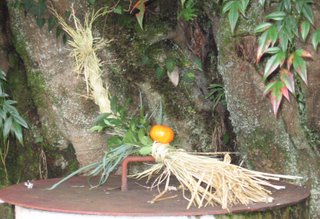
New Year decoration of a rural well in Japan
© Gabi Greve, Okayama, Japan. January 2007
*****************************
Worldwide use
Kenya
Cold water
*****************************
Things found on the way
"Clear Water Temple" Kiyomizudera, Kyoto
Pure Water Temple
"Enchin, a priest from Nara, was told in a vision to "Look for the clear water origin of the Yodo river". In a long search, he stumbled upon a place deep in the forest greenery where a mist, like a belt of white clouds, hung over a waterfall at the foot of Mt. Otowa."
According to the legend, Enchin received a vision that said he would find at the source of the Yodo river, a clear source of water. During his search Enchin came across a hermit named Gyoei. Gyoei was a old priest practising ascetism and he gave Enchin a piece of wood possessed by the spirit of the Kannon Bosatsu. This was then carved into the likeness of the Kannon and Enchin then enshired the image in a small thatched roofed hut.
This was the begining of Kiyomizudera. The legend also says that the hermit disappeared, and that when Enchin later found the hermit's sandals on top of the mountain, he realized that he had actually been speaking with a manifestation of the Kannon. On the other hand, the hermit may just have wanted some peace and quiet.
The legend continues that Sakanoue Tamuramaro, one of the emperor's leading generals came upon Enchin while deer hunting. The blood of a stag was thought to ease the pain the childbirth, and Tamuramarro's wife was about to give birth. Enchin spoke of the cruelty of killing animals (forbidden in the Buddhist tradition) and his speech so moved Tamuramaro that to repent, Tamuramaro underwrote the construction of a proper sanctuary. (Another story is that he disassembled his home and gave it to the temple, building a new house to replace it).
In 794 the emperor Kammu moved his capital to Kyoto and gave Tamuramaro his throne hall as a reward for his military service. As a devout worshipper of Kannon he proceeded to donate the building to Enchin for a new main hall. The building stood until 1629 until it was destroyed by fire. Today's Main Hall has roof made of cypress, not the traditional tile, in remembrance of originally being part of the emperor's palace. Most of the buildings today were rebuilt by Iemitsu Tokugawa, the 3rd shogun of the Tokugawa Shogunate, in 1633.
Read more here :
© copyright The Yamasa Institute, Hattori Foundation

© Photo by Christopher Buchanan
Visitors drink from the sacred water of Kiyomizudera, said to bring health and good
fortune.
:::::::::::::::::::::::::::::::::::::::::::::::::::::::::::::::::::::::::::::::::::::::::::::::::::::
Sound of Water (mizu no oto) Japan a famous haiku phrase
Suiteki 水滴 water drippers for calligraphy
*****************************
HAIKU
田の水やさらばさらばと井にもどる
ta no mizu ya saraba saraba to i ni modoru
rice paddy drains--
goodbye! goodbye!
back to the well
More Issa Haiku about rice paddies
(tr. David Lanoue)
:::::::::::::::::::::::::::::::::::::::::::::::::::::::::::::::::::::::::::::::::::::::::::::::::::::
like a leaf
floating in clear water -
a samurai's life
Gabi Greve
Click HERE to read the details.
:::::::::::::::::::::::::::::::::::::::::::::::::::::::::::::::::::::::::::::::::::::::::::::::::::::
horo horo to yamabuki chiru ka taki no oto
Petals of the mountain rose
Fall now and then,
To the sound of the waterfall
Matsuo Basho
http://www.takase.com/Haiku/Haiku.htm
:::::::::::::::::::::::::::::::::::::::::::::::::::::::::::::::::::::::::::::::::::::::::::::::::::::
blinding rain -
waterfall among the pines
is singing again
Sunil Uniyal, New Delhi, India
Kigo Hotline, June 2009
*****************************
Related words
***** Rain in various KIGO
***** Rain Rituals (amagoi) Rain Dance, Rain Prayer
***** Snow (yuki)
***** Sound of Water (mizu no oto) Japan
A famous haiku line and its translation problems
***** Water Shortage (Tropics)
Waterfalls and Fudo Myo-o 不動滝
:::::::::::::::::::::::::::::::::::::::::::::::::::::::::::::::::::::::::::::::::::::::::::::::::::::
. River (kawa)
se 瀬 rapid, rapids
asase, kawase 川瀬, hayase 早瀬
Stromschnelle
se o kudaru 瀬を下る driving down a rapid
:::::::::::::::::::::::::::::::::::::::::::::::::::::::::::::::::::::::::::::::::::::::::::::::::::::
WASHOKU ... Japanese Food SAIJIKI ... Drinking Water
. SAIJIKI ... category EARTH
. Rain in various kigo (ame 雨) .
including the Rainy Season and Typhoon
. River (kawa 川) in various kigo .
spring at the sea, haru no umi 春の海
. Beach (biichi), Shore (nagisa) in all seasons .
:::::::::::::::::::::::::::::::::::::::::::::::::::::::::::::::::::::::::::::::::::::::::::::::::::::
[ . BACK to DARUMA MUSEUM TOP . ]
[ . BACK to WORLDKIGO . TOP . ]
:::::::::::::::::::::::::::::::::::::::::::::::::::::::::::::::::::::::::::::::::::::::::::::::::::::
:::::::::::::::::::::::::::::::::::::::::::::::::::::::::::::::::::::::::::::::::::::::::::::::::::::
Water (mizu)
***** Location: Japan, Worldwide
***** Season: Various, see below
***** Category: Earth
*****************************
Explanation
WATER just like that (mizu, sui 水 ) is not a kigo in Japan but a nonseasonal topic.
But since water is a constant necessity throughout the year, there are many detailed phenomenon used as kigo for it. And in olden times with no tabwater, this comodity was really important for the continuation of life.
Let us go through the seasons.
I also add some Japanese kigo with the word WATER as part of the description of something else.
xxxxxxxxxxxxxxxxxxxxxxxxxxxxxxxxxxxxxxxxxxxxxxxxxxxxxxxxxx
The goodwill of the God of Water is very important to a ricegrowing and farming society.
The God of Water, Suijin 水神様
God of the Fields (田の神) and related kigo
Kappa, the Water Goblin of Japan 河童 and Haiku
:::::::::::::::::::::::::::::::::::::::::::::::::::::::::::::::::::::::::::::::::::::::::::::::::::::
SPRING
Ceremony of Opening the Water Channels to the rice paddies
..... mizuguchi matsuri 水口祭
Ceremony of drawing the first sacred water お水取り,
Temple Todai-ji, Nara
Skunk Cabbage (mizu bashoo)
.................................................................................
. water in spring, haru no mizu 春の水 .
shunsui 春水、mizu no haru 水の春
"water in spring" refers to water getting warmer and more pleasant. With the snowmelt, rivers, ponds and lakes get full and the rays of the sun reflect pleasantly on it. It is the water of life for all beings.
. Yosa Buson 与謝蕪村 .
春水や四条五条の橋の下
shunsui ya Shjoo Gojoo no hashi no shita
water of spring -
at Shijo and Gojo
under the bridges
Two famous bridges in
. Kyoto (Hana no Miyako) .
春の水すみれつばなをぬらし行
haru no mizu sumire tsubana o nurashi-yuku
Water of spring,
violets and white flowered reeds
moistened as it flows.
Tr. Sawa and Shiffert
. tsubana 茅花 (つばな) Chigaya flowers .
kigo for mid-spring
春の水山なき国を流れけり
haru no mizu yamanaki kuni o nagarekeri
The water in spring
Through the hill-less countryside
Meanders.
Tr. Nelson and Saito
.................................................................................
snow meltwater, yukige mizu 雪解水
..... yukishiro mizu 雪しろ水
Water gets warmer, waters warm up, waters warming
mizu nurumu 水温む
..... nurumu mizu 温む水
kigo for mid-spring
:::::::::::::::::::::::::::::::::::::::::::::::::::::::::::::::::::::::::::::::::::::::::::::::::::::
SUMMER
natsu no mizu 夏の水 (なつのみず) water in summer
Represents all kinds of water, drinking water, water used in the home and also in the fields.
Water was a precious commodity in the old days, depending on rain, springs and wells.
spring, fountain, izumi 泉
... ... ... shimizu 清水 clear water
clear water, fresh spring water in summer, shimizu 清水
..... draw well water, shimizu kumu 清水汲む(しみずくむ)
Water in the rice paddies needs work:
..... to dam in the water, shimizu seku 清水堰く(しみずせく)
..... connecting the water, shimizu muzubu 清水掬ぶ(しみずむすぶ)
fresh mountain water, yama shimizu 山清水
fresh water from the rocks, iwa shimizu 岩清水
fresh water from moss, koke shimizu 苔清水(こけしみず)
fresh water from a deep valley, soba shimizu 岨清水(そばしみず)
clear water on the beach, iso shimizu 磯清水(いそしみず)
..... soko shimizu 底清水(そこしみず)
clear water in the home, ie shimizu 家清水
clear water at the corners (of an estate), kado shimizu 門清水(かどしみず)
clear water in the garden, niwa shimizu 庭清水(にわしみず)
clear water in a temple, tera shimizu 寺清水(てらしみず)
not to confuse with the famous temple in Kyoto, Kiyomizudera 清水寺, see below.
fresh water in the morning, asa shimizu 朝清水
fresh water in the evening, yuu shimizu 夕清水(ゆうしみず)
stall selling tea made with fresh water
..... shimizujaya, shimizu chaya 清水茶屋(しみずぢゃや)
. chaya, -jaya 茶屋 tea shop, tea stall .
... ... ...
. Floods, flooding, demizu 出水 .
Jelly Bean Cake (mizu yookan 水羊羹) Japan
Playing in water, mizu asobi 水遊び
..... This can be in rivers, lakes or at the sea in salt water. Also BEACH and beach life kigo.
Sprinkling Water (uchimizu, Japan)
sansuisha 撒水車 (さんすいしゃ) water sprinkling car
Trickling water, dripping water, shitatari 滴り
..... finely dripping water, kenteki 涓滴(けんてき)
..... dripping from the mountain, yama shitatari山滴り(やましたたり)
..... dripping from the rocks, iwa shitatari 巌滴り(いわしたたり)
..... dripping from a cliff, gake shitatari 崖滴り(がけしたたり)
..... dripping from the moss, koke shitatari 苔滴り(こけしたたり)
Water lily, suiren 水蓮
Watermelon, suika スイカ 西瓜
Water Strider, water boatman, water spider, water horse (amenbo 水馬) Japan
..... also whirligig beetles, mizusumashi 水澄
.................................................................................
. Waterfall, taki 滝 / baku 瀑
looking at a waterfall, takimi 滝見(たきみ)
teahouse at a waterfall, takimi chaya 滝見茶屋
bottom basin of a waterfall, takitsub9o 滝壺(たきつぼ)
foam from a waterfall, taki shibuki 滝しぶき(たきしぶき)
breeze of a waterfall , takikaze 滝風
sound of the waterfall, taki no oto 滝の音(たきのおと)
path to the waterfall, takimichi 滝道(たきみち)
two falls like a couple, myotodaki 夫婦滝(みょうとだき)
..... male waterfall, odaki 男滝(おだき)、
..... female waterfall medaki 女滝(めだき)
waterfall at night, yodaki 夜滝
coolness at a waterfall, taki suzushi 滝涼し(たきすずし)
bath in a waterfall, taki abi 滝浴び(たきあび)
wild waterfall, bakufu 瀑布(ばくふ)
"flying waterfall", hibaku 飛瀑(ひばく)
manmade waterfall, tsukuridaki 作り滝(つくりだき)
瀑五段一段毎の紅葉かなbaku godan ichidan goto no momiji kana
five-tiered waterfall -
by each tier there are
red maple leaves
Natsume Soseki 漱石, composed in 1895
Tr. Gabi Greve
Shirai no Taki Waterfall 白猪(しらい)の滝
Karakai no Taki 唐岬の滝 near Matsuyama.
(five terraced waterfalls)
NEXT
Waterfall, kigo for all seasons
.................................................................................
Well cleaning (sarashi-i 晒井 さらしい)
"changeing the well", ido gae 井戸替(いどがえ)
.................................................................................
humanity kigo for late summer
. mizukyoogen, mizu kyoogen
水狂言 (みずきょうげん) "water kyogen"
..... mizugei 水芸(みずげい) acrobatic tricks with water, performances
. mizu arasoi 水争 (みずあらそい) fighting for water
many KIGO for the farmers worrying about water during a dry spell
and giving thanks to a rainfall after it
.................................................................................
hinatamizu, hinata mizu 日向水 (ひなたみず)
water warmed by the sun
日向水ひろごる雲をうつしけり
hinatamizu hirogoro kumo o utsushi-keri
water warmed by sunshine . . .
in the afternoon it reflects
the clouds
Kubota Mantaro 久保田万太郎
. . . . .
gyoozui 行水 (ぎょうずい) children taking a bath in a bathtub
Especially enjoyed by small children in the garden
In the Edo period during the summer months, folks could enjoy a splash outside, but with the arrival of colder days, this pleasure was over.
行水も日まぜになりぬむしのこゑ
gyôzui mo himaze ni narinu mushi no koe
bathing outside
occurs only every second day now -
these sounds of insects
Konishi Raizan 小西来山 (1654 - 1716) Mitsuhira 満平
. The Water Supply of Edo .
. . . . .
yosusugi 夜濯 (よすすぎ) washing in the evening
During the Edo period, it was common to wash the sweaty cloths in the cooler evening and hang them for drying over night.
夜濯の更け来し水の澄みわたり
Nakamura Teijo 中村汀女
.................................................................................
. SAIJIKI ... category EARTH
Kigo for Summer
.................................................................................
humanity kigo for all summer
joro 如露 (じょろ) watering can, Giesskanne
..... jouro, jo-u-ro 如雨露(じょうろ)
. . . CLICK here for Photos !
mizu-uri 水売 (みずうり) vendor of water
hiyamizu uri 冷水売(ひやみずうり) vendor of cold water
koorimizu uri 氷水売り vendors of "ice water"
This was an important job in the Edo period, when there were no supermarkets or vending maschines on every corner.
They usually started their job around the 5th lunar month.
..... koori uri 氷売 (こおりうり) vendor of ice blocks
toshiyori no hiyamizu 年寄りの冷や水 to do something imprudent for an old person
derived from this habit.
水売りは一つか二つ錫茶碗
水売りは一つか二つ鈴茶碗
mizu-uri wa hitotsu ka futatsu suzu chawan
the water vendor
has one or maybe two
tin cups
Tin cups did not break easily and kept the water cool.
The vendors were dressed in fancyful robes, to look cool themselves.
They drew water from deep wells, but it was soon warm in the hot climate of summer in Edo.
. Food vendors in Edo .
ひやつこい ひやつこい hiyakkoi hiyakkoi
Here comes the cold delight !
One bowl was 4 mon, and if the client wanted more white sugar in the brew, it might cost im 8 or even 12 mon.
. shiratama uri 白玉売 vendor of Shiratama sweets .
also selling cold water
hiyamizu uri 冷や水売り selling cold drinking water
. koorimizu uri 氷水売り vendor of "ice water" - senryu
- - - - -
shawaa シャワー shower
Taking a shower, this custom is rather new, since the Meiji period.
Dusche, duschen
.SAIJIKI ... HUMANITY
Kigo for Summer
:::::::::::::::::::::::::::::::::::::::::::::::::::::::::::::::::::::::::::::::::::::::::::::::::::::
AUTUMN
. aki no mizu 秋の水 (あきのみず) water in autumn
..... shuusui 秋水 (しゅうすい)
..... mizu no aki 水の秋 (みずのあき)
mizu sumu 水澄む clear autumn water, water clears
. autumn floods, aki demizu 秋出水 (あきでみず) .
:::::::::::::::::::::::::::::::::::::::::::::::::::::::::::::::::::::::::::::::::::::::::::::::::::::
WINTER
kigo for all winter
mizu karu 水涸る (みずかる) water dries up
kassuiki 渇水期(かっすいき)season where water dries up
kawa karu 川涸る(かわかる)river dries up
..... karegawa 涸川(かれがわ)
numa karu 沼涸る(ぬまかる)swamp dried up
..... karenuma 涸沼(かれぬま)
ike karu 池涸る(いけかる)pond dries up
..... kareike 涸池(かれいけ)
kei karu 渓涸る(たにかる)gorge dries up
taki karu 滝涸る(たきかる)waterfall dries up
..... karedaki 涸滝(かれだき)
.................................................................................
fuyu no mizu 冬の水 (ふゆのみず) water in winter
mizu kemuru 水烟る(みずけむる)"water is smoking"
The water is dark like smoke from a woodfire.
. fuyu no izumi 冬の泉 spring in winter
.................................................................................
Water birds, mizudori 水鳥
.................................................................................
kigo for late winter
kan no mizu 寒の水 (かんのみず) water in the cold
..... kanku no mizu 寒九の水(かんくのみず)
kanku 寒九 the coldest time of winter
HAIKU about Sake and Mountains
Suganadake ha ni shimitooru kanku kana
. SAIJIKI ... category EARTH
.................................................................................
fuyudaki 冬滝 (ふゆだき) waterfall in winter
..... fuyu no taki 冬の滝(ふゆのたき)
itedaki 凍滝(いてだき)frozen waterfall
kooritaki 氷り滝(こおりたき)ice waterfall
kan no taki 寒の滝(かんのたき)waterfall in the cold
taki kooru 滝凍る(たきこおる)waterfall is frozen
In the colder parts of Northern Japan frozen waterfalls are a most splendid sight.
. . . CLICK here for Photos !
:::::::::::::::::::::::::::::::::::::::::::::::::::::::::::::::::::::::::::::::::::::::::::::::::::::
NEW YEAR
First Water, "young water" (wakamizu)

New Year decoration of a rural well in Japan
© Gabi Greve, Okayama, Japan. January 2007
*****************************
Worldwide use
Kenya
Cold water
*****************************
Things found on the way
"Clear Water Temple" Kiyomizudera, Kyoto
Pure Water Temple
"Enchin, a priest from Nara, was told in a vision to "Look for the clear water origin of the Yodo river". In a long search, he stumbled upon a place deep in the forest greenery where a mist, like a belt of white clouds, hung over a waterfall at the foot of Mt. Otowa."
According to the legend, Enchin received a vision that said he would find at the source of the Yodo river, a clear source of water. During his search Enchin came across a hermit named Gyoei. Gyoei was a old priest practising ascetism and he gave Enchin a piece of wood possessed by the spirit of the Kannon Bosatsu. This was then carved into the likeness of the Kannon and Enchin then enshired the image in a small thatched roofed hut.
This was the begining of Kiyomizudera. The legend also says that the hermit disappeared, and that when Enchin later found the hermit's sandals on top of the mountain, he realized that he had actually been speaking with a manifestation of the Kannon. On the other hand, the hermit may just have wanted some peace and quiet.
The legend continues that Sakanoue Tamuramaro, one of the emperor's leading generals came upon Enchin while deer hunting. The blood of a stag was thought to ease the pain the childbirth, and Tamuramarro's wife was about to give birth. Enchin spoke of the cruelty of killing animals (forbidden in the Buddhist tradition) and his speech so moved Tamuramaro that to repent, Tamuramaro underwrote the construction of a proper sanctuary. (Another story is that he disassembled his home and gave it to the temple, building a new house to replace it).
In 794 the emperor Kammu moved his capital to Kyoto and gave Tamuramaro his throne hall as a reward for his military service. As a devout worshipper of Kannon he proceeded to donate the building to Enchin for a new main hall. The building stood until 1629 until it was destroyed by fire. Today's Main Hall has roof made of cypress, not the traditional tile, in remembrance of originally being part of the emperor's palace. Most of the buildings today were rebuilt by Iemitsu Tokugawa, the 3rd shogun of the Tokugawa Shogunate, in 1633.
Read more here :
© copyright The Yamasa Institute, Hattori Foundation

© Photo by Christopher Buchanan
Visitors drink from the sacred water of Kiyomizudera, said to bring health and good
fortune.
:::::::::::::::::::::::::::::::::::::::::::::::::::::::::::::::::::::::::::::::::::::::::::::::::::::
Sound of Water (mizu no oto) Japan a famous haiku phrase
Suiteki 水滴 water drippers for calligraphy
*****************************
HAIKU
田の水やさらばさらばと井にもどる
ta no mizu ya saraba saraba to i ni modoru
rice paddy drains--
goodbye! goodbye!
back to the well
More Issa Haiku about rice paddies
(tr. David Lanoue)
:::::::::::::::::::::::::::::::::::::::::::::::::::::::::::::::::::::::::::::::::::::::::::::::::::::
like a leaf
floating in clear water -
a samurai's life
Gabi Greve
Click HERE to read the details.
:::::::::::::::::::::::::::::::::::::::::::::::::::::::::::::::::::::::::::::::::::::::::::::::::::::
horo horo to yamabuki chiru ka taki no oto
Petals of the mountain rose
Fall now and then,
To the sound of the waterfall
Matsuo Basho
http://www.takase.com/Haiku/Haiku.htm
:::::::::::::::::::::::::::::::::::::::::::::::::::::::::::::::::::::::::::::::::::::::::::::::::::::
blinding rain -
waterfall among the pines
is singing again
Sunil Uniyal, New Delhi, India
Kigo Hotline, June 2009
*****************************
Related words
***** Rain in various KIGO
***** Rain Rituals (amagoi) Rain Dance, Rain Prayer
***** Snow (yuki)
***** Sound of Water (mizu no oto) Japan
A famous haiku line and its translation problems
***** Water Shortage (Tropics)
Waterfalls and Fudo Myo-o 不動滝
:::::::::::::::::::::::::::::::::::::::::::::::::::::::::::::::::::::::::::::::::::::::::::::::::::::
. River (kawa)
se 瀬 rapid, rapids
asase, kawase 川瀬, hayase 早瀬
Stromschnelle
se o kudaru 瀬を下る driving down a rapid
:::::::::::::::::::::::::::::::::::::::::::::::::::::::::::::::::::::::::::::::::::::::::::::::::::::
WASHOKU ... Japanese Food SAIJIKI ... Drinking Water
. SAIJIKI ... category EARTH
. Rain in various kigo (ame 雨) .
including the Rainy Season and Typhoon
. River (kawa 川) in various kigo .
spring at the sea, haru no umi 春の海
. Beach (biichi), Shore (nagisa) in all seasons .
:::::::::::::::::::::::::::::::::::::::::::::::::::::::::::::::::::::::::::::::::::::::::::::::::::::
[ . BACK to DARUMA MUSEUM TOP . ]
[ . BACK to WORLDKIGO . TOP . ]
:::::::::::::::::::::::::::::::::::::::::::::::::::::::::::::::::::::::::::::::::::::::::::::::::::::
Subscribe to:
Comments (Atom)


 Posts
Posts


