Showing posts with label Theory. Show all posts

8/01/2016

Masaoka Shiki bungo

[ . BACK to WORLDKIGO TOP . ]
. Masaoka Shiki 正岡子規 .
:::::::::::::::::::::::::::::::::::::::::::::::::::::::::::::::::::::::::::::::::::::::::::::::::::::

Masaoka Shiki - from Bungo to Nihongo
(1867, October 14 - 1902, September 19) 


Selected Poems of Masaoka Shiki
Translated by Janine Beichman

:::::::::::::::::::::::::::::::::::::::::::::::::::::::::::::::::::::::::::::::::::::::::::::::::::::

quote
Centenary of the Death of Masaoka Shiki (1867-1902)
... Shiki expresses himself to us, in a simple and sincere voice, as though talking with the reader in private. By using the language of everyday life he raises it to a literary rank.
Masaoka Shiki’s literary carrier burst into literature when the majority of authors were copying limitlessly the European and American literature of the Meiji restoration period. His poetical style was the shasei, meaning “drawing from life”.
Using this informal, spoken language, he dared to denounce the importance of going back to the traditional roots of Japanese poetry, calling it a source in the process of defining modern Japanese modes of expression.
source : World Haiku Review . Susumu Takiguchi / Judit Vihar


:::::::::::::::::::::::::::::::::::::::::::::::::::::::::::::::::::::::::::::::::::::::::::::::::::::


Shiki lived in a time of great changes and reforms in Japan.
After the opening of the country to the "West", the Japanese had to deal with new ideas on every level.
One of them was the Japanese language itself.

The use of BUNGO 文語 had been common for written texts. It had a grammar and vocabulary of its own and made use of difficult Kanji characters.

- quote -
The Classical Japanese language
(文語 Bungo, literally "Literary language"),

also called "Old writing" (古文 Kobun), is the literary form of the Japanese language that was the standard until the early Shōwa period (1926–89).
It is based on Early Middle Japanese, the language as spoken during the Heian period (794–1185), but exhibits some later influences.
Its use started to decline during the late Meiji period (1868–1912) when novelists started writing their works in the spoken form.
Eventually,
the spoken style came into widespread use, including in major newspapers, but many official documents were still written in the old style. After the end of World War II because of the Surrender of Japan, most documents switched to the spoken style, although the classical style continues to be used in traditional genres, such as haiku and waka. Old laws are also left in the classical style unless fully revised.
..... Old character forms (旧字体 Kyūjitai)
變 → 変 (hen "strange")
體 → 体 (karada "body")
眞 → 真 (makoto "truth")
..... Historical kana usage (歴史的仮名遣 Rekishi-teki kana-zukai)
..... Geminate (促音 Sokuon) rule
In 1946, the simplified 当用漢字 Toyo Kanji were declared official.
..... and more details are here:
- source : wikipedia -

Shiki was a strong advocate of the simpler form of every-day life of the Japanese language, so that anybody could write poetry or prose to express himself.
He wanted "the people" to write poems, not just an educated elite with an education in poetry, history and Chinese influence on Japanese writing.

He did not change the three conditions of a hokku
- 5 7 5
- one kireji (cut marker)
- one kigo (season word)

He advocated poetry meetings where people could write single, individual poems, not the first set of a renku linked verse.
And all they had to do was look around them and write about it (shasei at its simplest).

He advocated a change in the use of the language, and thus
re-named 発句 hokku to 俳句 haiku.

It reminds me of the modern translations of the Bible, which use a much different language than the first "translations".


俳句は季題を詠む詩である。
Haiku is poetry
that expresses itself through season words.

Masaoka Shiki 正岡子規

:::::::::::::::::::::::::::::::::::::::::::::::::::::::::::::::::::::::::::::::::::::::::::::::::::::


A "Sketch from Life" was One of Shiki's Many Techniques
Masaoka Shiki: the Misunderstood Reformer, Critic and Poet
. Carmen Sterba, 2011 .

(1) to "pay more attention to lesser-known locales" rather than famous places,
(2) to walk and observe nature, but afterwards write at home,
(3) to focus on "material and theme in a way that will reveal [your] individuality,"
(4) to read other's haiku to be informed, and
(5) to know something of the history of tanka (originally called waka).

Ueda also suggests that Basho wrote about the "beauty of external nature" and Shiki wrote haiku based on "internal, psychological reality of what is truthful (makoto)."


- quote -
History of Magazines in Japan: 1867-1988
The first magazine of Japan was Seiyo-Zasshi, or Western Magazine, published in October 1867 by a scholar Shunzo Yanagawa. That was ten and some pages wood printed booklet, and six issues had been public until it closed in September 1869. Since then, the term Zasshi has been used for the translation of magazine.
- source : kanzaki.com/jpress -


:::::::::::::::::::::::::::::::::::::::::::::::::::::::::::::::::::::::::::::::::::::::::::::::::::::

The efforts to make Japanese haiku accessible to more Japanese people
is going on.

. Local Japanese Kigo (chiboo kigo 地貌季語) .
Collecting regional kigo, sometimes even in dialect, from rural areas of Japan.
Natural phenomenon are included, and more interesting, the local festivals, food and other necessities of the daily life.
There are now quite a few regional Saijiki.

:::::::::::::::::::::::::::::::::::::::::::::::::::::::::::::::::::::::::::::::::::::::::::::::::::::

The following poem came to my attention a few days ago.

. Yosa Buson 与謝蕪村 (1715-1783) .

薬盗む女やは有おぼろ月
kusuri nusumu onna ya ha aru oborozuki

A woman has
stolen the elixir of life
the hazy moon

Tr. Allan Persinger


This is a poem that can not be understood without a detailed knowledge of things Chinese.
This is just the kind of poem that Shiki would have rejected.

The background of this story is here
. Lady Chang-O, The Moon Lady .
Jooga 嫦娥 Joga, Chang'e
Kooga 姮娥(こうが)Koga, Heng'e


:::::::::::::::::::::::::::::::::::::::::::::::::::::::::::::::::::::::::::::::::::::::::::::::::::::

Here is a haiku by Shiki himself, when he was too ill to get up any more.
He could only look at his front garden.

"teizen 庭前" Front Garden

鶏頭の十四五本もありぬべし
keitoo no juushigohon mo arinubeshi

there must be
about fourteen or fifteen
cockscombs . . .

Tr. Gabi Greve


In a recent documentary about the life of Shiki, I saw the cockscombs in his garden, a flower he liked very much. When he could not move around any more, his sister, who cared for him lovingly, planted the flowers a bit closer to the veranda.
Later, when he had to be in bed all the time, she re-planted them again so that he could still see them when he uplifted his upper body, holding on to a crutch under his arm. Counting the blossoms was one of his daily joys in his sickbed.

When he became completely bedridden, she replanted many flowers, including the hechima gourds, directly on the veranda in pots, so he could see them while lying on his back in bed.
- Gabi Greve, January 2010 -


More translations and background of this poem in my blog:
. keitoo 鶏頭 (けいとう) Cockscomb .

:::::::::::::::::::::::::::::::::::::::::::::::::::::::::::::::::::::::::::::::::::::::::::::::::::::

. . SHIKI - Cultural Keywords and ABC-List . .


Join the Masaoka Shiki - Study Group on facebook!


::::::::::::::::::::::::::::::::::::::::::::::::::::::::::::::::::::::::::::::::::::::::::::::::::::: 

[ . BACK to WORLDKIGO  TOP . ]
[ . BACK to DARUMA MUSEUM TOP . ]

::::::::::::::::::::::::::::::::::::::::::::::::::::::::::::::::::::::::::::::::::::::::::::::::::::: 

12/18/2011

Healing and therapy

[ . BACK to WORLDKIGO TOP . ] :::::::::::::::::::::::::::::::::::::::::::::::::::::::::::::::::::::::::::::::::::::::::::::::::::::

Healing and Therapy through Haiku

The motto of my own haiku forum is:

A Haiku a day keeps the Doctor away!
And a Happy Haiku works Wonders on a Weary Soul.


. Haiku Forum : Musings about Happiness .


:::::::::::::::::::::::::::::::::::::::::::::::::::::::::::::::::::::::::::::::::::::::::::::::::::::


The Healing Spirit of Haiku

David H. Rosen, Joel Weishaus, Arthur Okamura

For David H. Rosen and Joel Weishaus, haiku represents a healing union of intuition and sensation, past and present, self and other, ordinary and extraordinary, and current and ancient memories. In this simple, compelling book, the authors, who have lived and traveled extensively in Japan, offer 172 haikus that resonate with Zen Buddhist, Shinto, and Taoist insights. Underscoring the philosophy "moments, moments, that is life," the book takes readers beyond the ego into a healing realm of simple, archetypal words.
This book is a haibun of psyche, an exchange of poetry and prose between two old friends who set out to accomplish a soulful journey together.
source : www.amazon.co.jp


:::::::::::::::::::::::::::::::::::::::::::::::::::::::::::::::::::::::::::::::::::::::::::::::::::::

Friends have asked about the healing effect of haiku and its use in therapy:

Question:
does anyone here know where I can find literature about haiku and psychotherapy?


source : facebook


CLICK for more : Healing and Haiku

:::::::::::::::::::::::::::::::::::::::::::::::::::::::::::::::::::::::::::::::::::::::::::::::::::::


temple in summer -
the power of healing
in prayer and stone

夏の寺 祈りと石に癒されし

Tempel im Sommer -
die Kraft der Heilung
in Gebet und Stein


:::::::::::::::::::::::::::::::::::::::::::::::::::::::::::::::::::::::::::::::::::::::::::::::::::::

quote
The Breath of Surrender:
A Collection of Recovery-Oriented Haiku

edited by Robert Epstein, Published by MET Press

In The Breath of Surrender, haiku poet and psychotherapist Robert Epstein brings together the haiku and recovery communities, whose unique perspectives expand our appreciation of the world within and around us. Whether new to, or widely traveled on, the path of recovery, readers will discover new wholes in their lives sparked by the courage, strength and hope in these inspiring poems.

Baltimore, Maryland November 4, 2009
The Breath of Surrender: A Collection of Recovery-Oriented Haiku edited by Robert Epstein has been published as a trade paperback by MET Press of Baltimore, Maryland. Often described as
"wordless" due to its brevity and directness, haiku poetry highlights, and celebrates, our often unseen connection with nature.
Recovery from the hell realms of addiction: alcohol, drugs, sex, shopping, over-eating, makes possible a reunion with life and one's fellow beings.

In The Breath of Surrender he first collection of its kind Haiku poet and psychotherapist Robert Epstein brings together the haiku and recovery communities, whose unique perspectives
expand our appreciation of the world within and around us. Whether new to, or widely traveled on, the path of recovery, readers will discover new wholes in their lives sparked by the courage, strength and hope in the inspiring poems that fill these pages.

"The addicted brain is a museum of distorted pictures. Recovery brings forth a new framing of images that is well-captured in this unique collection of poems.
Those at every stage of recovery can hang these poetic images on the mental walls that have been left so bare by addiction."
Fred Von Stieff, MD, MBA,

About Author:
Robert Epstein is a licensed Clinical Psychologist who practices psychotherapy in the San Francisco Bay Area. He has worked in the field of recovery treatment since 1980. ...
source : haikuinformation

:::::::::::::::::::::::::::::::::::::::::::::::::::::::::::::::::::::::::::::::::::::::::::::::::::::


There is a Zen story about
how a single breath can free us
from the confines of our intellectualizing
and unite us with all creation.


Tokusan was a brilliant scripture scholar who went to study with Zen Master Ryutan.
One night as Tokusan was leaving to go home to bed after a long evening of discussion, he noticed that it was pitch black outside. Zen master Ryutan lit a lantern and handed it to Tokusan. Just as Tokusan reached for the lantern, Ryutan blew it out.

In that moment, Tokusan experienced enlightenment and bowed in gratitude.

Tokusan realized that he was not dependent upon words and teachings to light the way for him. Even in times of darkness, he could experience his essential nature directly and be a lamp unto himself.


Ellen Birx in "Healing Zen"
Buddhist Wisdom on Compassion, Caring, and Caregiving for Yourself and Others


haiku -
a single breath
can free us


:::::::::::::::::::::::::::::::::::::::::::::::::::::::::::::::::::::::::::::::::::::::::::::::::::::


early morning -
the healing power
of birdsong


Morgenfrühe -
die heilende Kraft
des Gesangs der Vögel


:::::::::::::::::::::::::::::::::::::::::::::::::::::::::::::::::::::::::::::::::::::::::::::::::::::


quote
Shoma Morita, founder of Morita therapy,
and haiku poet Shiki:

origin of Morita therapy.


A hypothesis that Shiki's struggle for life probably influenced the creation of Morita therapy is presented. Although Morita had no personal acquaintance with Shiki, they did have three common friends in Terada, Wakao and Katori. Considering this, as well as the renown of Shiki's works, Morita likely knew much of Shiki and may have been deeply impressed by his approach to life. Several essential concepts of Morita therapy such as absolute bed-rest, anguish and deliverance,
"Aru ga mama," "Jijitsu Yuishin," desire to live, and
the importance of keeping a diary can be found in Shiki's lifestyle and in his literary theory.

Moriyama N.
SourceYahata Kosei Hospital, Kitakyushu, Japan.
source : ncbi.nlm.nih.gov/pubmed


*****************************
Things found on the way


Iyashi no Haiku 癒しの俳句 Healing Haiku


.................................................................................


Reference :
- Haiku and Psychotherapy


*****************************
HAIKU


Healing power of spring green

powerful buds
today’s green is
different
.
all shades of green -
the painter
in silence
.
hugging a tree
hugging a forest
hugging the world


Gabi Greve, Spring 2004


*****************************
Related words


***** - Haiku Theory Archives -


. WKD - LIST of haiku topics and Keywords  

::::::::::::::::::::::::::::::::::::::::::::::::::::::::::::::::::::::::::::::::::::::::::::::::::::: 

[ . BACK to WORLDKIGO  TOP . ]
[ . BACK to DARUMA MUSEUM TOP . ]

:::::::::::::::::::::::::::::::::::::::::::::::::::::::::::::::::::::::::::::::::::::::::::::::::::::

12/10/2011

- Time and Space

[ . BACK to WORLDKIGO TOP . ]
:::::::::::::::::::::::::::::::::::::::::::::::::::::::::::::::::::::::::::::::::::::::::::::::::::::

Time and Space


Japanese haiku are usually placed in the present tense.
. AHA, the HAIKU MOMENT .


The concept of shasei, sketching from life, also places a haiku in the present.
. Sketching from Nature , SHASEI 写生 .


And we have the time-space shifting MA:
. MA 間, the pause created by a cut marker .


.................................................................................


There are however haiku that talk about the past or the future.
Let us look at some of them here.

Many use the word yagate やがて /軈て/頓て
eventually, after that, in the course of time
in due time


:::::::::::::::::::::::::::::::::::::::::::::::::::::::::::::::::::::::::::::::::::::::::::::::::::::


the FUTURE


やがて死ぬけしきは見えず蝉の声
yagate shinu keshiki wa miezu semi no koe

shrilling of cicadas -
they show no sign
of dying soon

Tr. Gabi Greve

soon to die
yet no sign of it
cidada's chirp


Matsuo Basho 松尾芭蕉

- Translation reference -


おもしろうてやがて悲しき鵜舟かな
omoshiroote yagate kanashiki u-bune kana


.................................................................................


初蝶もやがて烏の扶食哉
hatsu choo mo yagate karasu no fujiki kana

first butterfly--
before long some crow's
snack


Shiinji Ogawa helped me understand this brutal haiku:
that sooner or later the first butterfly (or butterflies) will be eaten by a crow (crows).
Issa's poem recalls W. B. Yeats's lines,
"Cast a cold eye/ on life, on death!"

Tr. David Lanoue


waga ue ni yagate sakuran koke no hana


:::::::::::::::::::::::::::::::::::::::::::::::::::::::::::::::::::::::::::::::::::::::::::::::::::::


the PAST

月いづく鐘は沈める海の底
tsuki izuku kane wa shizumeru umi no soko

where is the full moon?
the war bell has sunk
to the bottom of the sea


Basho often alludes to events of the past.

. Basho in Kanegasaki, Tsuruga .


:::::::::::::::::::::::::::::::::::::::::::::::::::::::::::::::::::::::::::::::::::::::::::::::::::::


quote
By ROGER PULVERS

Japanese artistry, by design,
melds time and space into all its creations

Among the greatest of Japan's gifts to the world is surely the gift of design.

..... From the time Japan opened its doors to the outside world at the end of the feudal Edo Period (1603-1868) — after more than 200 years in which it was a capital offence to leave or enter the country without authority from the very highest level — people in Europe, America and China, in particular, became bewitched by the culture of Japan.

This was because they saw how Japanese culture brilliantly combined the abstract design of scale and the passage of time itself with a level of mastery in technique that had not been seen before. Indeed, to me, Japanese design is no less than design of space and time itself. This may sound rather obtuse, so let me explain.
.....
One feature of Japanese aesthetics that redesigns time is totsuzensa (suddenness).
Japanese culture is full of the unexpected, the unpredictable. In the traditional performing arts of kabuki and bunraku it can take the form of an instant transformation from one state or form to another — as when one character becomes another, such as a ghost. In ukiyo-e (woodblock prints), it is often evident in the poses and grimaces in the scene, capturing an unexpected instant of high drama.

The art of the haiku, too, which has become a universal symbol of Japanese emotional expression, beautifully illustrates the design of space and time in the engineering of scale.

Consider Issa Kobayashi's (1763-1827) haiku that jumps from the face of a traveler to the sky above:

Asleep with a fan
Across the face
The moon on the sea


Another poet who, in his haiku, presents startling images that redesign the spatial relationship between things was Shiki Masaoka (1867-1902). What is big? What is small? It all depends on your perspective and your personal viewpoint.

Sometimes, Shiki would present a spatial stretch of the imagination, but always in the presence of nature:

The snail is enticing
Rain clouds
With its antennae


Or sometimes he would offer a painterly scene in which the changing light plays a part:

Locusts buzz
The paths between the rice fields
As the daylight dims


Another characteristic of Japanese aesthetics, as is so sublimely evident in the following two haiku by Shiki, is the manipulation of color in order to achieve incongruity, contrast in scale and visual starkness:

The mountains in summer
All creation green ...
But a red bridge


And:

Hydrangeas
Pale blue in the rain
Bright blue under the moon


I would define haiku as "the redesign of space and time in 17 syllables."
By redesigning space in this way, Japanese culture places humans (including us who read the haiku, view the picture or observe the performance) properly in nature, as one small element with a highly personal viewpoint.

Only art can slow or prolong the ticking of the clock and allow people to appreciate their place in the scheme of the world; and Japanese art has demonstrated this ability in ways no other civilization has done.
source : Japan Times, December 11, 2011


:::::::::::::::::::::::::::::::::::::::::::::::::::::::::::::::::::::::::::::::::::::::::::::::::::::


quote
Susumu Takiguchi writes:

silk strand
suddenly I've become
a puppeteer

an'ya

Amidst the flood of praise for this haiku of yours, may I add a comment on a question which is seldom discussed, and may well have been never pointed out before. The question is a non-Japanese convention of recommending the use of present tense, or 'present', in haiku-writing. This is one of the many conventions which WHC has been challenging into having a good review and reassessment, at least not accepting as a received gospel.

One of the reasons why your 'spiderweb silk' haiku is a success is the fact that you used present perfect. We Japanese, write, and have written for centuries, haiku in past tense as a routine. Even if we write some haiku in what 'appears' to be in present tense, it can be because of some grammatical convenience or of constraint of brevity and in 'real terms' it could still point to a past point.

What feels very much like the English present perfect (i.e. something already happened in the past but it is still in the same state such as the famous crow haiku in that the crow perched on the branch some time ago, and Basho may well have witnessed it, and he is still in the same state of perching there) is often used in Japanese haiku and is very effective.The convention of emphasising the present tense or 'present' in haiku comes straight from R. H. Blyth and Harold G. Henderson.

Fifty years on, we should review their views and reassess them properly, not to down or disown them but to respect them.
Compare, an'ya, your haiku 'spiderweb silk', or
Basho's on a bare branch /crow haiku.

Susumu Takiguchi, the World Haiku Club

source : sites.google.com/site/existencearts


*****************************
Related


***** - Haiku Theory Archives -

. WKD - LIST of haiku topics and Keywords  

::::::::::::::::::::::::::::::::::::::::::::::::::::::::::::::::::::::::::::::::::::::::::::::::::::: 

[ . BACK to WORLDKIGO  TOP . ]
[ . BACK to DARUMA MUSEUM TOP . ]

:::::::::::::::::::::::::::::::::::::::::::::::::::::::::::::::::::::::::::::::::::::::::::::::::::::

6/29/2011

Style personal style

[ . BACK to WORLDKIGO TOP . ]
:::::::::::::::::::::::::::::::::::::::::::::::::::::::::::::::::::::::::::::::::::::::::::::::::::::

Personal style in Haiku

. compiled by Larry Bole

What is Basho's style?
His style evolved over his career, from the early Danrin school influence, through Genroku 'keiki' style with its Chinese influence, to his final 'karumi' style.
(keikizuke 景気付)

And as Blyth points out, Basho could write from a lot of different points of view.

Blyth says (perhaps under the influence of Shiki):

Basho's verses are comparatively few in number, about two thousand in all, of which about a hundred are really good, but one thing that strikes us about them is their variety. We can see in his verses the tendencies which later poets developed.

[all translations below are by Blyth]

Epic

ふきとばす石も浅間の野分かな
fukutobasu ishi wa Asama no nowaki kana

The autumn blast
Blows along the stones
On Mount Asama.


Chinoiserie

夜着は重し呉天に雪を見るあらん
yogi wa omoshi Goten ni yuki o miru aran

The bedclothes are so heavy;
The snow of the sky of the Kingdom of Wu
Will soon be seen.


Still life

しおだいの はぐきもさむし うおのたな
shio-dai no haguki mo samushi uo no tana

In the fish-shop
The gums of the salted sea-bream
Are cold.


Unconventionality

野を横に馬牽むけよほとゝぎす
no o yoko ni uma hikimuke yo hototogisu

Lead the horse
Across the moor
To where the hototogisu is singing!


Humour

麦飯にやつるる恋か猫の妻
mugi-meshi ni yatsururu koi ka neko no tsuma

The lady cat,
With love and barley-rice
So thin!


Picturesqueness

しぐるるや田の新株の黒むほど
. shigururu ya ta no arakabu no kuromu hodo .

First winter rain,--
Enough to turn
The stubble black.


Delicacy

粽結ふ片手にはさむ額髪
chimaki musubu katate ni hasamu hitaigami

Wrapping rice-dumplings in bamboo leaves,
With one hand she fingers
The hair over her forehead.


And David Landis Barnhill says,
regarding Basho's style when it comes to use of language:

Basho's hokku have been called a "poetry of nouns" because of its tendency to rely primarily on image rather than statement. We can look back at the Sado Island, crow on a withered branch, and old pond poems as examples. In each case we have the same pattern of noun, noun-verb, noun. Much of the dynamism of these poems is in the stark imagism that turning them into a statement would only dilute.
[end of excerpt]


And here is how Ryu Yotsuya
describes the styles of some 20th-century haijin:

Kyoshi:
Kyoshi's haikus are not limited to a fixed style. Among his haiku, several are splendid and virile, whereas others are subtle and delicate; several give free rein to his imagination, others describe simply daily facts. The world of Kyoshi is a true chaos, varied like a field full of wild flowers and grasses.


Kijoo, Suiha, Fura, Dakotsu, Sekitai, and Hisajo:

These poets are generically called "poets of Taisho Hototogisu".
大正ホトトギス

Taisho Hototogisu Magazines 1912

The characteristic of their poems is to describe the nature and to express the worship to the eternal and mysterious existence, in a traditional style with a lofty tone. And their themes are the great landscapes (mountain, valley, sea, or sky) or the life of men in the great nature.

One of the characteristics of the Taisho Hototogisu poets is the technique to create a pseudo-perspective by combining the distant view and the foreground.


Taisho Hototogisu Magazines 1912


--comments taken from "History of Haiku,"
by Ryu Yotsuya
:
http://www.big.or.jp/~loupe/links/ehisto/ehisinx.shtml


:::::::::::::::::::::::::::::::::::::::::::::::::::::::::::::::::::::::::::::::::::::::::::::::::::::::

夜着は重し呉天に雪を見るあらん
yogi wa omoshi Goten ni yuki o miru aran

my quilts are heavy -
snow falling in far away lands
should be clearly visible


my bed quilt is heavy -
snow falling in Goten
should be clearly visible

Tr. Gabi Greve

Written in 天和2年, Basho age 39.

A parody of a part of the Chinese poem and Zen saying

笠重呉天雪  鞋香楚地ノ花
kasa wa omoshi goten no yuki - ai wa kanbashi sochi no hana

My bamboo hat has become heavy
from the snow of Mount Wu.


Goten 呉天, regions in China far away from the center of the GO dynasty in the South of China.
Go, Wu 呉 902 - 937

The State of Wu
(Chinese: t 吳國, s 吴国, p Wúguó)
was one of the vassal states during the Western Zhou Dynasty and the Spring and Autumn Period. It was also known as Gou Wu (勾吳) from the name of the indigenous tribe there and as Gong Wu (工吳).
Considered a semi-barbarous state by ancient Chinese historians, Wu was located at the mouth of the Yangtze River east of the State of Chu. Its first capital was at Meili (probably in modern Wuxi) and was later moved to Gusu (within modern Suzhou) and then Helu City (the old town of present-day Suzhou).
© More in the WIKIPEDIA !


. yogi 夜着 bedtime quilt .


:::::::::::::::::::::::::::::::::::::::::::::::::::::::::::::::::::::::::::::::::::::::::::::::::::::::


- Hokku and Haiku - the Poetry of Nouns -
. Matsuo Basho 松尾芭蕉 - Archives of the WKD .


*****************************
Related words


***** . Mount Asama and Shinano 浅間山

***** . Chimaki 茅巻 rice cakes
for the Boy's Festival, May 5


. WKD - LIST of haiku topics and Keywords  

::::::::::::::::::::::::::::::::::::::::::::::::::::::::::::::::::::::::::::::::::::::::::::::::::::: 

[ . BACK to WORLDKIGO  TOP . ]
[ . BACK to DARUMA MUSEUM TOP . ]
::::::::::::::::::::::::::::::::::::::::::::::::::::::::::::::::::::::::::::::::::::::::::::::::::::: 

4/26/2011

Haiku Lessons

[ . BACK to WORLDKIGO TOP . ]
:::::::::::::::::::::::::::::::::::::::::::::::::::::::::::::::::::::::::::::::::::::::::::::::::::::

Haiku Lessons

There is now a great difference in the concept of traditional Japanese haiku and haiku written in other languages, especially in the so-called ELH (English language haiku).

This might be confusing for a beginner.
Here I try to concentrate on the "parent",
the traditional Japanese haiku.


My advise for beginners :

keep the three lines : short long short
use one season word (kigo)
use one cut marker (kireji)


Write about a personal experience,
not a philosophical thought or idea.
Try to pay attention to the small things in life with all their details,
the seasonal changes of your daily human life.
Every moment of your life counts!
Be Here and Now !


:::::::::::::::::::::::::::::::::::::::::::::::::::::::::::::::::::::::::::::::::::::::::::::::::::::


. Definition of HAIKU .   


. 5 7 5 and short/long/short .   


. Kigo - the season word .   


. Cut (kire), cutting word (kireji), cut marker .   


. Basic haiku theories .   


:::::::::::::::::::::::::::::::::::::::::::::::::::::::::::::::::::::::::::::::::::::::::::::::::::::


Study KIGO with me !

. WKD : Kigo Hotline .   


Ask about translations !

. WKD : Translating Haiku .   


::::::::::::::::::::::::::::::::::::::::::::::::::::::::::::::::::::::::::::::::::::::::::::::::::::: 


[ . BACK to WORLDKIGO  TOP . ]
[ . BACK to DARUMA MUSEUM TOP . ]

:::::::::::::::::::::::::::::::::::::::::::::::::::::::::::::::::::::::::::::::::::::::::::::::::::: 

3/04/2011

Haiku in the US

[ . BACK to WORLDKIGO TOP . ]
:::::::::::::::::::::::::::::::::::::::::::::::::::::::::::::::::::::::::::::::::::::::::::::::::::::

Haiku in the US

Some thoughts by Jim Wilson
February 2011

I want to suggest that there are two haiku worlds in the U.S.
The first is a kind of 'official' haiku world. It is the world of the HSA and Northern California Haiku Poets, and other local Haiku organizations. They tend to be small but dedicated.

With the significant exception of Yuki Teiki, they all tend to advocate for free verse haiku. It is in this sense that I meant that American Haiku has become a type of free verse; that is to say that official, or organizational, American Haiku has become a type of free verse.

Outside of the context of official haiku organizations there is another type of haiku. It is not organized; that is to say it doesn't have any official organization advocating for its point of view. That's not unusual; there's no official organization advocating for an approach to the villanelle or the sestina. Haiku poets in this other, non-official, group tend to write syllabic haiku rather than free verse. They tend to approach haiku in the same way that a cinquain poet would approach cinquain. I mean that the syllable count and lineation are the starting points.

When I have communicated with this second group what I have learned is that they are aware that their approach differs from what something like the HSA advocates, but they nevertheless find a syllabic approach fruitful, often saying it 'works' for them. And so they continue.

What I am wondering, or suggesting, is that this second group is more extensive than at first one might guess. As I posted above, if one goes by publications, then the poets who write syllabic haiku are very active. I don't know how one would go about comparing quantity, but two free verse haiku poets (one of whom is very well known) have said to me that they suspect the majority of haiku written in the U.S. are syllabic. Again, this is a guess, but it is an informed one.

In my opinion the two types have become different forms of poetry.
For example, it would make sense to me to have a separate forum here at Aha for 'syllabic haiku' in the section where Jane has cinquain. The reason I think they have become distinct forms is because they have developed different standards of judgment.

The free verse haijin values succinctness, terseness, and a kind of rapid-fire minimalist syntax. The syllabic haijin tend to compose in a syntax that is more like common speech, often mimicking ordinary, overheard, conversations or even directly quoting from those and other sources like song.

From the free verse haijin's perspective the syllabic haijin is 'wordy' and 'padding'.
But from the syllabic haijin's perspective they are just being 'natural'.

From the syllabic haijin's perspective free verse haiku are often truncated and lack flow.
From the free verse haijin's perspective 'less is more'.

In other words, I'm tentatively suggesting that the two approaches have grown up and they have matured into differentiated poetic forms. Though they share the same name, 'haiku', they are composing differently, using different standards, and I believe as the years go by these differences will become greater and more apparent.

I don't think this is to be regretted.
But I believe recognizing this could prove helpful to all concerned.

Jim Wilson


Shaping words

Shaping Words is dedicated to the exploration of formal syllabic verse in English.
www.shapingwords.blogspot.com


::::::::::::::::::::::::::::::::::::::::::::::::::::::::::::::::::::::::::::::::::::::::::::::::::::: 


. Definitions of Haiku .  


[ . BACK to WORLDKIGO  TOP . ]
[ . BACK to DARUMA MUSEUM TOP . ]

::::::::::::::::::::::::::::::::::::::::::::::::::::::::::::::::::::::::::::::::::::::::::::::::::::: 

4/28/2010

Allusion

[ . BACK to worldkigo TOP . ]
:::::::::::::::::::::::::::::::::::::::::::::::::::::::::::::::::::::::::::::::::::::::::::::::::::::

Allusion used in Haiku

quote
An allusion is a reference to, or representation of, a place, event, literary work, myth, or work of art, either directly or by implication. M.H. Abrams defined allusion as "a brief reference, explicit or indirect, to a person, place or event, or to another literary work or passage". It is left to the reader or hearer to make the connection (Fowler); an overt allusion is a misnomer for what is simply a reference.

An allusion is a literary term, though the word also has come to encompass indirect references to any source, including allusions in film or the visual arts. In literature, allusions used to link concepts that the reader already has knowledge of, with concepts discussed in the story.

In discussing the richly allusive poetry of Virgil's Georgics, R.F. Thomas distinguished six categories of allusive reference, which are applicable to a wider cultural sphere.

These types are

Casual Reference, "the use of language which recalls a specific antecedent, but only in a general sense" that is relatively unimportant to the new context;
Single Reference, in which the hearer or reader is intended to "recall the context of the model and apply that context to the new situation"; such a specific single reference in Virgil, according to Thomas, is a means of "making connections or conveying ideas on a level of intense subtlety";
Self-Reference, where the locus is in the poet's own work;
Corrective Allusion, where the imitation is clearly in opposition to the original source's intentions;
Apparent Reference ""which seems clearly to recall a specific model but which on closer inspection frustrates that intention" and
Multiple Reference or Conflation, which refers in various ways simultaneously to several sources, fusing and transforming the cultural traditions.

Allusion differs from the similar term intertextuality in that it is an intentional effort on the author's part. The success of an allusion depends in part on at least some of its audience "getting" it. Allusions may be made increasingly obscure, until at last they are understood by the author alone, who thereby retreats into a private language.
© More in the WIKIPEDIA !


:::::::::::::::::::::::::::::::::::::::::::::::::::::::::::::::::::::::::::::::::::::::::::::::::::::

quote
Modes of allusion
Earl Miner

The modes include the following:

metaphoric allusion in which an echo of the previous work imports the tenor of the previous work to the new context;

imitative allusion in which a quotation of the exact language or representation of generic characteristics of the previous work creates an equivalence between the previous context of utterance and the new context;

parodic allusion in which a quotation of the language or representation of generic characteristics of the previous work suggests a discrepancy between the previous context of utterance and the new context; and

structural allusion in which repetition of structural elements (e.g., recognition and reversal) of a previous work gives form to the new work by analogy to the previous work. ("Allusion")
source : www.semo.edu


:::::::::::::::::::::::::::::::::::::::::::::::::::::::::::::::::::::::::::::::::::::::::::::::::::::

quote

Cor van den Heuvel

“The writing of variations on certain subjects in haiku, sometimes using the same or similar phrases (or even changing a few words of a previous haiku), is one of the most interesting challenges the genre offers a poet and can result in refreshingly different ways of ‘seeing anew’ for the reader.
This is an aspect of traditional Japanese haiku which is hard for many Westerners, with their ideas of uniqueness and Romantic individualism, to accept. But some of the most original voices in haiku do not hesitate to dare seeming derivative if they see a way of reworking an “old” image.”

quote from
Make Haibun New through Chinese Poetic Past:
Basho’s Transformation of Haikai Prose
by Chen-ou Liu
Simply Haiku July 2010


:::::::::::::::::::::::::::::::::::::::::::::::::::::::::::::::::::::::::::::::::::::::::::::::::::::


In haiku, allusion could be seen as

cultural keywords, a kind of haiku topics.
The various regional saijiki of the WKD provide many samples of "cultural keywords".


"Poetry Pillow words" utamakura 歌枕

. Utamakura in Japanese poetry and haiku
Discussion


. Placenames used in Haiku / a LIST
Japanese and worldwide


:::::::::::::::::::::::::::::::::::::::::::::::::::::::::::::::::::::::::::::::::::::::::::::::::::::


quote
Allusion, Poetry about Poetry

The emphasis on the "haiku moment" in North American haiku has meant that most of the poetry does not have another major characteristic of Japanese haikai and haiku: its allusive charcter, the ability of the poem to speak to other literary or poetic texts. I believe that it was Shelley who said that poetry is ultimately about poetry. Great poets are constantly in dialogue with each other. This was particularly true of haikai, which began as a parodic form, by twisting the associations and conventions of classical literature and poetry.

One of Basho's innovations was that he went beyond parody and used literary and historical allusions as a means of elevating haikai, which had hitherto been considered a low form of amusement. Many of Basho and Buson's haikai in fact depend for their depth on reference or allusion to earlier poetry, from either the Japanese tradition or the Chinese tradition.

. Beyond the Haiku Moment : Haruo Shirane


:::::::::::::::::::::::::::::::::::::::::::::::::::::::::::::::::::::::::::::::::::::::::::::::::::::


quote
Allusion in Haiku
Art Durkee

Allusions are references to literary works, to art, to cultural, historical, and political events. They can be explicit or indirect, evocative or direct. They are connections to a shared pool of cultural imagery and conception, and the reader is expected to understand the reference. Allusion in poetry is expected to deepen the meaning of a poem, for example by connecting a contemporary scene to one from ancient Greek mythology.
http://artdurkee.blogspot.com/2008/06/allusion-in-haiku.html


. Read more here


:::::::::::::::::::::::::::::::::::::::::::::::::::::::::::::::::::::::::::::::::::::::::::::::::::::


A Sampling of Cultural Haiku
First published in Hermitage 3:1–2, 2006 (Romania), pages 79–83.

Haiku in English—or at least in North America—is sometimes criticized for lacking the geographical, cultural, literary, or personal references that frequently enrich haiku in Japanese. However, a sampling of just one issue of a recent journal, the June 2004 issue of The Heron’s Nest (VI:5), calls this criticism into question. Indeed, the following sample poems all provide allusions and references that make for a richer reader experience.
http://sites.google.com/site/graceguts/essays/cultural-haiku


:::::::::::::::::::::::::::::::::::::::::::::::::::::::::::::::::::::::::::::::::::::::::::::::::::::


Haiku Allusion - (1) On the Theme of Death
Susumu Takiguchi


after your death
a good epitaph, only for others
and autumn wind

[William Shakespeare, 1564-1616, Hamlet, II, ii, 553]


autumn ending . . .
I’d rather die once, and let others
in life die many times

[William Shakespeare, Julius Caesar, I, i, 134]


winter night . . .
even the fair of unparallel’d beauty
in death’s possession

[William Shakespeare, Antony and Cleopatra, II, ii, 199]


MORE
source : simplyhaiku.com, Autumn 2005


:::::::::::::::::::::::::::::::::::::::::::::::::::::::::::::::::::::::::::::::::::::::::::::::::::::


Honka-dori is an action to write a new poem but alluding to a honka (original poem).
Unison (shoowa 唱和)
Plagiatism
Déjà-ku ... coincidence
. 'honka-dori, honkadori ほんかどり【本歌取り】  


:::::::::::::::::::::::::::::::::::::::::::::::::::::::::::::::::::::::::::::::::::::::::::::::::::::


With allusion and with honkadori,
if the reader does not know the original you are referring to, he will think all the lines of a haiku are original from the poet.

So if you write a haiku with an allusion, better give a footnote with the quote you are referring to.
I tend to call this "Haiku in Context".

Japanese haiku poets were lucky to write in a rather closed society during the Edo period, educated poeple knew what they knew and could compose haiku with allusions to the Chinse classics and old waka without a problem. A translation for a European or American audience is usually not enough, it needs more information of the Japanese background.
Therefore when translating from Japanese, I can not expect the European reader to know all the cultural implications, so I give more background information and present the translation as a "Haiku in Context".

Haiku should be a "stand alone",
but only if the proper context is know to all readers.

This is hard to accomplish in a worldwide online haiku scene.
Therefore I propagate

Haiku in Context

also for haiku magazines and publications.

.................................................................................


another thought


The poet uses an allusion/a rather not well known kigo

Now we can imagine three situations with readers of various kinds of understanding, educational background etc.

the reader does not get the allusion/kigo -
reading the haiku at face value

the reader gets the allusion/kigo -
reading at the same cultural level

the reader gets a different allusion -
reading at a different level, getting a different image than the poet intended (and in worst-case cenario: writes a comment about the haiku as he understood it ...)


:::::::::::::::::::::::::::::::::::::::::::::::::::::::::::::::::::::::::::::::::::::::::::::::::::::

BACK TO
***** Haiku Theory Archives

::::::::::::::::::::::::::::::::::::::::::::::::::::::::::::::::::::::::::::::::::::::::::::::::::::: 

[ . BACK to WORLDKIGO  TOP . ]
[ . BACK to DARUMA MUSEUM TOP . ]

::::::::::::::::::::::::::::::::::::::::::::::::::::::::::::::::::::::::::::::::::::::::::::::::::::: 

3/12/2010

NHK Haiku

[ . BACK to TOP . ]
:::::::::::::::::::::::::::::::::::::::::::::::::::::::::::::::::::::::::::::::::::::::::::::::::::::

NHK 俳句

The Japanese National Television, NHK, features a variety of Haiku programs. Some are weekly, others monthly or four times in the year. This is a good chance for Japanese haiku poets to "meet" famous teachers and improve the understanding of various haiku theories and temporary haiku writing.

They also publish a KIYOSE, Kigo Almanach.


季を春・夏・秋・冬の四季に新年を加えて五つに区分した。一つの季全体にわたる季題(三春・三夏・三秋・三冬)と、季の移り変わりにより初・仲・晩に分かれる季題(例=初春・仲春・晩春)を分類して掲載した。したがって、連句にも利用できるものとなっている。
冬の部には、三冬・初冬・仲冬・晩冬のほかに、歳末の項を設け、「年の市」「除夜」など新暦、旧暦いずれにもわたる歳末の季題を集めた。


:::::::::::::::::::::::::::::::::::::::::::::::::::::::::::::::::::::::::::::::::::::::::::::::::::::

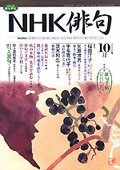
NHK Haiku NHK 俳句

Monthly Magazine for the weekly TV program


http://www.nhk-book.co.jp/text/syumi/index.html


From this LINK, on the right side, you can access the weekly programs.
http://www.nhk.or.jp/tankahaiku/

Archives of the Best
http://www.nhk.or.jp/tankahaiku/haiku_tokusen/index.html

The Best of this Week
http://www.nhk.or.jp/tankahaiku/haiku_tokusen/index_week.html


Detailed BLOG version:
NHK俳句に学ぶ


:::::::::::::::::::::::::::::::::::::::::::::::::::::::::::::::::::::::::::::::::::::::::::::::::::::

Five Seven Five with a Photo

NHK Foto Go Shichi Go


NHK フォト 五七五 in Japanese, with photos.


Click on the whirl with the ribbon (今月の作品) to go to the collection of each month. Started in April 2006.

Sample from November 2006
Click on the downward arrow beside the little window of 2006年11月 to select another month.


Advise about writing haiku by
Yasuhara Yoo Sensei 安原葉, April 2007


More about Haiku and Photos, shahai 写俳
Gabi Greve


:::::::::::::::::::::::::::::::::::::::::::::::::::::::::::::::::::::::::::::::::::::::::::::::::::::


NHK Haiku Ookoku .. Kingdom of Haiku
俳句王国

Haiku okoku


. 2008 「俳句ナンダこりゃコレクション」  
What, this is supposed to be haiku ?
Gendai ... Modern Haiku Interpretations


:::::::::::::::::::::::::::::::::::::::::::::::::::::::::::::::::::::::::::::::::::::::::::::::::::::

鷹羽狩行の名句案内
Guide to Famous Haiku / meiku annai


By 鷹羽狩行 Takaha Shugyoo
ISBN   978-4-14-016151-7

Takaha sensei tried to define what is
a NOTEWORTHY, a FAMOUS HAIKU :

The use of the language (Japanese) should be in a proper and correct way.
The haiku must be easily understood at the first reading. Keep it simple.
And when reading it again and again, you feel a good taste (the depth) of it.
The kigo must fit the general theme of the haiku and be alive.

(quoted from my memory after viewing a TV show)


the chirping of tree crickets—
after having judged
a thousand verses in one day


Selected Haiku by Takaha Shugyo


. WKD : Introducing Takaha Shugyo  


:::::::::::::::::::::::::::::::::::::::::::::::::::::::::::::::::::::::::::::::::::::::::::::::::::::

列島縦断俳句スペシャル-
Special : Haiku from North to South of Japan

With Inahata Teiko and Kaneko Tohta.

NHK Haiku Marathon October 2006

NHK Haiku Marathon October 2007

NHK 俳句日和
NHK Haikubiyori October 2009


:::::::::::::::::::::::::::::::::::::::::::::::::::::::::::::::::::::::::::::::::::::::::::::::::::::


Great Annual Haiku Meeting
NHK全国俳句大会

The best during the course of a year of all the above mentioned programs come together again in January and choose the very best. All the honorable sensei are present and argue a bit on the reasons for the best. Inahata Teiko and Kaneko Tohta are among the great elders who take part every year!
This year, 2007, Kaneko sensei is 87 years old! He also appeared on the last NHK program in March, giving his advise to the nationwide students.

In 2007 there were 50,122 haiku to choose from the grown ups and 30,547 from the junior section.

The LINK below shows the names of the judges and then has further links to read the winning haiku in Japanese.

平成19年1月21日にNHKホール(東京・渋谷)

:::::::::::::::::::::::::::::::::::::::::::::::::::::::::::::::::::::::::::::::::::::::::::::::::::::


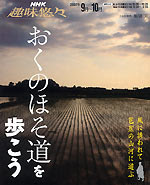
CLICK for original LINK !

Oku no Hosomichi/ Matsuo Basho
Walking the Narrow Road to the North of Japan

CLICK for original LINK !

© NHK New Program
September / October 2007


My Take on the Unbeaten Tracks with Basho / NHK
Gabi Greve


:::::::::::::::::::::::::::::::::::::::::::::::::::::::::::::::::::::::::::::::::::::::::::::::::::::


Hasegawa Kai 長谷川櫂
Teaching about the CUT, starting from April 2007

"ときには俳句はその人の人生を変えてしまうことさえある。
芭蕉は旅のうちに人生を送り、子規は六尺の病床で人生を終えた。しかし、芭蕉は旅のつれづれの慰めに俳句を詠んだのではなく、子規もまた病の気晴らしに俳句を詠んだのではない。
芭蕉は俳句に誘われて旅立ったのであり、
子規は俳句に助けられて重い病と闘った。"
俳句的生活


季語は、宇宙的な言葉。
Kigo are like a cosmic words.
世界をひらく言葉


Kigo to Saijiki no Kai
Since January 2008

. . . 季語と歳時記の会 / NPO法人

Office in Niigata, Temple Soheki-Ji
事務局がある新潟県加茂市の双璧寺
(0256・52・0637)


ひやひやと赤貝のぬた春の雪
haiku about the ark clam with miso paste


:::::::::::::::::::::::::::::::::::::::::::::::::::::::::::::::::::::::::::::::::::::::::::::::::::::

Back to the Worldkigo Index
http://worldkigodatabase.blogspot.com/

:::::::::::::::::::::::::::::::::::::::::::::::::::::::::::::::::::::::::::::::::::::::::::::::::::::

3/03/2010

Kidai and Kigo. Hon-i

[ . BACK to Worldkigo TOP . ]
:::::::::::::::::::::::::::::::::::::::::::::::::::::::::::::::::::::::::::::::::::::::::::::::::::::

Kidai and Kigo 季題と季語

kidai - seasonal topic, seasonal theme
seasonal activity, seasonal event, seasonalsubject matter. Most are based on seasonal words used in Waka and traditional court poetry.
Usually the first word or head entry given in the list of kigo for one (item).

kigo - seasonal word, season word
seasonal aspect. Many were added during the Edo period with the growing popularity of haikai. They did not have such a deep-rooted poetic association.
Kigo are not only nouns, they can also include verbs and adjectives and be more than one word.

hon-i 本意 - "the real meaning" (honto no imi 本当の意味)
Poetic essence, other associations with this word. Essential nature. Codified emotion, cultural code meaning. The most difficult part, to explain the cultural background of a word. Without the full understanding of "hon-i, honi, hon'i" it is hard to appreciate the use of kigo. A Japanese saijiki tries to explain the hon-i of a word.
In Japanese poetry, a lot of the hon'i dates back to classical Chinese poetry.


I remember some Japanese sensei discuss the problem of mountain climbing as a kigo "yamanobori" , maybe widely meaning "the summer season of mountain climbing", but the verb form, which might be translated as I climb a mountain, "yama o noborishi, yama o noborite" would not be a seasonal reference, since you can climb a mountain at any time.

When translating kidai and kigo into English, even more possibilities of the wording arise for one word. The distinction of this kind will be even more difficult.


A lot of the significant cultural meaning of a kigo (hon-i) was taken from the Chinese classics, especially from Chuang-Tsu, which was a "must know" among the practitioners of haikai during the Edo period.

. Chinese background of Japanese kigo .


Another way to add a special, deeper meaning to a word was the use of place names with a special historic and poetic background.
They are similar to "makura kotoba" 枕詞, 枕言葉, "pillow words", normal words used as codes to bring out a mood or mental scene for the reader.

. Utamakura 歌枕 place names used in Poetry .


Gabi Greve


.................................................................................

Hon-i ...
how a particular image should be presented.
. . .
However, as an extremely concise poetic form and a product of group composition, haikai needs heavily charged signifiers in order to sustain its poetic expression.

source : Peipei Qiu : Basho and the Dao

.................................................................................


Haiku are poems about the season, the changes of the seasons, their theme is the season and KIDAI / KIGO is the means to bring the season alive.


"seasonal topics"
is the necessary translation of KIDAI.
It should not be mixed up with
. non-seasonal topics - TOPICS.


:::::::::::::::::::::::::::::::::::::::::::::::::::::::::::::::::::::::::::::::::::::::::::::::::::


The Japanese word kisetsu 季節, translated as season,
refers to the climate changes of
spring, summer, autumn and winter.


The English word season can also refer to other things, for example
a certain period of time.
source : www.thefreedictionary.com

Therefore the expression "Season of Ramadan" is not linked to climate, but to a special period of time.

. WKD : Ramadan and the Islamic Calendar .


:::::::::::::::::::::::::::::::::::::::::::::::::::::::::::::::::::::::::::::::::::::::::::::::::::


quote
With the dramatic growth of haikai in the seventeenth century,
the number of new seasonal words grew rapidly.
- snip - ... while the number of seasonal words grew at an astounding pace,
the number of seasonal topics remained relatively limited.

source : Haruo Shirane
Japan and the Culture of the Four Seasons:
Nature, Literature, and the Arts

seasonal words - read kigo
seasonal topics - read kidai

- - - - - - - - - -

tatedai 縦題 - 竪題 "vertical dai"
classical season words like plum, cherry, hototogisu, autumn leaves, used in waka and renku poetry.

yokodai 横題 "horizontal dai"
mostly new dai concerning the human beings, like manzai, yabu-iri, kotatsu . . .
A term used for haikai poetry.

Terms used in 1720 by 菊阿口義.

Kikaku wrote:
「縦は、花、時鳥、月、雪、柳、桜、の折に触れて、詩・歌・連・俳ともに通用の本題なり。
横は、万歳、薮入り、の春めくことより始めて、火燵、餅つき、煤払、鬼打つ豆、の数々なる俳諧題をさして言ふなれば、
縦の題には古詩・古歌の本意を取り連歌の式例を守りて、文章の力を借り、
私の詞なく、一句の風流を専一にすべし。
横の題にては、洒落にもいかにも、わが思ふことを自由に言ひ取るべし。」


:::::::::::::::::::::::::::::::::::::::::::::::::::::::::::::::::::::::::::::::::::::::::::::::::::

quote
From a philological point of view, the term "haiku" did not exist in the Edo period (from circa 1600). Following the Meiji revolution (1868) Japan was introduced to Western technology, philosophy, etc., and was strongly influenced by Western art movements (e.g. Romanticism, Impressionism). Shiki Masaoka (1867-1902) refined and developed the hokku or haikai into "haiku," coining the new term, and made “haiku” independent from the hokku tradition (the first stanza of a renga).

After haiku became a fully independent genre, the term "kigo" was coined by Otsuzi Ōsuga (1881-1920) in 1908.
"Kigo" is thus a new term for the new genre approach of "haiku."
So, when we are looking historically at hokku or haikai stemming from the renga tradition, it seems best to use the term "kidai." Although the term "kidai" is itself new—coined by Hekigotō Kawahigashi in 1907!
When discussing Bashō and Issa, the term "kidai" is best applied, because both of these authors’ works are in the tradition of hokku.

The Heart in Season. Richard Gilbert
source : Simply Haiku 2006


:::::::::::::::::::::::::::::::::::::::::::::::::::::::::::::::::::::::::::::::::::::::::::::::::::


quote:
Like other Japanese saijiki, the Nyūmon Saijiki is a compilation of the major kidai (seasonal topics) and kigo (seasonal words) in traditional and modern Japanese haiku. In turn, haiku are the traditional Japanese poetic form characterized by 17 sound symbols in metrical units of 5, 7, and 5.

The Nyūmon Saijiki includes approximately 800 kidai, or headwords, and 2,100 kigo, or subtopics. An example of a kidai for the season of spring is risshun (beginning of spring). Kigo under the headword risshun are haru tatsu (spring begins) and haru kuru (spring comes).

For each kidai the saijiki includes a prose discussion of the meaning and usage of the kidai, together with examples of Japanese haiku that make use of the kidai and/or kigo.

© University of Virginia Library: Japanese Text Initiative

:::::::::::::::::::::::::::::::::::::::::::::::::::::::::::::::::::::::::::::::::::::::::::::::::::

Quote from
© Glossary of Jane Reichhold 2002


kidai - KEY-DAY'EE (J: season topic)
A system that designates a season by agreement among poets which makes the full moon a sign of autumn. As this path is full of potholes and debates, there are dictionaries called saijiki which are devoted to the sport and explain little with many words.

kigo - KEY-GO (J: seasonal word)
Nouns which imply the season because they have been traditionally associated with certain times of the year in Japanese literature and/or real life. There are winter birds and summer plants, spring activities and winter skies, fall trees and summer holidays and the list goes on and on. Is a red balloon an indication of summer or fall?

hon’i – HONE-EE (J: essential characteristic).
An aesthetic principle that used convention to describe the character of certain things especially in renga writing. For example the subject of love require unrequited longing, travel had to denote the suffering. These codified versions which were gathered from previous admired literature were considered more poetic than reality.

:::::::::::::::::::::::::::::::::::::::::::::::::::::::::::::::::::::::::::::::::::::::::::::::::::


yo no hito no mitsukenu hana ya noki no kuri

few in this world
notice those blossoms--
chestnut by the eaves

Matsuo Basho, Tr. Makoto Ueda

This haiku sparked a discussion on the use of kigo and kidai:

As I understand it, the kigo in question is 'kuri no hana' (chestnut's blossom), yet that phrase does not appear in the ku itself. I had the impression that a kigo was a fixed phrase which wasn't open to this kind of manipulation, and now wonder was I quite wrong? I thought that the 'topic' of flowering chestnut was better called a kidai than a kigo?

- Discussion with a friend -


kidai : flower of the chestnut, kuri no hana 栗の花
kigo :
..... chestnut flower, hanaguri 花栗
..... chestnuts flowering, kuri saku 栗咲く

:::::::::::::::::::::::::::::::::::::::::::::::::::::::::::::::::::::::::::::::::::::::::::::::::::

quote
kidai (seasonal topic)
In tanka and haiku, a topic upon which a verse is to be composed. It can be a specific kigo or some seasonal event, or a combination. See kisetsu.

kisetsu (season, seasonal aspect) The seasons.
The seasonal aspect of the vocabulary (kigo) and subject matter (kidai) of traditional tanka, renga, and haiku; a deep feeling for the passage of time, as known through the objects and events of the seasonal cycle.

kigo (season word)

The name of a plant, animal, climatic condition, or other object or activity traditionally connected with a particular season in Japanese poetry.

Haiku Handbook: How to Write, Share and Teach Haiku
Excerpts online


Haiku Handbook: How to Write, Share and Teach Haiku
Glossary about kidai and kigo


William J. Higginson


:::::::::::::::::::::::::::::::::::::::::::::::::::::::::::::::::::::::::::::::::::::::::::::::::::


"The essence of traditional haiku consists of two things.
First, there is an association with nature through one of the seasons either by naming the season (kigo), like winter or spring, or by suggesting the season through specific elements of that season (kidai), like a frozen pond or cherry blossoms."
Bruce Ross


This gives an overview of the nature aspect of traditional haiku, but contains a serious error of fact. Kidai are traditionally recognized seasonal phenomena that often provide the main subject matter of a haiku. They also place haiku in the seasonal round that forms an important context for all such poems. On the other hand, kigo are the specific words or phrases in individual poems that refer to the kidai. For example, a Japanese phrase that might best be translated "remaining snow" is an important spring kidai.

Another phrase, perhaps best translated "left-over snow," often appears in haiku, and refers to this same phenomenon. A poem with the kigo "left-over snow" has "remaining snow" as its kidai. "Remaining snow" itself may also be used in a poem—in which case it is both the kidai and the kigo of that poem. In short, a kidai is a "seasonal topic"—some phenomenon one might write about—while a kigo is the word or phrase one uses to write about it—the "season word."

Kigo does not mean "naming the season"; "seasonal topic(s)" is the usual translation of kidai, not the confusing "elements of the season," which might be understood as referring to the weather.
William J. Higginson

Read more here
book review
How to Haiku: A Writer’s Guide to Haiku and Related Forms
by Bruce Ross


:::::::::::::::::::::::::::::::::::::::::::::::::::::::::::::::::::::::::::::::::::::::::::::::::::::

hon-i 本意 - "the real meaning" (honto no imi 本当の意味)
poetic essence, “essential implications”
established essence
the essential nature of things
“genuine purports” (Kawamoto)
. Reference : Kawamoto Koji .

The “poetic essences” (hon'i) can capture the true nature of something and it can be handed down in the literary tradition.

The cultural context establishes this "true meaning" of a kigo within Japanese poetry. The WKD tries to add as much of this cultural context as possible.
(Please bear in mind that I am only one person with limited time . . .).

When adding new season words of other parts of the world, I try to explain its cultural context as best as I can with my haiku friends from the region.
A great thank you again to all who contributed.

:::::::::::::::::::::::::::::::::::::::::::::::::::::::::::::::::::::::::::::::::::::::::::::::::::::

quote
Beyond the Haiku Moment
Haruo Shirane

Nature and Seasonal Words

From as early as the eleventh century, the poet of classical poetry was expected to compose on the poetic essence (honi) of a set topic.
The poetic essence was the established associations at the core of the seasonal word.
In the case of the warbler (uguisu), for example, the poet had to compose on the warbler in regard to the arrival and departure of spring, about the emergence of the warbler from the mountain glen, or about the relationship of the warbler to the plum blossoms. This poetic essence, the cluster of associations at the core of the seasonal topic, was thought to represent the culmination and experience of generations of poets over many years.

By composing on the poetic essence, the poet could partake of this communal experience, inherit it, and carry it on. (This phenomenon is true of most of the traditional arts. The beginner must first learn the fundamental forms, or kata, which represent the accumulated experience of generations of previous masters.)

Poets studied Japanese classics such as The Tale of Genji and the Kokinshu, the first imperial anthology of Japanese waka poetry, because these texts were thought to preserver the poetic essence of nature and the seasons as well as of famous places.
source : www.haikupoet.com


:::::::::::::::::::::::::::::::::::::::::::::::::::::::::::::::::::::::::::::::::::::::::::::::::::::


Hon-I and Symbol

BASHŌ'S HOKKU
David Landis Barnhill

. . . . . Many Western students of literature are used to analyzing poetry, "figuring out" its meaning. One common aspect of such analysis is the explication of symbols, the assumption being that a symbol (e.g. dove) stands for something else (e.g. peace), and the reader needs to determine that reference, which is what the symbol means. (Consider, for instance, the rich tapestry of symbols in T.S. Eliot's "The Wasteland.")
A second assumption is that poems have a theoretical content that we need to explain. In light of these assumptions, the commonplace nature of Bashō's imagery and the sheer brevity of the "old pond" poem make this verse an unlikely candidate for profundity and complexity.

The significance of the poem begins to appear, however, when we shift to a different notion of imagery. Usually (though not always), images in Bashō's hokku are not symbols standing for something else;
the old pond "stands for" an old pond.
This conception of language is related to what has been called the Buddhist critique of symbols, in which the dualism between the image and its symbolic meaning collapses.

. . . . . If images do not stand for something else but instead indicate sensuous phenomena, what does reading consist of? As William LaFleur has said, "this aesthetic mode lives off the way it redirects our focused attention to phenomena for their own sake," in order to cultivate the "simple recognition of phenomena." But the simplicity involved in reading Bashō's hokku is not simplistic for it involves entering deeply into the scene presented.
The poem, then, is not a bearer of symbolic meaning, it is a catalyst for experience.

While the images are not symbols, they do have associations that are important for a full experience of the poem.

..... The notion of meaningful gaps in the work is a particularly significant idea for Bashō's hokku. They often have a contrast which the reader must somehow embrace in the reading experience (rather than explain or intellectually resolve): the stormy sea and heaven's river; dawn twilight and the whiteness of a fish; chrysanthemum's scent and a worn sandal; the cry of a bird and a tall iris; an old pond and the splash of a frog. In addition to such contrasts, Bashō was a master of synesthesia, which necessitates the reader embracing a sensual paradox in his or her experience.

Another approach to this poem has eschewed such an identification of the poem and Buddhist enlightenment and focused on what we could call the psycho-sensuous experience of the scene itself and an implied metaphysics. If we let ourselves be absorbed in the Old Pond poem's setting, we can begin to feel an elemental stillness.
"Old" gives rise to the feeling not simply of great age but of the suspension of time, an eternity not of unending duration but of utter timelessness. Suddenly (we cannot say how long there has been no movement) a frog leaps. Just as suddenly, in the third line, the frog has disappeared. There has been a change in senses as well, from visual to aural--the sound of the water. The sound too disappears in a split second, and we are left with the ringing silence that follows an abrupt intrusion of sound: the old pond is once again silent, while our listening remains acute. For a time, however, something of the frog and the sound remains--the ripples on the pond--a kind of visual echo which we imagine without any words to that effect. Soon these too will disappear and the pond will return to utter stillness.
source : barnhill PDF


:::::::::::::::::::::::::::::::::::::::::::::::::::::::::::::::::::::::::::::::::::::::::::::::::::::


quote
Reviving Japanese Haikai through Chinese Classics
Chen-ou Liu

the old pond's
frog is growing elderly
falles leaves


First of all, semantically speaking, the above poem is made up of two parts that are separated by a kireji (cutting word), kana. The first part is that in the old pond there is an aging frog, whose honi (poetic essence) is “suggestive of spring…[implying] vigor and youth.”
The second part introduces the reader to the scene fallen leaves, whose honi refers to winter.

source : www.haijinx.org/IV-1


*****************************
Related words

***** ..... Saijiki, the history of saijiki

***** ..... Haiku Seasons, Categories and their worldwide use

***** ..... Mu Kigo : The Season of 'No-Season' in Contemporary Haiku
A discussion !


Kigo and its use in Japanese haiku.


. BACK TO
Basic Haiku Theories
  

[ . BACK to Worldkigo TOP . ]
:::::::::::::::::::::::::::::::::::::::::::::::::::::::::::::::::::::::::::::::::::::::::::::::::::::